Layer-2 Matures: Bark Goes Live as XRP Cuts Node Overhead
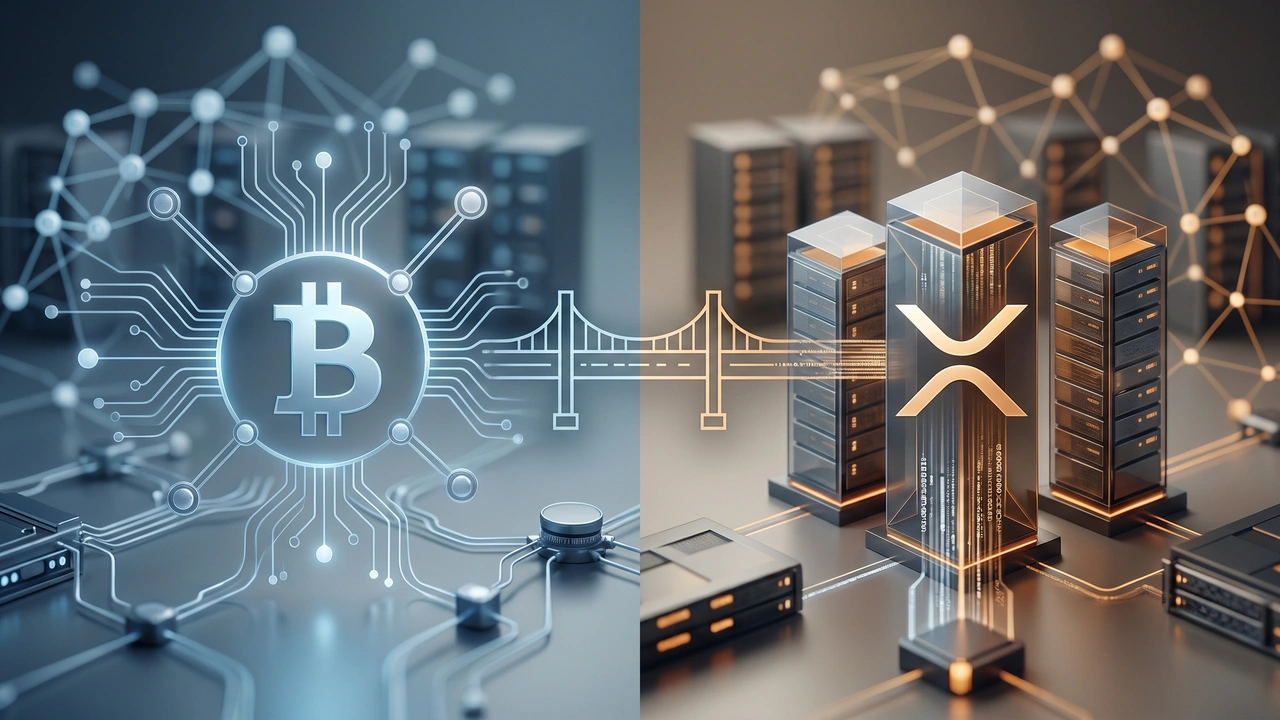
Two protocol developments this week signal a maturing infrastructure layer across crypto networks - Second's Bark implementation reaches Bitcoin mainnet, while the XRP Ledger prepares a significant efficiency overhaul that slashes node storage requirements by up to 40 percent.
Key Takeaways
- Bark's mainnet launch delivers a Bitcoin layer-2 option that eliminates channel and liquidity management, targeting the UX gap that has long limited self-custody adoption beyond technically sophisticated users.
- Second's decision to ship a rich developer toolkit at launch - eight language bindings, multiple reference wallets, a BTCPay plugin - signals a strategy of capturing developer mindshare before competing for end-user volume.
- The XRP Ledger's 3.2.0 upgrade cuts node storage overhead by up to 40 percent, a structural improvement that keeps infrastructure participation accessible as network activity scales.
- With roughly 84 percent of XRP nodes already on the preceding 3.1.3 release, the June 15 activation window carries relatively low coordination risk - but operators running legacy software face potential exclusion.
- Both developments reflect the same underlying priority across crypto infrastructure: reducing friction and cost for the humans and machines that actually run these networks, not just for end users in the abstract.
The Infrastructure Buildout Accelerating Beneath the Price Charts
While market participants obsess over price action, the deeper story in crypto right now is unglamorous but consequential: the underlying plumbing is being rebuilt. Two developments this week crystallize that trend - a Bitcoin layer-2 protocol called Bark has crossed from testnet theory into mainnet reality, and the XRP Ledger is days away from an upgrade that dramatically reduces the cost of running network infrastructure. Neither headline will trend on social media, but both represent meaningful progress toward the kind of usability and efficiency that long-term adoption actually requires.
The common thread is friction reduction. Whether that means eliminating the channel-management headaches that have kept ordinary users away from Lightning, or cutting the hardware burden on the node operators who keep a network running, the direction of travel is unmistakable: protocol builders are prioritizing the experience of real users over theoretical elegance.
The Facts
Second, a Bitcoin-focused development lab, formally launched Bark on the Bitcoin mainnet this week [2]. Bark is Second's production implementation of the Ark protocol, a layer-2 architecture that lets many users collectively share on-chain UTXOs through a system of coordinated, pre-signed commitments settled off-chain - distributing transaction fee costs across participants while keeping each individual in sole control of their funds [2]. The practical upshot is self-custodial Bitcoin payments that require no channel setup, no advance liquidity allocation, and none of the operational complexity that has historically made Lightning a tool for enthusiasts rather than everyday users [2].
Second CEO Steven Roose framed the goal plainly in a post accompanying the launch: "We wanted to make it ridiculously easy for users to get started with self-custodial bitcoin, hold it, and spend it, without surprise fees, and without having to manage channels or liquidity" [2]. To back that ambition with actual tooling, Second shipped a comprehensive developer kit alongside the mainnet launch - the Bark SDK, written in Rust, with bindings covering Kotlin, Swift, React Native, Flutter, Go, Python, and WebAssembly [2]. A server-side daemon called Barkd provides a REST interface for backend environments [2].
Several applications were mainnet-ready at launch. Noah is a mobile wallet pairing a React Native interface with a Rust backend, while Arke is a native iOS wallet built around open-source design principles from bitcoin.design [2]. Satsigner brings UTXO management and multisig workflows to mobile, and Bark Wallet runs as an Umbrel app supporting Ark, Lightning, and on-chain payments simultaneously [2]. A BTCPay Server plugin, also built by Second, allows merchants to process self-custodial Lightning payments without touching channel configuration [2]. Second, which operates with a team of eleven and has drawn engineers previously at Blockstream, raised $5.1 million from a private backer [2].
Over on the XRP Ledger, a different kind of infrastructure upgrade is imminent. Version 3.2.0 of the network's core software is scheduled to activate on June 15, and its headline change is a rebranding of the node software itself - the long-running daemon known as rippled will be retired in favor of a new name, xrpld [1]. More substantively, the upgrade is expected to cut node storage consumption by as much as 40 percent, a change that should allow the network to handle growing activity without proportional increases in hardware requirements [1]. End users will notice nothing directly, but the network's capacity headroom grows meaningfully [1].
The 3.2.0 release follows the 3.1.3 update that shipped in late May, which addressed bugs across NFT handling, Vault functionality, and other XRPL features [1]. Adoption of that earlier version has been rapid - roughly 84 percent of active nodes had already installed it as of recent network data [1]. Ripple has been pushing node operators to upgrade before the June 15 activation date, warning that older software versions may face restricted participation once the new rules go live [1]. The efficiency push fits within Ripple's broader repositioning of the XRP Ledger around tokenization, stablecoin infrastructure including its RLUSD product, and institutional DeFi applications [1].
Analysis & Context
The Bark launch is worth contextualizing against the broader arc of Bitcoin layer-2 development. Lightning has been the dominant scaling narrative for years, yet mainstream self-custody adoption has remained stubbornly low - not because Lightning is technically flawed, but because the user-facing experience of managing inbound capacity, routing, and channel rebalancing creates a cognitive overhead that most people simply will not tolerate. Bark's architecture sidesteps those problems structurally rather than cosmetically, and the depth of the SDK ecosystem at launch - spanning eight language bindings and multiple reference applications - suggests Second is targeting developer adoption as the path to end-user reach. That is exactly the right sequencing: build the tooling first, let the apps follow.
The XRP node efficiency story points to a pattern worth recognizing across maturing blockchain networks. As transaction volumes and state size grow over time, the cost of running infrastructure tends to climb, which gradually centralizes participation toward well-resourced operators. The 40 percent storage reduction in 3.2.0 works against that pressure - it widens the field of entities capable of running a validator without expensive hardware upgrades. In a network Ripple is positioning for institutional tokenization workloads, keeping the validator set accessible matters more than it might seem: institutional clients conducting due diligence on a network will scrutinize decentralization metrics, and a lower barrier to node operation is a credible answer to that scrutiny.
Sources
AI-Assisted Content
This article was created with AI assistance. All facts are sourced from verified news outlets.