320 Bitcoin Returned in South Korea: Why This Case Demands Attention
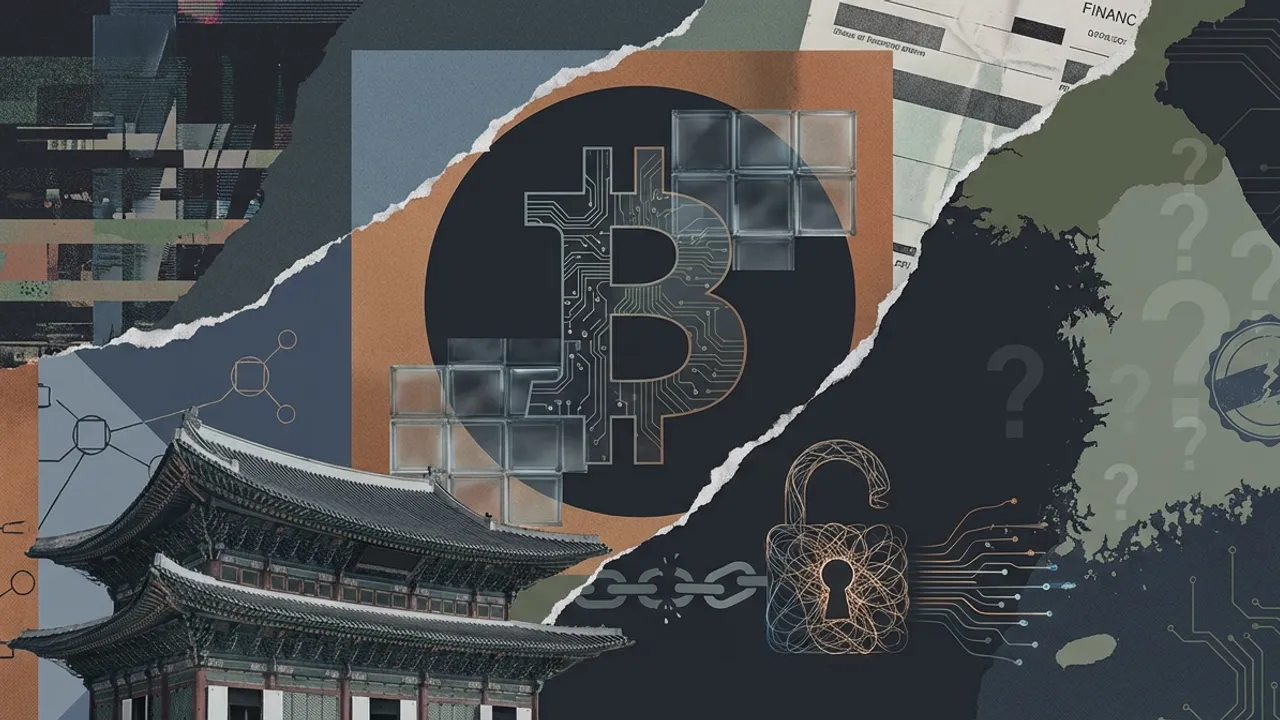
A hacker voluntarily returns stolen Bitcoin worth $21 million—an extremely unusual occurrence that suggests a possible inside job and exposes vulnerabilities in government cryptocurrency custody.
320 Bitcoin Returned in South Korea: Why This Case Demands Attention
A highly unusual incident in South Korea raises fundamental questions about government custody of cryptocurrencies: Following a phishing attack in August 2025, the Gwangju prosecutor's office suddenly received 320.88 Bitcoin back on February 17, 2026—without prior notice, without negotiations, without apparent reason. The case, which initially appeared to be a simple hack, is developing into a cautionary tale about the risks of institutional Bitcoin custody and raises suspicion of an inside job.
The voluntary return of over $21 million in Bitcoin contradicts all known patterns of criminal behavior. Observers see this as clear evidence that there is more behind this incident than an external attacker.
The Facts
In August 2025, 320.88 Bitcoin disappeared from the custody of the Gwangju District Prosecutor's Office. The coins originated from proceedings against a Thai operator of an illegal online gambling network, who was sentenced to two and a half years in prison [1]. According to a source from the prosecutor's office, officials fell for a phishing website where they entered the private key to the coins [1].
However, the case was marked by irregularities even before this incident. Originally, the seizure of 1,798 BTC had been ordered. But 1,476 of them were already unaccounted for when authorities attempted to take custody—only 320 Bitcoin actually entered government custody [1]. The convicted woman claimed that the officials themselves had stolen the remaining Bitcoin from her wallet. Searches revealed no evidence of embezzlement by police officers, but the whereabouts of the 1,476 BTC remain unclear to this day [1].
When the disappearance of the 320 Bitcoin was also noticed in December 2025, authorities ordered a nationwide review of cryptocurrency custody. This audit uncovered another case: 22 Bitcoin had been stolen from a hardware wallet belonging to the Gangnam police in Seoul—even though the device itself had not gone missing. Involvement of officials is also suspected here [1].
On February 17, 2026, the 320.88 Bitcoin then surprisingly reappeared in the government wallet [1][2]. The prosecutor's office immediately transferred the coins to the Korean exchange Upbit, presumably for secure custody [1]. According to investigators, the prosecutor's office had contacted domestic and foreign exchanges and requested the freezing of suspicious wallet movements [2]. A spokesperson for the prosecutor's office stated: "The hacker appears to have voluntarily returned all the bitcoins because he feared not being able to liquidate them" [1].
Investigations into the identity of the perpetrator are ongoing. The prosecutor's office suspects that the phishing perpetrator "felt pressured by the investigation" and therefore transferred the Bitcoin back [1]. However, the identity of the attacker remains unknown, as does the person behind the theft of the 22 BTC in Gangnam [1].
Analysis & Assessment
This case is remarkable in several respects and highlights fundamental problems with institutional Bitcoin custody. The voluntary return of stolen cryptocurrency is extremely rare—criminals typically use decentralized exchanges, mixing services, or other methods to obscure and liquidate stolen coins. The idea that an attacker would simply return the coins because exchanges were blocked seems implausible. The central question remains: Why would someone steal Bitcoin if they must assume from the outset that they cannot monetize them?
The suspicion of an inside job is supported by several factors. First: The 1,476 BTC that disappeared even before the phishing incident indicate systematic problems in the custody chain. Second: The parallel case in Gangnam, where Bitcoin was stolen from a hardware wallet without the device itself disappearing, suggests technical insider knowledge. Third: The return occurred precisely when investigative pressure increased—behavior that suggests someone with much to lose rather than a professional cybercriminal.
For the Bitcoin community, this incident underscores a fundamental principle: "Not your keys, not your coins." If even government authorities fall for phishing websites when handling private keys, this demonstrates the necessity of robust security protocols and professional custody solutions. The case will likely lead to increased demands for transparent standards for government custody of seized cryptocurrencies. Institutions worldwide that handle confiscated crypto assets should understand this as a warning signal: Inadequate security processes can not only lead to financial losses but also fundamentally damage trust in government institutions.
Conclusion
• The voluntary return of 320 Bitcoin worth $21 million is an extremely unusual occurrence that strongly suggests an inside job—professional criminals would have had numerous options to obscure and liquidate the coins.
• The case reveals serious vulnerabilities in government cryptocurrency custody: From susceptibility to phishing to unexplained losses of 1,476 BTC to parallel thefts at other agencies, a pattern of inadequate security processes emerges.
• Institutions worldwide that hold seized cryptocurrencies must urgently reconsider their security standards—this incident will likely lead to stricter requirements for professional custody solutions and transparent custody processes.
• The ongoing investigations into the identity of the perpetrator and the whereabouts of additional missing Bitcoin will show whether internal involvement is indeed the case—but the circumstances strongly suggest this.
• For Bitcoin users, the case confirms a core principle: Even government institutions are not immune to fundamental security errors in handling private keys—true self-custody remains the safest option for long-term holders.
Sources
AI-Assisted Content
This article was created with AI assistance. All facts are sourced from verified news outlets.