Bitcoin and Crime: Seized Assets and Insider Trading
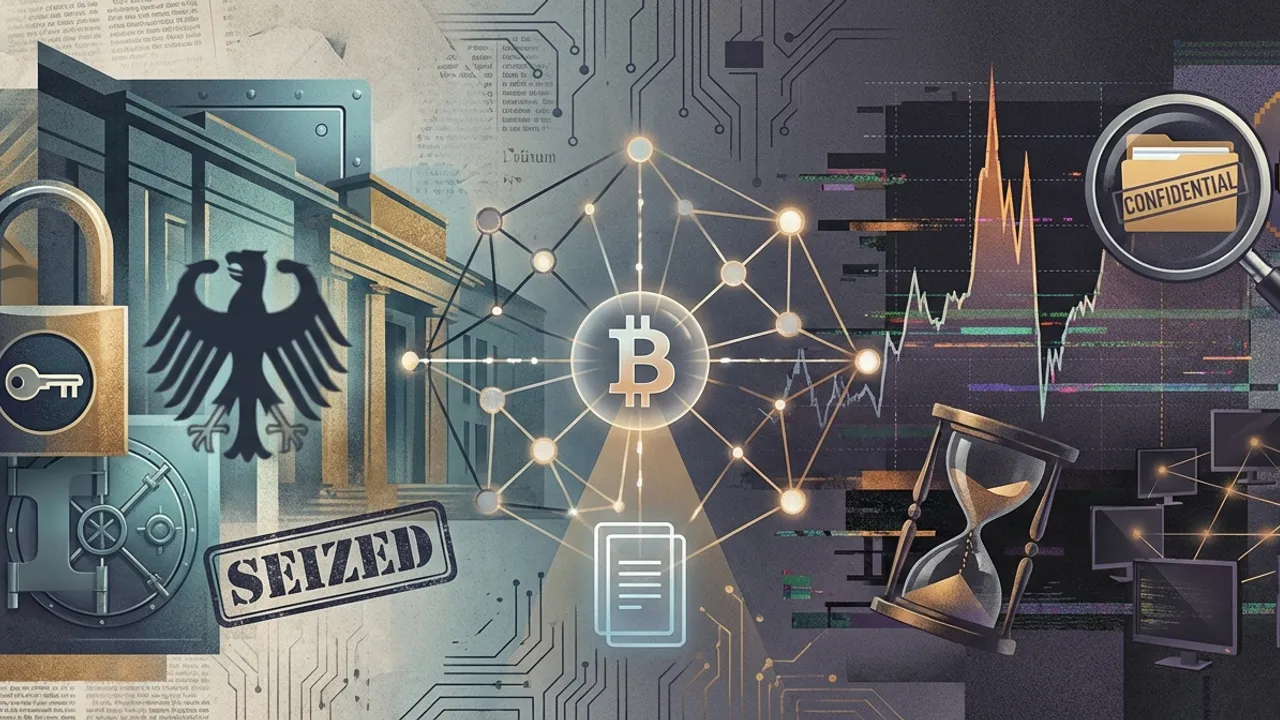
Germany's sale of 50,000 seized Bitcoin and an exposed memecoin insider trading case show two sides of the same coin: Bitcoin transparency enables both asset recovery and the detection of illegal activities.
Transparency as a Double-Edged Sword: When the Blockchain Convicts Criminals and Secures Billions
While critics frequently associate Bitcoin with illegal activities, recent cases demonstrate the opposite: blockchain transparency makes Bitcoin a poor tool for criminals. Two recent developments—the seized Movie2k Bitcoin in Germany and an exposed insider trading scandal—illustrate how the inherent traceability of blockchain transactions both enables government asset recovery and brings criminal schemes to light.
Both cases raise fundamental questions: How should authorities handle seized crypto assets? What role does blockchain transparency play in combating market manipulation? And what do these developments mean for the further regulation and acceptance of Bitcoin?
The Facts
Proceedings have begun at the Leipzig Regional Court against the operators of the illegal streaming portal "movie2k.to." At the center is a Bitcoin fortune worth billions: 50,000 Bitcoin were transferred to the Saxon State Criminal Police Office in 2024 and later sold for 2.64 billion euros [1]. The prosecution also suspects that the main operator may possess an additional 57,000 Bitcoin—an even larger crypto treasure that is likely to significantly shape the trial until its expected conclusion in mid-May [1].
The sale of the 50,000 Bitcoin caused international controversy. Bitcoin advocates like Michael Saylor commented in German: "Everyone gets Bitcoin at the price they deserve" [1]. However, the sale was legally mandatory. Dr. Patrick Pintaske, group leader at the Dresden Public Prosecutor's Office, explained to BTC-ECHO: "The legally mandated emergency sale can occur when there is a threat of significant loss of value. With Bitcoin, this threat of value loss is present at all times due to its volatility" [1].
Dr. Lennart Ante, CEO of Blockchain Research Lab gGmbH, emphasized that selling seized goods is "common practice": "It is not the responsibility of the Free State of Saxony or other involved institutions to speculate on possible appreciation of seized goods" [1]. The law applies not only to cryptocurrencies, but equally to real estate or jewelry.
In parallel, blockchain investigator ZachXBT uncovered a serious case of insider trading. A senior employee of the onchain trading platform Axiom Exchange allegedly abused internal access to user data to identify private wallets and analyze trading patterns of prominent crypto influencers [2]. The goal was to recognize price movements in memecoins early and position strategically.
According to the investigation, the New York-based employee used internal dashboards to extract sensitive information such as linked wallet addresses, registration data, and user identifiers [2]. This data was shared and analyzed within a small circle. In published audio recordings, the alleged insider can be heard describing how he could "track nearly every user via internal codes" [2]. The group reportedly targeted crypto traders who built up larger memecoin positions from private wallets before publicly promoting projects.
Axiom confirmed the abuse of internal support tools and responded with strong words. Access to the systems was revoked and responsible persons would be held accountable [2]. On-chain data also suggests connections to central exchange wallets according to ZachXBT, though definitive proof of insider trading is not yet possible without internal log data [2].
Analysis & Assessment
Both cases illustrate a central characteristic of Bitcoin and blockchain technology: transparency is built in. Unlike cash or traditional financial systems, every transaction leaves a permanent, publicly visible trail. This property paradoxically makes Bitcoin a poor instrument for long-term criminal activities—and an excellent tool for investigators.
The Movie2k case shows that even years after illegal activities, seized Bitcoin holdings can be identified and secured. However, the discussion about the timing of the sale reveals a dilemma: while Bitcoin advocates criticize the sale as a missed opportunity, the legal position is clear. Government speculation on appreciation would create a dangerous precedent and would be hardly compatible with rule-of-law principles. The question remains, however, whether volatility-based emergency sale clauses should be viewed more differentially in the future, especially as Bitcoin gains further institutional acceptance.
The Axiom insider trading scandal, on the other hand, shows the dark side of centralized crypto platforms. While the blockchain itself is transparent, central exchanges and trading platforms create information asymmetries that can be exploited. The fact that this case was uncovered at all is remarkable, however: blockchain investigators like ZachXBT use on-chain data to recognize patterns that would remain hidden in traditional financial markets. This underscores the importance of independent blockchain analysis for market integrity.
Historically, the Movie2k sale is reminiscent of earlier government Bitcoin sales, such as by U.S. authorities after the Silk Road seizure. Significant value gains were missed there as well, but the legal logic remained consistent. The increasing professionalization of blockchain forensics—as visible in the Axiom case—suggests that illegal activities in the crypto sector are becoming increasingly risky.
Conclusion
• Blockchain transparency makes Bitcoin an increasingly poor tool for criminals, while simultaneously enabling government asset recovery and private investigations like those by ZachXBT
• The sale of seized Bitcoin by German authorities was legally mandated and follows international practice—however, the debate shows that regulatory frameworks may not be keeping pace with increasing institutional Bitcoin acceptance
• The Axiom insider trading scandal underscores the risks of centralized crypto platforms and the necessity of robust internal controls as well as independent blockchain monitoring
• The professionalization of blockchain forensics and on-chain analysis is becoming an increasingly decisive factor for market integrity and trust in the crypto sector
• With potentially another 57,000 Movie2k Bitcoin at stake, it remains to be seen whether German authorities will adjust their sales strategy or once again act according to the proven emergency sale principle
Sources
- [1]btc-echo.de
- [2]btc-echo.de
AI-Assisted Content
This article was created with AI assistance. All facts are sourced from verified news outlets.