Bitcoin Correction: Why This Crash Is Different from 2018 and 2022
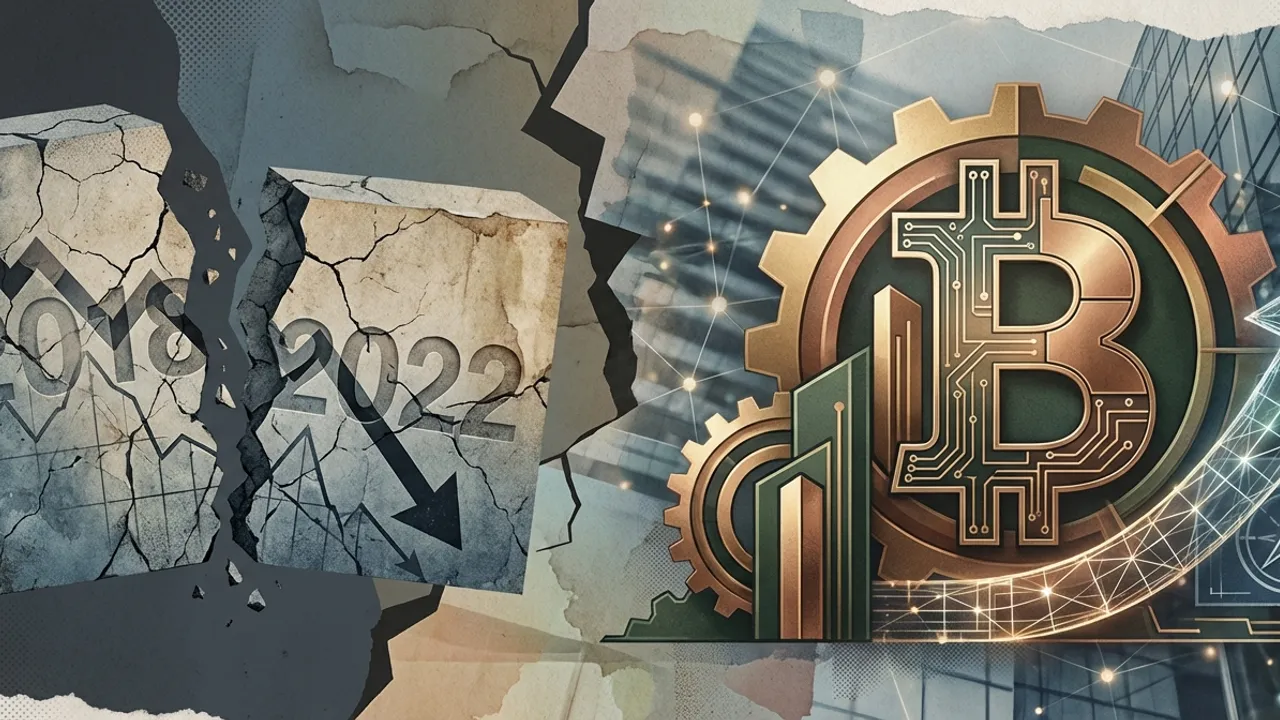
While Bitcoin continues to consolidate, fundamental differences from previous bear markets are emerging. Institutional adoption and regulatory progress could form the basis for sustainable recovery.
Bitcoin Correction: Why This Crash Is Different from 2018 and 2022
The current Bitcoin price decline is awakening memories among many market participants of the dramatic bear markets of 2018 and 2022. However, Matt Hougan, Chief Investment Officer of Bitwise, vehemently disagrees with this assessment. His thesis: the structural framework conditions have fundamentally changed – and that could make all the difference.
While Bitcoin has been closing continuously weaker for five weeks and is consolidating around $68,000, experienced industry experts are looking more optimistically to the future than the price development suggests. The question is not if, but when the market will price in the changed fundamentals.
The Facts
Bitcoin is currently trading at approximately $68,245, after the price closed at $68,716 on February 16 [2]. The market has been in a post-crash consolidation for weeks, which has been largely directionless. Ethereum is moving just below $2,000 and recording moderate gains of one percent, while Solana is gaining slightly with 1.9 percent daily performance [2].
Matt Hougan of Bitwise, however, sees the current situation fundamentally differently than many pessimists. In an interview with The Block, he makes clear: "The people who say this crypto winter is worse than 2018 or 2022 apparently don't remember 2018 or 2022" [1]. His argument is based on several structural changes that distinguish today's market environment from previous bear markets.
The Bitwise CIO paints a drastic picture of past crises: In 2018, Bitcoin was trading at merely $3,000, while Ethereum could demonstrate practically no use cases [1]. The 2022 bear market was characterized by a "total market collapse" and a regulatory authority that actively wanted to drive the industry out of business [1]. These structural problems no longer exist today.
Instead, Hougan identifies several growth drivers: Stablecoins are moving toward a market capitalization of three trillion dollars, while the tokenization of real-world assets has a potential of 200 trillion dollars [1]. Additionally, there is a significantly more positive regulatory environment and improved tokenomics. Particularly significant: Institutional heavyweights like BlackRock and Apollo are actively building on DeFi infrastructure [1]. The massively expanded infrastructure, exchange-traded crypto ETFs, and growing concerns about fiat currencies complete the picture [1].
For the current week, analysts expect no major breakouts from the consolidation. The macroeconomic agenda is unusually thin, with few hard data points and no major central bank decisions [2]. The main focus is on U.S. core inflation data on Friday, which could potentially provide new impulses [2].
Analysis & Context
Matt Hougan's perspective deserves special attention, as it directs the focus to often-overlooked structural changes. Indeed, the current market environment differs in several crucial points from previous bear markets: Institutional adoption has reached a new dimension. While in 2018 and 2022 it was primarily retail investors who left the market, today established financial institutions are actively investing in the infrastructure. BlackRock's engagement in DeFi is not merely symbolic – it signals a fundamental paradigm shift in the perception of digital assets by traditional financial actors.
The regulatory landscape has also changed dramatically. After years of uncertainty and active repression by U.S. authorities, a more constructive approach is emerging. The approval of Bitcoin spot ETFs marked a turning point that would have been unthinkable in 2018. This regulatory clarity creates the foundation for sustainable institutional engagement that is less susceptible to short-term panic selling.
Nevertheless, the current weakness should not be downplayed. The five-week series of lower weekly closes shows that selling pressure is real and could persist in the short term. The thin macroeconomic agenda suggests that Bitcoin could continue to remain in its consolidation range in the coming days. The crucial question is whether the improved fundamentals are sufficient to prevent a similarly prolonged bear market as in 2018 or 2022. Historical data suggests that markets with stronger institutional participation are not immune to corrections, but these tend to be shorter and less extreme.
Conclusion
• The current Bitcoin correction is taking place in a fundamentally improved environment: Institutional adoption, regulatory progress, and mature infrastructure clearly distinguish 2025 from the bear markets of 2018 and 2022
• Stablecoins, asset tokenization, and DeFi investments by established financial institutions like BlackRock create structural growth drivers that did not exist in previous cycles
• In the short term, Bitcoin remains trapped in a consolidation phase around $68,000, with the macroeconomic agenda offering few catalysts for a breakout
• The improved fundamentals argue against a multi-year bear market, although further volatility and setbacks cannot be ruled out
• Investors should differentiate between short-term price weakness and long-term structural improvements – the current framework conditions are historically uniquely positive
Sources
- [1]btc-echo.de
- [2]btc-echo.de
AI-Assisted Content
This article was created with AI assistance. All facts are sourced from verified news outlets.