Bitcoin Exits: Why Companies Are Abandoning Their BTC Strategies
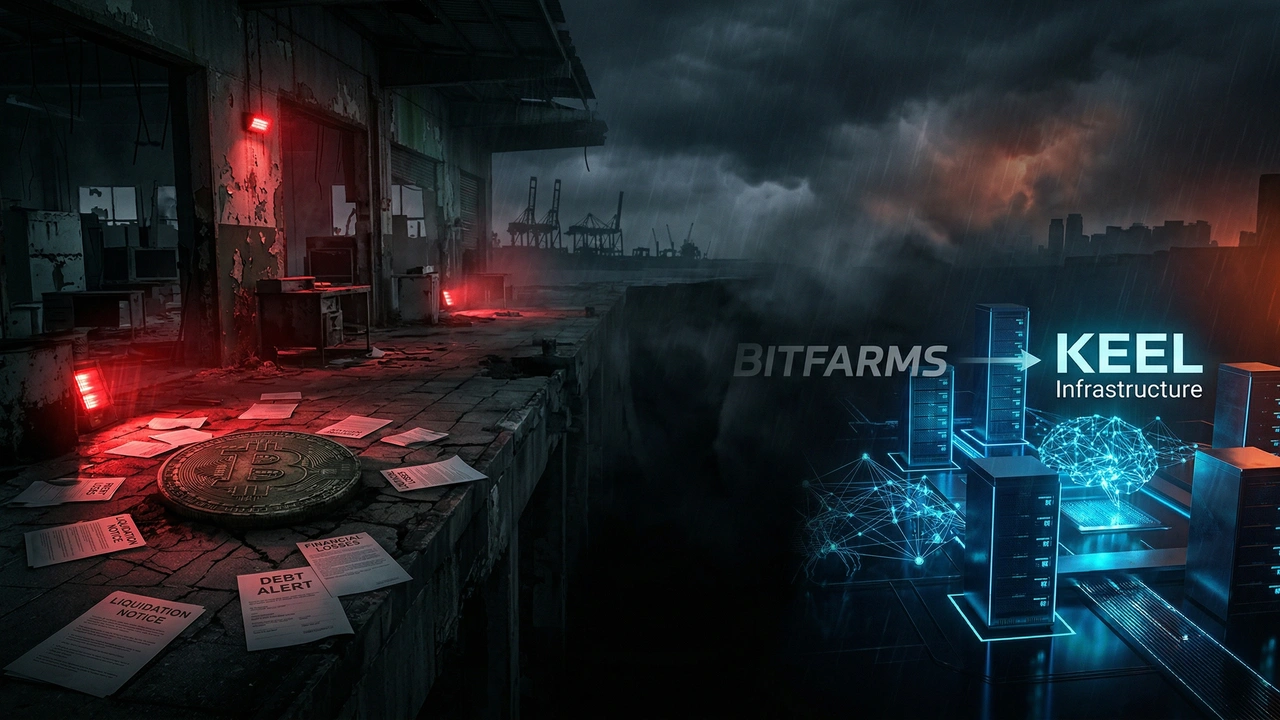
Genius Group liquidated its entire Bitcoin treasury to clear debt, while Bitfarms is planning a full exit from BTC in favor of AI infrastructure — signaling a broader corporate retreat from Bitcoin-first strategies.
Key Takeaways
- Genius Group's forced liquidation of its entire 84 BTC treasury to clear $8.5 million in debt is a stark reminder that corporate Bitcoin strategies require strong operational cash flow and balance sheet resilience — the strategy is only sustainable when the underlying business can absorb market shocks [1].
- Bitfarms' planned full exit from Bitcoin, including its rebranding to Keel Infrastructure, underscores a structural shift among Bitcoin miners away from BTC accumulation and toward AI data center infrastructure, where margins and contract visibility are far superior [2].
- With all-in mining costs near $80,000 per BTC for publicly listed miners, the economics of Bitcoin mining as a treasury-building mechanism have deteriorated significantly, accelerating the pivot to AI compute [2].
- These developments represent company-specific and sector-specific stress, not a systemic threat to Bitcoin — the volumes being liquidated are small relative to the broader market, and Genius Group has explicitly stated its intention to re-enter the Bitcoin treasury space when conditions improve [1].
- Investors evaluating companies with Bitcoin treasury mandates should scrutinize operational cash flow, debt structure, and access to capital markets — not just the size of the BTC position — as the key indicators of strategy sustainability.
The Corporate Bitcoin Exodus: When the Strategy Meets Reality
The corporate Bitcoin treasury narrative — once celebrated as the bold, forward-thinking move for companies seeking an inflation hedge and balance sheet upgrade — is facing its most serious stress test yet. Two developments this spring paint a striking picture: one company has already sold every last satoshi to survive, and another is openly planning a complete exit from Bitcoin. Together, they reveal the fragile foundations on which many corporate Bitcoin strategies were built.
This is not simply a story about individual companies making tactical retreats. It is a signal worth examining carefully — about the sustainability of Bitcoin treasury models when operational pressure mounts, and about a broader rotation of capital away from Bitcoin mining toward AI infrastructure that could reshape the digital asset landscape for years to come.
The Facts
Genius Group, the Singapore-based education technology firm that aggressively pivoted to a Bitcoin-first treasury strategy following the U.S. election in late 2024, has sold its remaining Bitcoin holdings to eliminate $8.5 million in debt [1]. At its peak, the company had accumulated 440 BTC by February 2025, positioning itself as a committed institutional Bitcoin holder [1]. However, a court order blocking the company's ability to raise funds or issue new shares effectively cut off its financial lifelines, forcing a prolonged series of asset sales that whittled the treasury down to approximately 84 BTC before the final liquidation [1]. The sale was executed at a loss, leaving the company with no remaining crypto reserves [1].
Despite the painful exit, Genius Group's operational picture showed genuine improvement. The company reported Q1 2026 revenues of $3.3 million — a 171 percent increase year-over-year — with gross profit of $2.0 million and a return to net profitability [1]. Adjusted EBITDA turned positive at $600,000, driven by a strategic pivot toward higher-margin education programs across its Genius School, Genius Academy, and Genius Resorts divisions [1]. CEO Roger Hamilton framed the liquidation as a temporary measure, stating the company intends to rebuild its Bitcoin treasury "when it believes market conditions are more favourable" [1].
Meanwhile, Bitcoin miner Bitfarms is executing a more deliberate and sweeping strategic transformation [2]. CEO Ben Gagnon has made no attempt to soften the message: "Over time, we will have no more Bitcoin" [2]. The company already realized approximately $28.2 million in gains through Bitcoin sales in 2025 and currently holds around 1,827 BTC valued at roughly $124 million — a reserve that is actively shrinking [2]. Rather than holding mined Bitcoin as a treasury asset, Bitfarms is redirecting its energy and capital toward AI infrastructure, backed by a 2.2 gigawatt development pipeline across North America [2]. The company is even abandoning its Bitcoin-era identity, rebranding to "Keel Infrastructure" with the ticker KEEL [2]. Revenue from its new AI business is projected to begin flowing as early as 2027 [2].
The Bitfarms shift is not an isolated corporate quirk — it reflects an industry-wide reckoning. According to data cited by CoinShares, the average all-in cost to mine one Bitcoin among publicly listed miners reached nearly $80,000 by the end of 2025, a figure that in many market environments sits at or above the spot price of Bitcoin itself [2]. With margins this compressed, AI data centers — which offer long-term contracts and structurally higher returns — have become the obvious alternative for companies sitting on large power infrastructure assets [2].
Analysis & Context
These two cases, though different in scale and circumstance, converge on the same underlying truth: a Bitcoin treasury strategy is only as strong as the operational business supporting it. Genius Group is the cautionary tale of a company that adopted a Bitcoin-first mandate at the peak of post-election enthusiasm without the balance sheet resilience to weather external shocks — in this case, a court order that froze its capital markets access [1]. Michael Saylor's Strategy (formerly MicroStrategy) has demonstrated that leveraged Bitcoin accumulation can work spectacularly when you have a dedicated, well-capitalized vehicle built around that singular purpose. For smaller companies using Bitcoin as a secondary treasury overlay while managing operational debt, the model is far more precarious.
The Bitfarms pivot speaks to a different but equally important dynamic. Bitcoin mining has long been considered a quasi-institutionalized form of Bitcoin accumulation — miners hold their coins and benefit from price appreciation. But when production costs approach or exceed market prices, that logic inverts. The race to AI infrastructure reflects where capital sees asymmetric opportunity right now: long-term power contracts, predictable enterprise revenues, and the explosive growth of AI compute demand. Historically, Bitcoin has attracted capital when its narrative of scarcity and appreciation dominates. When other technologies offer more immediate, contractually secured returns, capital rotates — and that is precisely what we are watching in real time.
For Bitcoin's price and ecosystem, these corporate exits are worth monitoring but should not be overstated. The quantities of Bitcoin being sold — 84 BTC from Genius Group and the gradual drawdown of Bitfarms' 1,827 BTC position — are modest in the context of Bitcoin's daily trading volumes and the continued institutional inflows from ETFs and dedicated treasury companies. The more significant signal is narrative: if the corporate Bitcoin treasury model loses credibility among smaller adopters, the next wave of corporate entrants may be slower to materialize. Conversely, if Genius Group and others successfully rebuild their treasuries in stronger market conditions, it would validate the approach's cyclical durability.
Sources
AI-Assisted Content
This article was created with AI assistance. All facts are sourced from verified news outlets.