Bitcoin Holds at $70K Amid Macro Storms: Stress or Strength?
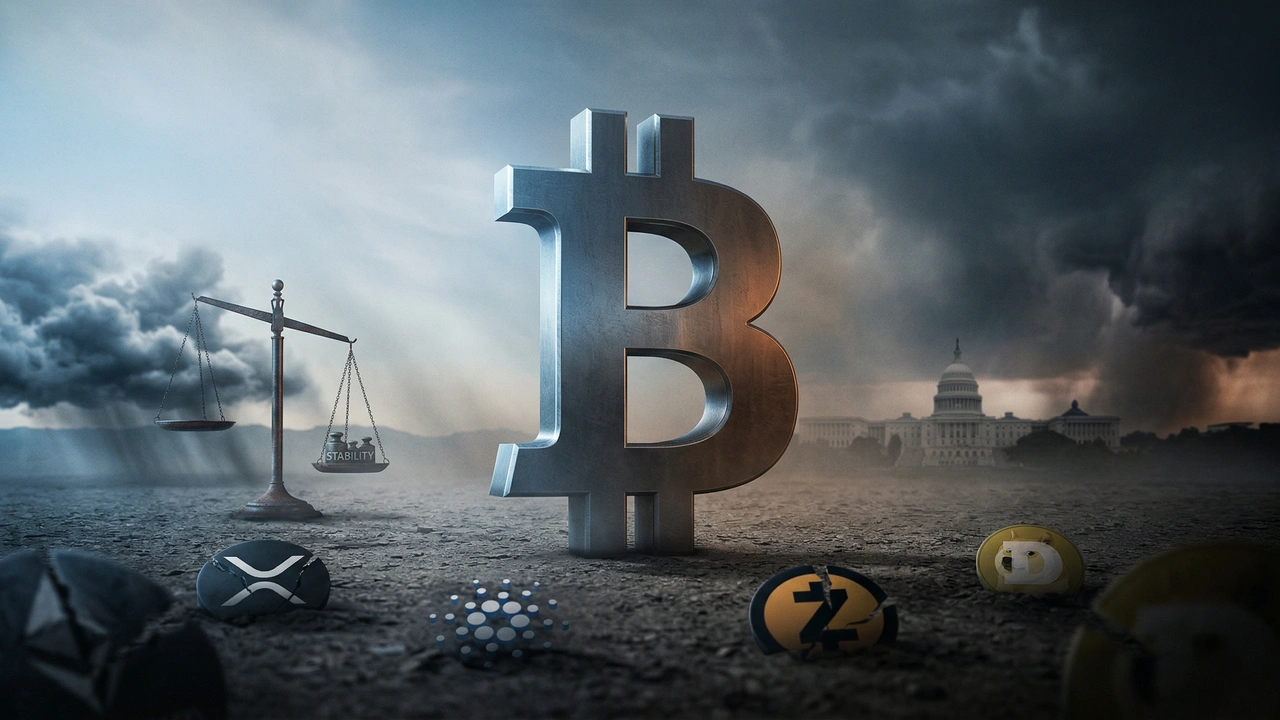
Bitcoin is hovering near $70,000 in what analysts describe as 'quiet consolidation rather than outright stress,' even as geopolitical tensions, inflation fears, and broader crypto market pain intensify the pressure on digital assets.
Key Takeaways
- Bitcoin's consolidation near $70,000 is being characterized by professional trading firms as orderly accumulation rather than panic selling — a meaningful distinction in a hostile macro environment.
- The OECD's projection of 4.2% US inflation in 2026 and renewed rate hike speculation represent the primary macro risk vectors for Bitcoin in the near term; monitoring Fed signals will be critical.
- Bitcoin's relative outperformance versus major altcoins (down 20% vs. ADA's 64% decline) reinforces its status as the crypto market's defensive anchor during periods of capital contraction.
- The broader geopolitical risk premium — Iran tensions, oil price volatility, and recession fears — keeps macro firmly in control of short-term BTC price direction; technical setups are secondary to macro resolution.
- Range traders should note that a breakdown below current support levels could accelerate losses toward new cycle lows, while a sustained move above near-term resistance could trigger the compression breakout some analysts are projecting toward $80,000.
Bitcoin Holds at $70K Amid Macro Storms: Stress or Strength?
In a market environment defined by geopolitical anxiety, rising inflation expectations, and a crypto bear market that is leaving few assets unscathed, Bitcoin is doing something quietly remarkable — holding its ground. While altcoins are being eviscerated and macroeconomic headwinds grow more ferocious by the week, BTC's refusal to capitulate raises a critical question for investors: is this consolidation the calm before a storm, or the foundation for the next leg higher?
The answer, as always, lies in understanding what the data is actually telling us — and what it is conspicuously not saying.
The Facts
Bitcoin experienced daily losses approaching 3% at Thursday's Wall Street open, with BTC/USD briefly nearing $69,000 for the first time since Monday [2]. The selling pressure coincided with escalating tensions in the US-Iran conflict, as US President Donald Trump publicly warned Iranian negotiators on Truth Social that they had better "get serious soon, before it is too late" [2]. The geopolitical uncertainty pushed US stock markets into the red at the open and reignited fears about the longer-term inflationary consequences of a prolonged Middle East conflict.
Those inflation fears are far from abstract. The Organisation for Economic Co-operation and Development (OECD) now projects US inflation at 4.2% for 2026 — the highest reading among G7 nations — prompting trading resource The Kobeissi Letter to flag that potential interest rate hikes by both the US Federal Reserve and the European Central Bank are "back on the table" [2]. Rate hike expectations represent one of the most direct macro headwinds for risk assets, including Bitcoin, as tighter monetary conditions historically suppress speculative appetite and liquidity.
Despite this backdrop, trading firm QCP Capital offered a notably measured read of Bitcoin's price action. In its daily "Market Color" analysis, QCP described BTC as exhibiting "quiet consolidation" rather than "outright stress," characterizing the broader setup as "not obviously bearish" [2]. The firm observed that Bitcoin is "trading like an asset being accumulated on dips but not yet chased," with the range holding and market structure remaining "defensive but orderly" [2]. Crucially, QCP placed macro developments firmly in the driver's seat of short-term price direction.
The broader crypto market context makes Bitcoin's relative stability all the more striking. On a year-over-year basis, Bitcoin has declined approximately 20% — painful, but modest compared to the carnage elsewhere [1]. XRP has shed 43% over the same period, while Cardano has collapsed by a staggering 64%, leaving ADA holders deeply frustrated and prompting Cardano founder Charles Hoskinson to publicly urge his community to stop fixating on price and start actually using the network [1]. Even Zcash, which had surged nearly 500% over the prior year on privacy-feature enthusiasm, is now retreating sharply, trading near $221 and testing critical technical support levels around $218 [3]. The contrast between Bitcoin's measured decline and the broader altcoin devastation is a data point that demands serious attention.
Analysis & Context
What the current environment reveals is a familiar but important Bitcoin dynamic: in periods of genuine macro stress, Bitcoin tends to decouple from altcoins not by surging, but by declining less. This pattern has precedent. During the 2022 bear market and the 2018-2019 downturn, Bitcoin's dominance metric climbed steadily as speculative capital abandoned the long tail of the crypto market and concentrated in what investors perceive as the most credible, liquid, and defensible digital asset. A 20% year-over-year drawdown for Bitcoin against a 43-64% collapse in major altcoins is not a coincidence — it reflects a flight to relative quality within an asset class that is itself under pressure.
The QCP Capital framing of Bitcoin being "accumulated on dips but not yet chased" is historically consistent with mid-bear-market behavior that precedes meaningful recoveries. Accumulation phases are, by definition, unexciting — they are characterized by suppressed volatility, range-bound price action, and persistent skepticism. The very fact that most market participants remain highly risk-averse and are bracing for new macro lows [2] is, from a contrarian standpoint, a meaningful data point. Markets rarely bottom when consensus is bullish. The OECD's grim inflation forecast and the prospect of renewed rate hikes do represent genuine headwinds, but Bitcoin has navigated hostile monetary environments before. The 2022 Fed tightening cycle drove BTC from $69,000 to below $16,000 — a severity that the current drawdown has not yet approached, which suggests either that the market has already substantially priced in macro deterioration, or that the worst is still ahead.
Perhaps the most instructive signal in the current data set is what is happening in the altcoin market. The collapse of ADA, XRP, ZEC, and dozens of other assets is a reminder that Bitcoin's network effects, institutional infrastructure, and narrative coherence create a structural floor that most alternative cryptocurrencies simply cannot replicate. Hoskinson's plea for Cardano users to actually use the chain — rather than merely speculate on its price — inadvertently underscores a fundamental truth: utility adoption is extraordinarily difficult to build in a bear market, and without it, altcoin valuations remain largely speculative premiums on top of unproven thesis.
Sources
AI-Assisted Content
This article was created with AI assistance. All facts are sourced from verified news outlets.