Bitcoin Payments Become Everyday-Ready: The New Infrastructure Era
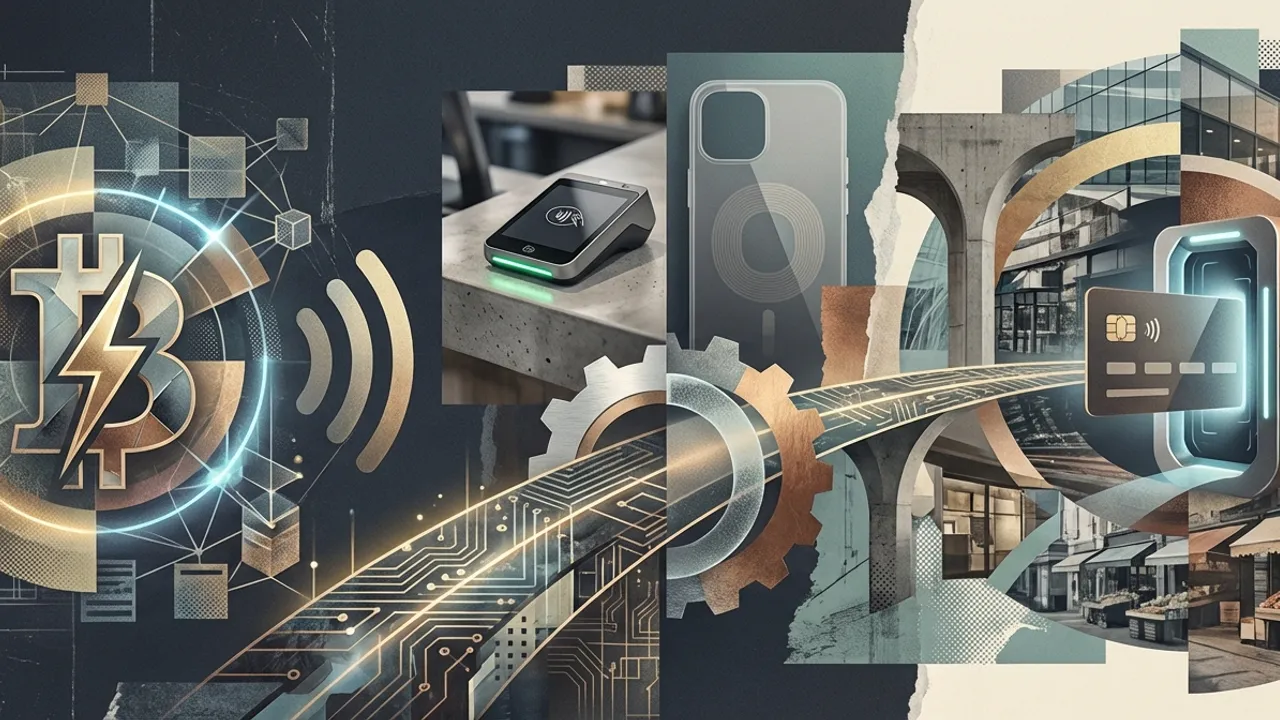
With NFC-based tap-to-pay solutions and Lightning integration, paying with Bitcoin is finally becoming as simple as Apple Pay. The critical hurdle was never the technology, but the user experience.
Bitcoin Payments Stand on the Brink of Mass-Market Viability
The greatest irony in Bitcoin's history: While Satoshi Nakamoto explicitly designed Bitcoin as a digital means of payment, the first cryptocurrency primarily evolved into a store of value and speculative asset. But a new generation of payment infrastructure could fundamentally change this. The crucial insight: The technical feasibility of Bitcoin payments was never the problem—it was the user experience. With contactless tap-to-pay solutions that make Bitcoin payments as simple as Apple Pay or Google Pay, the tide may now be turning.
This development comes at a critical juncture. While El Salvador's experiment with Bitcoin as legal tender exposed the limits of pure top-down adoption, new technological approaches demonstrate how Bitcoin payments can work where they solve real problems—not through government mandates, but through superior user experience.
The Facts
The Numo project has released an Android app that enables Bitcoin payments via NFC—without additional hardware [1][2]. Merchants only need an NFC-enabled Android smartphone, customers hold their device to it, and within seconds the payment is completed. The app is based on Cashu, an open-source ecash protocol for Bitcoin, but also supports traditional Lightning payments [1][2]. Particularly noteworthy: The system works offline as well, which can be crucial for brick-and-mortar retail with unstable internet connections [1].
The technical implementation is elegant: When tapping, the customer's wallet reads an NFC signal emulated by the merchant's smartphone and transmits a payment token back [1]. For merchants, Numo offers an automatic payout function—once a set threshold is reached, amounts are automatically forwarded to a personal Lightning address [1][2]. The project charges no platform fees, is open source under MIT license, and is currently offered as an APK download, with a Google Play Store release forthcoming [1][2].
This development stands in contrast to the sobering findings from existing Bitcoin payment systems. A 2025 survey by the National Cryptocurrency Association found that 39% of crypto owners have already used cryptocurrencies to purchase goods or services [3]. However, these surveys do not distinguish between Bitcoin and other assets and do not capture frequency of use [3]. Another study by GM Global Cryptocurrency Insights from 2024 shows that only 11% of respondents actively use crypto for purchases, while 19% express interest in using it for everyday transactions [3].
El Salvador provides perhaps the most instructive case study. Despite introducing Bitcoin as legal tender in 2021 and initial incentive programs, retail adoption did not grow significantly [3]. Only a fraction of citizens used Bitcoin for regular transactions, and most businesses accepting BTC reported very low volumes [3]. The analysis identifies volatility, rapid reconversion of incentives to cash, lack of compelling reasons for merchants, and usability problems for non-technical users as primary reasons [3]. In early 2025, as part of an agreement with the IMF, mandatory Bitcoin acceptance for private companies was lifted [3].
Data from payment processors shows consistent patterns: Transaction volumes are higher in online commerce than in brick-and-mortar retail, average purchase amounts often exceed typical retail spending, and categories like travel, luxury goods, digital services, and electronics appear more frequently [3]. Also noteworthy is that stablecoins now account for a large portion of crypto payments—in both B2B and P2P contexts [3]. For merchants, receiving dollar-pegged tokens is easier to account for and convert than holding Bitcoin [3].
Analysis & Context
The divergence between technical possibility and actual use of Bitcoin payments has always been primarily a UX problem, not a protocol problem. Numo's approach addresses precisely this discrepancy: By replicating the familiar tap-to-pay experience of contactless card payments, the app eliminates the psychological barrier of the "crypto feeling." For mass adoption, this may be more important than any technical innovation.
The offline capability solves a practical problem often overlooked in previous Lightning solutions. Markets, festivals, rural areas, or stores with weak cellular reception are not niche cases—they represent a substantial portion of global retail. The combination of Cashu for offline payments and Lightning for online transactions creates redundancy and flexibility.
El Salvador's experience confirms a fundamental truth: Payment systems cannot be mandated from above. They must grow organically by solving real problems better than existing alternatives. The low adoption despite legal obligation shows that Bitcoin payments cannot compete with functioning fiat systems when the only advantage is ideological in nature. Instead, Bitcoin payments thrive where they offer superior properties: cross-border transactions, circumvention of capital controls, censorship-resistant donations, or high-value purchases with high card fees.
The increasing dominance of stablecoins in payment transactions is sobering for Bitcoin purists, but economically rational. Merchants and consumers want price stability. The strategic question is whether Bitcoin payment infrastructure—particularly the Lightning Network—can serve as a neutral settlement layer for various assets, or whether separate payment networks will develop. Numo's support for both Cashu and Lightning suggests a pragmatic multi-protocol approach.
Historically, payment innovations follow a predictable pattern: They begin in niches with specific pain points and gradually expand as infrastructure matures and network effects take hold. Credit cards took decades to achieve broad acceptance. Mobile payments like Alipay first dominated in China, where credit card penetration was low, before gaining global relevance. Bitcoin payments could follow a similar path: strong in specific use cases, gradually expanding as UX hurdles fall.
Conclusion
• User-friendliness, not technical feasibility, has been the greatest hurdle for everyday Bitcoin payments—tap-to-pay solutions like Numo eliminate this psychological barrier through familiar user experience
• El Salvador's experience proves that Bitcoin adoption cannot be mandated—it must grow organically by solving real problems better than existing systems
• Bitcoin payments are already happening today in specific niches: cross-border business payments, travel, electronics, censorship-resistant donations, and high-value transactions with high card fees
• The combination of offline capability (Cashu), Lightning integration, and hardware-free implementation creates the infrastructure for the next adoption cycle—especially in markets with unstable internet connectivity
• Competition with stablecoins in payment transactions is real, but Bitcoin payment infrastructure could serve as a neutral settlement layer for various assets, rather than focusing exclusively on BTC denomination
Sources
AI-Assisted Content
This article was created with AI assistance. All facts are sourced from verified news outlets.