Bitcoin's Security Crisis: Insider Threats and Quantum Risks Converge
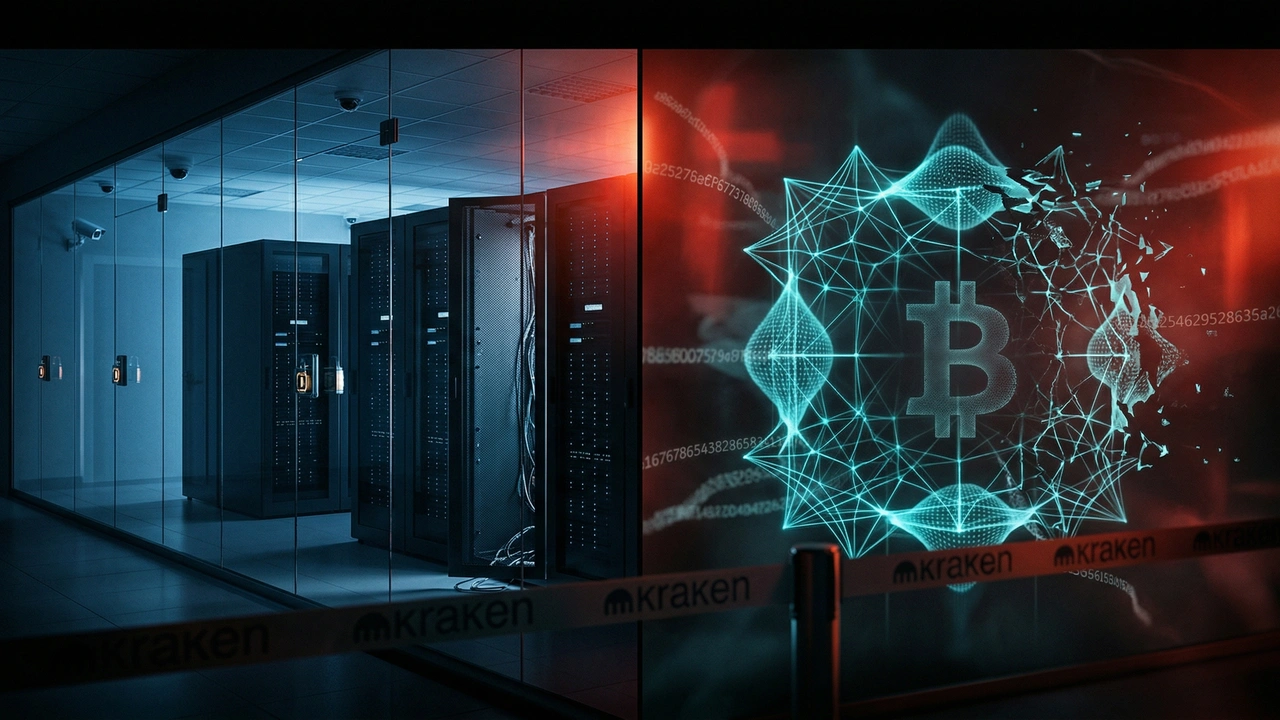
From Kraken's extortion ordeal to dormant wallets exposed to quantum computing, Bitcoin's security landscape faces pressure from two distinct but equally serious threat vectors that demand urgent attention from the industry.
Key Takeaways
-
Insider threats are a persistent and underappreciated exchange risk: Kraken's disclosure that ~2,000 accounts were accessed via support staff misuse — not external hacking — confirms that human-layer vulnerabilities inside exchanges can be as dangerous as technical exploits, and users should diversify custodial exposure accordingly [2].
-
Extortion, not data theft, is increasingly the end game: The criminal group's demand strategy against Kraken signals a maturation of attack playbooks in crypto — threat actors now monetize access through reputational leverage rather than direct fund theft, making transparency and law enforcement cooperation the strongest defensive posture [2].
-
Quantum risk is real but highly concentrated: The threat to Bitcoin's cryptography is not a network-wide switch that flips overnight — it is a targeted risk affecting dormant wallets with exposed public keys, particularly old P2PK outputs and early mining rewards that haven't moved in over a decade [1].
-
Active users can protect themselves; dormant wallets cannot: Migrating to modern address formats, avoiding address reuse, and staying alert to future quantum-resistant protocol upgrades are meaningful defensive steps for active participants — but they offer zero protection to lost or abandoned wallets, which remain permanently exposed [1].
-
Bitcoin's governance will face its hardest test when quantum capability matures: The industry needs to begin serious, structured conversation now about how to handle cryptographically exposed dormant coins before quantum computers force the issue — waiting for a crisis to trigger that debate will be far more costly than preemptive protocol research [1].
Bitcoin's Security Perimeter Is Being Tested From Every Angle
Bitcoin security has long been framed as a binary proposition: either the network holds, or it doesn't. That framing is dangerously simplistic. Two developments now making waves across the industry reveal a far more nuanced and sobering picture — one in which threats don't announce themselves with a dramatic network collapse, but instead probe quietly for structural weaknesses hiding in plain sight. The attack surface is broader than most users appreciate, and it spans from the human layer inside exchange support desks all the way to the cryptographic foundations that have underpinned Bitcoin's value proposition since 2009.
Taken together, the Kraken insider threat incident and the emerging quantum computing vulnerability narrative form a coherent warning: Bitcoin's greatest risks may not come from brute-force frontal attacks, but from exploitation of dormant weaknesses that the ecosystem has been slow to address.
The Facts
Crypto exchange Kraken disclosed two separate insider-related security incidents involving support staff who gained inappropriate access to limited client data [2]. According to the company, neither incident resulted in a systems breach, and no client funds were placed at risk at any point [2]. Both events involved misuse of internal support tools — not core trading infrastructure — and access was revoked upon discovery in each case [2].
The situation escalated significantly when a criminal group issued extortion demands, claiming to possess video footage of internal systems containing client data and threatening to release the material publicly unless Kraken complied [2]. Kraken's Chief Security Officer Nick Percoco responded with an unambiguous refusal: "Our systems were never breached; funds were never at risk; we will not pay these criminals" [2]. The exchange confirmed that approximately 2,000 client accounts — roughly 0.02% of its global user base — were potentially viewed across both incidents, with exposed information limited to support-tier data rather than financial controls [2]. Kraken is now cooperating with law enforcement across multiple jurisdictions and expressed confidence that those responsible can be identified and pursued [2].
On the cryptographic front, analysis of Bitcoin's quantum computing vulnerability reveals that the risk is far more targeted than the popular doomsday narrative suggests [1]. Bitcoin's security relies on two distinct components: SHA-256 hash functions used in mining, and public-key cryptography (ECDSA/Schnorr) used for transaction signatures [1]. While hash functions retain meaningful resilience against quantum algorithms, public-key cryptography is significantly more exposed — specifically, Shor's algorithm could theoretically allow a sufficiently powerful quantum machine to derive a private key from a known public key [1]. The critical factor is which addresses already have their public keys visible on-chain, a condition that applies overwhelmingly to old Pay-to-Public-Key (P2PK) outputs from Bitcoin's early years and to any address from which a transaction has already been broadcast [1].
Dormant wallets represent the highest-concentration risk category within this threat model [1]. Coins that haven't moved in over a decade — many of them early mining rewards of 50 BTC blocks — sit permanently exposed with no ability to migrate to quantum-resistant formats [1]. Unlike active wallets, these holdings cannot be upgraded, cannot respond to protocol changes, and their owners may be entirely unreachable [1]. In a separate but related disclosure, Galaxy Digital also reported a cybersecurity incident involving unauthorized access to an isolated development environment, though the firm stated that no client data or funds were affected [2].
Analysis & Context
The Kraken incident is a textbook illustration of why insider threats remain one of the most underappreciated risks in the digital asset industry. External hacks generate dramatic headlines, but the historical record shows that some of the most damaging breaches in financial services — crypto or otherwise — have originated from within. The 2014 Mt. Gox collapse involved internal mismanagement; the 2022 FTX implosion was an inside job by definition. Kraken's case differs in scale and outcome — it was identified and contained — but it underscores a structural tension that every exchange faces: support roles require account visibility, and that visibility creates an attack vector. The criminal group's pivot to extortion when direct exploitation failed reveals a sophisticated understanding of reputational leverage in an industry where user trust is the primary product.
Kraken's refusal to pay and its immediate engagement with law enforcement sets a commendable precedent, but it also highlights the uncomfortable reality that no exchange can fully eliminate the insider threat vector without compromising the operational capability to serve customers. The industry's growing reliance on AI-assisted support and zero-knowledge architectures may eventually reduce human exposure to raw client data, but those solutions remain immature and inconsistently deployed across the ecosystem.
The quantum computing threat deserves equally serious treatment, even though its timeline is measured in years rather than weeks. The tiered risk model is the key analytical insight here: the Bitcoin network as a whole is not imminently vulnerable, but a specific and identifiable subset of its supply — old P2PK outputs, reused addresses, and long-dormant wallets — faces a structurally different threat profile than modern, actively managed holdings [1]. This creates a governance paradox with no clean resolution. If quantum machines eventually reach sufficient capability, the Bitcoin community will face an agonizing choice between protocol immutability and the potential mass redistribution of early-era coins. Freezing dormant addresses raises profound questions about property rights; leaving them exposed invites a supply shock of unknown magnitude. The debate will intensify well before the technology arrives.
Sources
AI-Assisted Content
This article was created with AI assistance. All facts are sourced from verified news outlets.