Bitcoin's Twin Threats: Fraud Billions and the Quantum Time Bomb
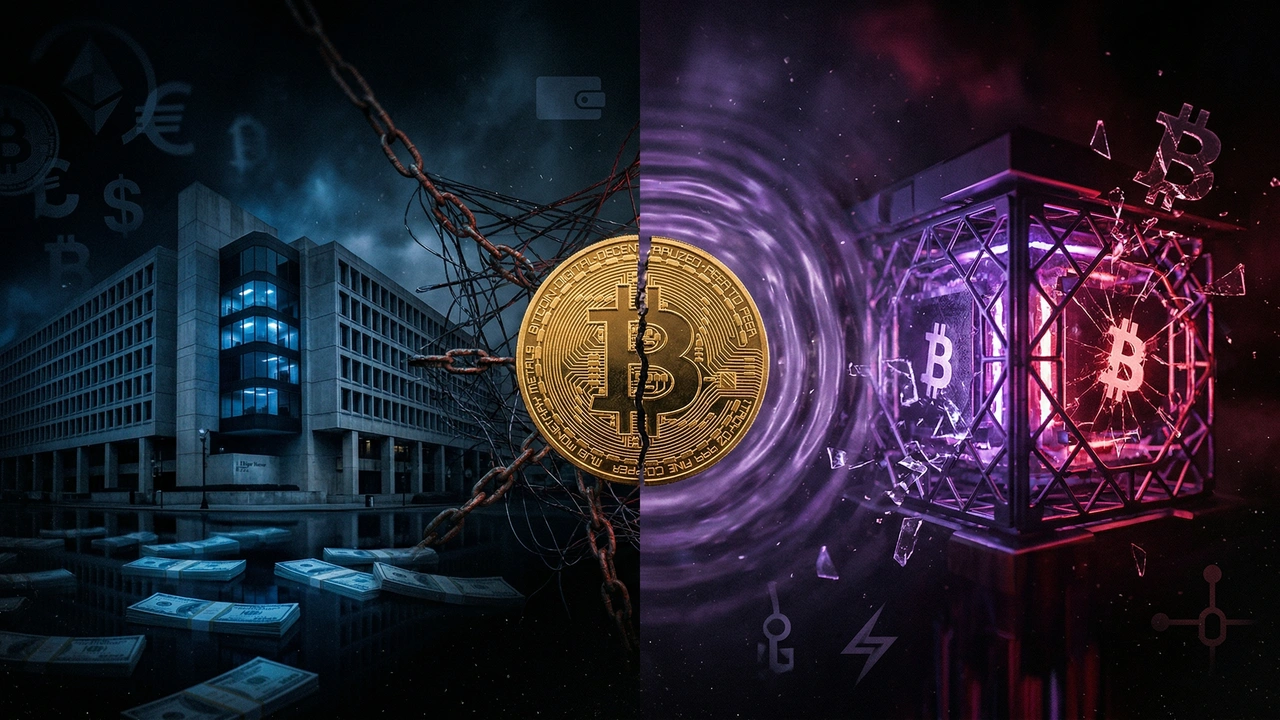
As FBI data reveals $11 billion lost to crypto fraud, a leading Bitcoin developer warns that quantum computing poses a deeper structural vulnerability — one that even careful users may be unable to avoid.
Key Takeaways
- The FBI has recorded approximately $11 billion in crypto fraud losses, with AI-enhanced scam techniques making fraudulent schemes progressively harder for victims to identify — due diligence on any investment platform is non-negotiable [1].
- The assumption that avoiding address reuse provides quantum protection is insufficient; Wertheimer's analysis demonstrates that public key exposure through Lightning Network activity and hardware wallet connections may already have created lasting vulnerabilities [2].
- Lightning Network users face a structurally unique quantum risk: the protocol requires public key publication by design, meaning there is currently no straightforward mitigation path available to developers [2].
- Bitcoin has navigated major technical transitions before, but a post-quantum upgrade would be the most complex in the network's history — the development community's timeline for addressing this matters enormously for long-term holders.
- The dual threats of social engineering fraud and cryptographic vulnerability both reward the same user behavior: skepticism toward high-yield promises, minimal unnecessary key exposure, and active engagement with Bitcoin's evolving security landscape.
Bitcoin Faces a Two-Front War: Criminal Exploitation and Cryptographic Fragility
Bitcoin's growing mainstream presence has attracted two distinct categories of threat that, taken together, paint a sobering picture for anyone holding or transacting in digital assets. On one front, sophisticated fraud networks are extracting billions from unsuspecting investors with increasing efficiency. On another, a longer-horizon but potentially more systemic risk is crystallizing: the prospect that quantum computing could one day render Bitcoin's cryptographic foundations dangerously exposed. Understanding both threats — and how they interact with user behavior — has never been more urgent.
These are not abstract risks confined to academic papers or distant regulatory hearings. They are active, evolving challenges that demand informed responses from every participant in the Bitcoin ecosystem, from long-term holders to Lightning Network users to institutional custodians.
The Facts
The Federal Bureau of Investigation has documented staggering losses from cryptocurrency-related fraud, with Americans alone suffering approximately $11 billion in damages from crypto scams [1]. The FBI's findings highlight that criminal methodology is becoming increasingly sophisticated, with perpetrators deploying convincing fake platforms, fabricated celebrity endorsements, and emotionally manipulative romance scams to extract funds from victims [1]. A particularly alarming trend is the integration of AI-assisted techniques that make fraudulent schemes harder to detect and easier to scale [1].
The structural appeal of cryptocurrency for criminals is well-documented in the report: global accessibility combined with transaction opacity creates an environment where stolen funds are difficult to trace and recovery is rare [1]. Victims frequently realize they have been defrauded only after significant time has passed, further reducing any chance of asset recovery. The FBI's data makes clear that as Bitcoin adoption accelerates, so too does the attack surface available to organized fraud networks [1].
On the cryptographic front, Bitcoin developer Udi Wertheimer has issued a sharp technical warning that challenges widely held assumptions about quantum resilience [2]. The conventional wisdom — that avoiding address reuse effectively shields users from a future Cryptographically-Relevant Quantum Computer (CRQC) — is, according to Wertheimer, dangerously incomplete [2]. The core vulnerability lies not in address reuse per se, but in the exposure of public keys. A sufficiently powerful quantum computer could theoretically derive a private key directly from a known public key, bypassing the protections that current elliptic curve cryptography provides [2].
Wertheimer's analysis is particularly damning for Lightning Network participants. Unlike on-chain Bitcoin transactions where public keys can be obscured through single-use addresses, the Lightning Network's architecture requires participants to publish their public keys in order to open and manage payment channels [2]. This means that entities such as large Lightning node operators — and anyone who has interacted with their infrastructure — may have already exposed public key data that could be exploited once quantum computing reaches sufficient capability [2]. Hardware wallets, often considered the gold standard of key security, are also implicated: Wertheimer notes that these devices expose public keys whenever they connect to a host application, meaning that data may already reside on third-party servers vulnerable to future quantum attacks [2]. His conclusion regarding the Lightning Network is unambiguous — he describes it as "fundamentally broken" in a post-quantum world, with no currently available isolated fix for developers [2].
Analysis & Context
The convergence of these two threat vectors reveals something important about Bitcoin's maturation as an asset class: success brings adversaries. The $11 billion fraud figure is not merely a statistic — it represents a criminal industry that has professionalized around Bitcoin's growth. Historically, every major wave of retail crypto adoption has been followed by a corresponding surge in scam activity. The 2017 ICO boom, the 2020-2021 bull cycle, and now the post-ETF approval era have each produced record fraud figures. What's different today is the deployment of AI tools that can generate hyper-realistic fake personas, deepfake video endorsements, and automated social engineering at scale. The barrier to entry for running a sophisticated crypto scam has collapsed.
The quantum computing threat operates on a different timeline but deserves equally serious attention. Wertheimer's analysis is technically credible and raises questions that the Bitcoin development community cannot defer indefinitely. Bitcoin has undergone significant protocol upgrades before — SegWit and Taproot being notable examples — demonstrating that the network can adapt when consensus is achieved. However, a post-quantum migration would be orders of magnitude more complex, requiring not just a soft fork but potentially a coordinated migration of all existing UTXOs. The challenge is particularly acute for coins in wallets whose public keys have already been exposed, as Wertheimer outlines. Satoshi's own early coins, mined using Pay-to-Public-Key (P2PK) outputs with permanently exposed public keys, represent a symbolic and practical vulnerability in this scenario. The Bitcoin community has been aware of quantum risks in theory for years, but Wertheimer's specific focus on Lightning Network's structural exposure adds a new and pressing dimension to the debate.
For investors and users, the intersection of these threats underscores a principle that has always been true of Bitcoin but is increasingly urgent: self-custody practices, transactional hygiene, and awareness of protocol-level risks are not optional extras — they are core competencies. The fraud landscape punishes complacency, and the quantum horizon, however distant, rewards preparation.
Sources
- [1]btc-echo.de
- [2]btc-echo.de
AI-Assisted Content
This article was created with AI assistance. All facts are sourced from verified news outlets.