Blockchain's Dual Frontier: Quantum Threats, Frictionless Payments
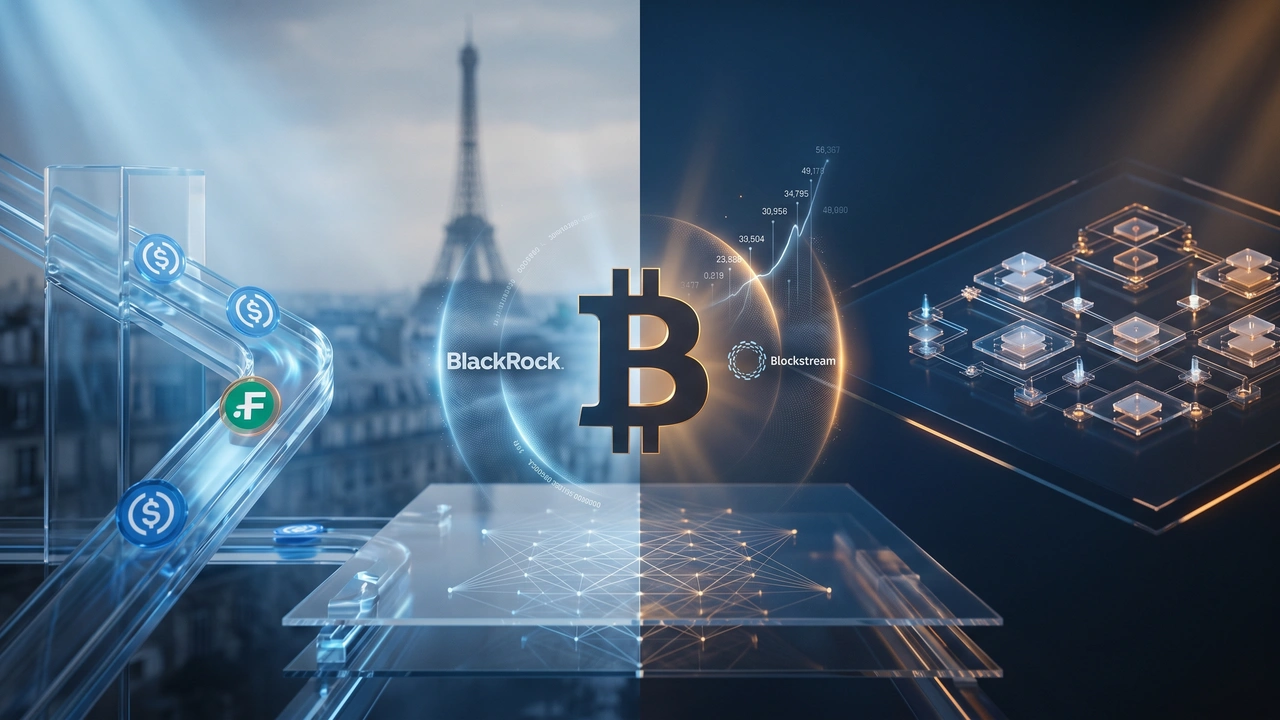
From Sui's fee-free stablecoin rails to Adam Back's measured rebuttal of quantum alarmism, the blockchain industry is quietly solving tomorrow's infrastructure problems today - and Bitcoin is emerging as the long-term anchor of both stories.
Key Takeaways
- Sui's elimination of gas fees for stablecoin transfers removes one of the most persistent UX barriers to blockchain payment adoption, and the trillion-dollar-plus volume figure since August 2025 validates real demand for frictionless on-chain settlement [1].
- Adam Back's assessment at Paris Blockchain Week 2026 offers a disciplined corrective to quantum alarmism: the threat is real in theory but operationally distant, and the industry already has a credible transition roadmap via NIST standards and projects like SHRINCS [2].
- Blockstream's live post-quantum transaction on the Liquid sidechain in March 2026 demonstrates that quantum-resistant cryptography for Bitcoin is no longer theoretical - it is being field-tested now [2].
- Institutional Bitcoin demand - across ETFs, corporate treasury vehicles, and trust products - is accumulating at a pace that Back argues could support a price range of 500,000 to one million dollars within two years, grounded in observable supply-and-demand dynamics rather than speculation [2].
- The broader lesson from both stories is that blockchain infrastructure is maturing through deliberate engineering decisions, not hype cycles - which makes the current environment more structurally significant than most short-term price action suggests.
Blockchain's Two Biggest Questions - Answered Differently Than You'd Expect
The conversation around blockchain infrastructure in 2026 is being defined by two very different anxieties: whether quantum computers will eventually crack cryptographic security, and whether public blockchains can ever achieve the seamless payment experience needed for mainstream adoption. This week delivered substantive updates on both fronts - and together, they sketch a more mature, more strategically nuanced picture of where the technology is heading.
On one side, the Sui network has moved from theory to practice by eliminating transaction fee friction for stablecoin transfers. On the other, Blockstream CEO and Hashcash inventor Adam Back used the Paris Blockchain Week 2026 stage to pour cold water on what he considers an overheated quantum panic - while quietly pointing to the institutional momentum driving Bitcoin toward historic price targets.
The Facts
Sui's mainnet now supports fee-free stablecoin transfers, removing the requirement for users or businesses to hold native SUI tokens to pay for network transactions [1]. The launch includes support for USDC, FDUSD, AUSD, and other assets within the Sui ecosystem [1]. The network frames the move as addressing one of the most persistent friction points in blockchain payments: the need to maintain a separate gas token just to move a different asset. Since August 2025, more than one trillion dollars in stablecoin volume has been processed across the network, a figure that underscores how seriously institutional and developer communities are testing its infrastructure [1].
At the Paris Blockchain Week 2026, Adam Back delivered a clear-eyed assessment of the quantum computing threat landscape [2]. While he acknowledged that the theoretical vulnerability is real, his position is that a practically viable attack on Bitcoin remains decades away [2]. The hardware required for such an attack - stable, high-precision quantum systems capable of running complex error-correction routines - is still firmly in the experimental research phase, even among the most advanced programs operated by major technology companies and academic institutions [2]. Current estimates suggest millions of stable physical qubits would be required to threaten Bitcoin's elliptic curve cryptography, a threshold that remains far beyond present capabilities [2].
Preparation is already underway, however. NIST published the first formal standards for post-quantum cryptographic methods in August 2024, setting a baseline for a gradual industry-wide transition [2]. Blockstream Research is developing SHRINCS, a compact quantum-resistant signature scheme, and conducted the first live transaction using this method on the Liquid sidechain in early March 2026 [2]. Bitcoin developers widely view the eventual integration of post-quantum cryptography as achievable through soft forks or updated wallet standards - a slow, deliberate migration rather than a crisis-driven overhaul [2].
Back sees a more immediate and material force shaping Bitcoin's trajectory: institutional demand. Strategy's STRC product raised capital for Bitcoin purchases in the range of 10,000 BTC in short order [2]. BlackRock's IBIT ETF now holds more than 806,000 BTC and has returned to net inflows after a soft start to the year [2]. The Morgan Stanley Bitcoin Trust collected over 100 million dollars in its opening week [2]. From this confluence of demand signals, Back does not rule out a Bitcoin price between 500,000 and one million dollars within the next 24 months [2].
Analysis & Context
The pairing of these two stories reveals something important about where blockchain infrastructure maturity actually stands. Sui's fee-free stablecoin model is not merely a product feature - it is a direct response to one of the oldest arguments against blockchain payments: that the user experience is too complex. Requiring someone to acquire a gas token before sending a digital dollar has long been the kind of detail that kills enterprise adoption before it starts. Removing that requirement moves Sui closer to the UX of a traditional payment rail, and the trillion-dollar volume figure since August 2025 suggests the market is validating the approach quickly [1].
Historically, the blockchains that achieved durable payment adoption were the ones that abstracted complexity away from the end user. Ethereum's multi-year struggle with gas costs, and the subsequent explosion in Layer 2 activity, illustrates how fee friction can suppress adoption even when underlying technology is sound. Sui's approach - delegating fee responsibility to the protocol rather than the wallet holder - is a structural solution, not a workaround, and it positions the network as a genuine competitor for stablecoin settlement flows that currently traverse older, more cumbersome rails.
On the quantum front, Back's measured tone at Paris Blockchain Week 2026 reflects a broader consensus emerging among serious cryptographers [2]. The NIST standards published in 2024 already called for migrations before 2030, and industry observers have noted that the post-quantum transition is best understood as a planned infrastructure upgrade rather than an emergency response. The critical distinction Back draws is between theoretical cryptographic vulnerability and operational threat - two concepts that public discourse frequently conflates. The practical gap between today's experimental quantum hardware and the millions of stable, error-corrected qubits needed to threaten Bitcoin's secp256k1 curve is vast. The more realistic near-term risk is not a sudden attack but rather inadequate preparation by organizations that wait too long to begin upgrading their cryptographic stacks. Blockstream's SHRINCS work on Liquid shows that Bitcoin's developer community is not waiting for the threat to materialize before testing solutions [2].
What ties both developments together is a shared theme: the blockchain industry is increasingly defined not by speculative narratives but by concrete infrastructure decisions. Whether it is removing fee friction for stablecoin transfers, standardizing post-quantum signatures, or accumulating BTC at institutional scale, the signals all point toward a sector that is building for longevity. Back's price thesis - grounded in ETF inflows, corporate treasury demand, and the supply constraints of a post-halving market - is not a moonshot fantasy but a supply-and-demand argument that becomes more plausible with each institutional product launch [2]. The question is no longer whether Bitcoin becomes a serious reserve asset; it is how fast that repricing occurs.
Sources
- [1]btc-echo.de
- [2]btc-echo.de
AI-Assisted Content
This article was created with AI assistance. All facts are sourced from verified news outlets.