Catastrophic Security Breaches: What South Korea's Crypto Disaster Means
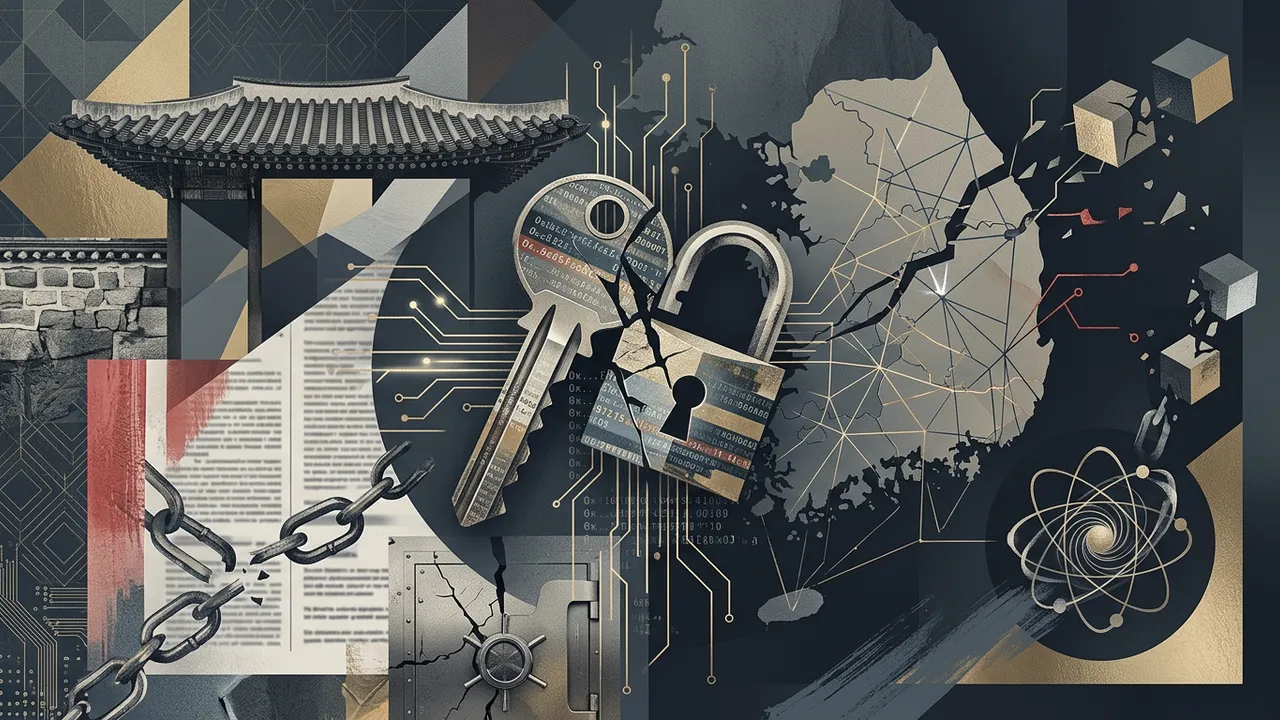
South Korea's tax authority published private keys in a press release – just one of several embarrassing incidents. The events reveal fundamental knowledge gaps in government crypto custody and raise questions about quantum security.
When Authorities Ignore Fundamental Bitcoin Rules: Lessons from South Korea's Security Disaster
What transpired in South Korea within a few months reads like a manual for how not to do things: Authorities lost millions of dollars worth of Bitcoin through phishing attacks, unsecured hardware wallets, and finally by publicly sharing private keys in a press release. This series of blunders not only reveals alarming knowledge gaps but also raises fundamental questions about government custody of digital assets – particularly as the debate over quantum computer risks occupies the community.
The Facts
South Korea's crypto disaster began in August 2025, when employees of the Gwangju District Prosecutor's Office fell for a phishing website and lost 320 Bitcoin that had been seized from an illegal online gambling case [1]. Of the originally confiscated 1,798 BTC, 1,476 BTC had already been untraceable, leading to allegations against officials – however, searches revealed no evidence of embezzlement [1].
A nationwide review of crypto custody in December 2025 uncovered further failures: Gangnam police had lost 22 Bitcoin from a hacking case because they failed to transfer the coins from the affected company's hardware wallet to their own address – meaning the officials were not in sole possession of the private keys [1]. In mid-February, the 320 Bitcoin suddenly reappeared, presumably because the hacker returned them out of fear of investigation, which again raised doubts about the official narrative [1].
The most recent and arguably most embarrassing incident occurred last week: South Korea's National Tax Service (NTS) published photos in a press release about the confiscation of assets from 124 tax evaders that showed not only cash and Ledger hardware wallets but also uncensored seed phrases [1]. As expected, 4 million PRTG tokens with a theoretical value of $4.8 million were subsequently withdrawn from the compromised wallet in three transactions [1].
The tax authority admitted the error: "We failed to recognize that the original photo contained sensitive information about virtual assets and passed it on to the media without the required caution. This is solely the fault of the National Tax Service," a statement said [1]. Finance Minister Koo Yun-cheol announced a comprehensive review of the custody of state-owned digital assets [1].
An internet user who accessed the wallet "out of curiosity" reported to police and claimed to have returned the tokens [1]. On-chain data confirms that the PRTG tokens returned to the original wallet 20 hours later and were immediately transferred onward – whether they are back under government control remains unclear [1].
Meanwhile, the crypto community is grappling with questions about quantum computer risks. A BTC-ECHO survey of more than 7,100 German-speaking investors found that nearly 60 percent do not consider quantum computers a threat to Bitcoin, while 33 percent see a serious risk [2]. Ethereum co-founder Vitalik Buterin has already defined quantum resistance as a central pillar of the new roadmap [2]. For Bitcoin, discussions are ongoing about proposal BIP 360, a concrete solution approach for quantum security, while Michael Saylor sees danger "only in 10 years" [2].
Analysis & Assessment
The South Korean incidents reveal a fundamental problem: Government institutions often still treat Bitcoin and cryptocurrencies like traditional assets without understanding the specific security requirements. The golden rule "Not your keys, not your coins" applies equally in reverse: whoever makes private keys public irreversibly loses control. That a tax authority would violate this basic rule in an official press release is not just embarrassing – it demonstrates systematic failure in training and processes.
Particularly concerning: The incidents didn't occur in a crypto-skeptical country, but in South Korea, one of the world's most active crypto nations. If even there basic custody errors happen, it raises questions about global government competence in handling digital assets. The United States has already shown with its own custody problems that no country is immune to such blunders [1].
The parallel to the quantum computer debate is instructive: While the community discusses theoretical future risks, authorities are already failing at the basics of today's crypto security. While the BTC-ECHO survey shows a certain composure among investors regarding quantum risks [2], the South Korean cases demonstrate that the greatest danger to Bitcoin holders doesn't lie in the distant future, but in human failure today.
For Bitcoin itself, the government mishaps are ultimately an argument for the underlying value proposition: self-custody without intermediaries. At the same time, they underscore the need for better education and professional custody solutions – especially as governments begin building strategic Bitcoin reserves, as the United States is already doing [1]. Without fundamental understanding of the technology, such initiatives become a risk rather than an opportunity.
Conclusion
• South Korea's series of crypto blunders – from phishing to insecure wallets to publicly shared seed phrases – demonstrates alarming knowledge gaps among government authorities in handling digital assets
• The incidents show that the greatest threat to Bitcoin security doesn't come from hypothetical quantum computers, but from fundamental human failure in applying currently available security practices
• While 60 percent of German-speaking investors view quantum risks with composure, the South Korean cases underscore the urgency of better education and professional custody standards – particularly for institutional and government actors
• For governments wanting to build strategic Bitcoin reserves, developing robust custody concepts is not optional but a mandatory prerequisite – the alternative is millions in losses through avoidable errors
• The events confirm Bitcoin's core promise of self-custody: "Not your keys, not your coins" remains the most important security rule – especially and particularly regarding government institutions
Sources
AI-Assisted Content
This article was created with AI assistance. All facts are sourced from verified news outlets.