Code Vulnerabilities: Bitcoin Cleans House While XRP Narrowly Avoided Collapse
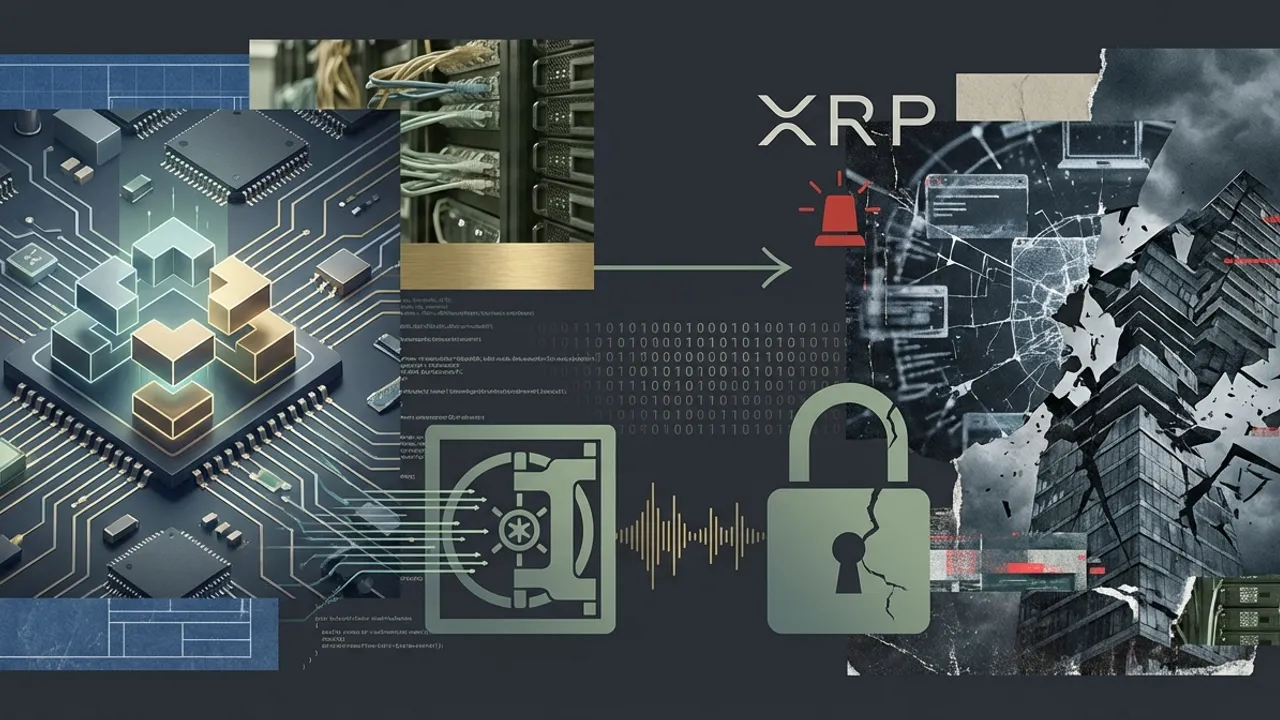
While Bitcoin proactively addresses historical vulnerabilities with BIP 54, the XRP Ledger narrowly escaped a critical bug that could have crippled the entire network. A lesson in protocol security.
Security by Design: Two Contrasting Approaches Compared
While Bitcoin developers present BIP 54 as a methodical proposal for preventively addressing theoretical vulnerabilities, the XRP Ledger recently had to implement an emergency patch to fix a critical bug that could have destabilized the entire network. The two incidents vividly illustrate how differently blockchain protocols handle security issues – and what consequences these approaches have for users and investors.
The Facts
With BIP 54, the so-called "Consensus Cleanup," a soft fork proposal for Bitcoin addresses no new features but exclusively tackles historical legacy issues and theoretical vulnerabilities in the consensus code [1]. The proposal focuses on four core areas: fixing the "Timewarp attack," cleaning up historical coinbase and TXID special rules, limiting potentially executable signature operations, and eliminating Merkle tree ambiguity [1].
The Timewarp attack is a theoretical vulnerability in Bitcoin's difficulty adjustment, which occurs every 2016 blocks. Miners could theoretically artificially lower the mining difficulty over multiple periods through targeted manipulation of block timestamps [1]. BIP 54 closes this gap by introducing an additional consensus condition: within a difficulty period, no block may have a timestamp that precedes the first block of that period [1].
Another point concerns historical peculiarities with transaction IDs. In Bitcoin's early phase, it was possible for two different transactions to have the same TXID. For example, in 2010, the TXID of the coinbase transaction in block 91842 was identical to that in block 91812, resulting in a loss of 50 BTC [1]. BIP 54 tightens the rules for coinbase transactions to structurally prevent future TXID duplicates [1].
In stark contrast, the XRP Ledger recently faced an acute crisis. A severe bug in the code threatened the entire ecosystem: attackers could have completely drained user wallets without the corresponding private keys [2]. Developers responded with an emergency patch called Rippled 3.1.1, which timely blocked the faulty change, averting widespread network destabilization and an XRP price crash [2].
"A successful large-scale attack could have led to significant loss of confidence in the XRPL, potentially resulting in substantial disruptions to the entire ecosystem," states an XRPL blog post [2]. The incident followed accusations by blockchain researcher and XRP critic Justin Bons, who had recently issued a warning about the XRPL [2].
Parallel to this crisis, Ripple announced a strategic restructuring: the company plans to quickly relinquish its role as sole gatekeeper and shift focus to a completely distributed financing model to make the network more open and resilient [2]. Former Ripple CTO David Schwartz defended against centralization accusations, calling them "objectively nonsensical" [2].
Analysis & Context
The two developments reveal fundamental differences in protocol architecture and philosophy. Bitcoin pursues a proactive, conservative approach: BIP 54 addresses vulnerabilities that are largely theoretical in nature and could hardly ever be exploited in practice. This preventive strategy reflects Bitcoin's core philosophy: maximum robustness through minimal complexity and long-term code maintainability.
The Timewarp vulnerability, for instance, requires unrealistic coordination of miners over long periods in a globally distributed network. Nevertheless, it is being fixed – not because there is an immediate risk, but because Bitcoin is designed for centuries. The older a decentralized protocol becomes, the more important it is to clean up historical edge cases and keep the code base consistent.
The XRP Ledger, on the other hand, faced an acute security emergency. A bug that would have allowed wallets to be emptied without private keys represents the most severe conceivable security breach – a direct attack on the fundamental ownership promise of a cryptocurrency. That such a bug could make it into production code raises questions about code review quality and testing infrastructure.
The quick response with the emergency patch demonstrates capability to act, but also underscores centralized control over the protocol. With Bitcoin, such a rapid emergency patch would be structurally impossible – and that is intentional. Bitcoin's decentralized governance with its lengthy consensus-finding process may sometimes seem frustrating, but it is also a security feature: no one can change the protocol unilaterally, neither for better nor for worse.
For investors and users, the contrast is clear: Bitcoin relies on long-term stability through conservative development, while centralized protocols can respond more quickly but also carry greater systemic risks. Ripple's announced decentralization is a step in the right direction, but true decentralization cannot simply be "implemented" retrospectively – it must be anchored in the protocol architecture from the beginning.
Conclusion
• Bitcoin demonstrates with BIP 54 a methodical, preventive security approach that fixes theoretical vulnerabilities before they could ever become real problems – a luxury that only truly robust protocols can afford
• The critical bug in the XRP Ledger that could have drained wallets without private keys reveals the inherent risks of centralized protocol development and inadequate code review processes
• Ripple's ability to quickly implement an emergency patch is simultaneously a strength and weakness: it enables rapid response but also confirms centralized control over the protocol
• BIP 54 does not make Bitcoin faster or more feature-rich, but increases long-term maintainability and robustness – an often underestimated but essential aspect of decentralized protocols
• For investors, both incidents underscore: protocol security and genuine decentralization are not marketing features, but fundamental characteristics that determine the long-term viability of a network
Sources
AI-Assisted Content
This article was created with AI assistance. All facts are sourced from verified news outlets.