FBI Chief Kash Patel's Bitcoin Bet Raises Conflict Questions
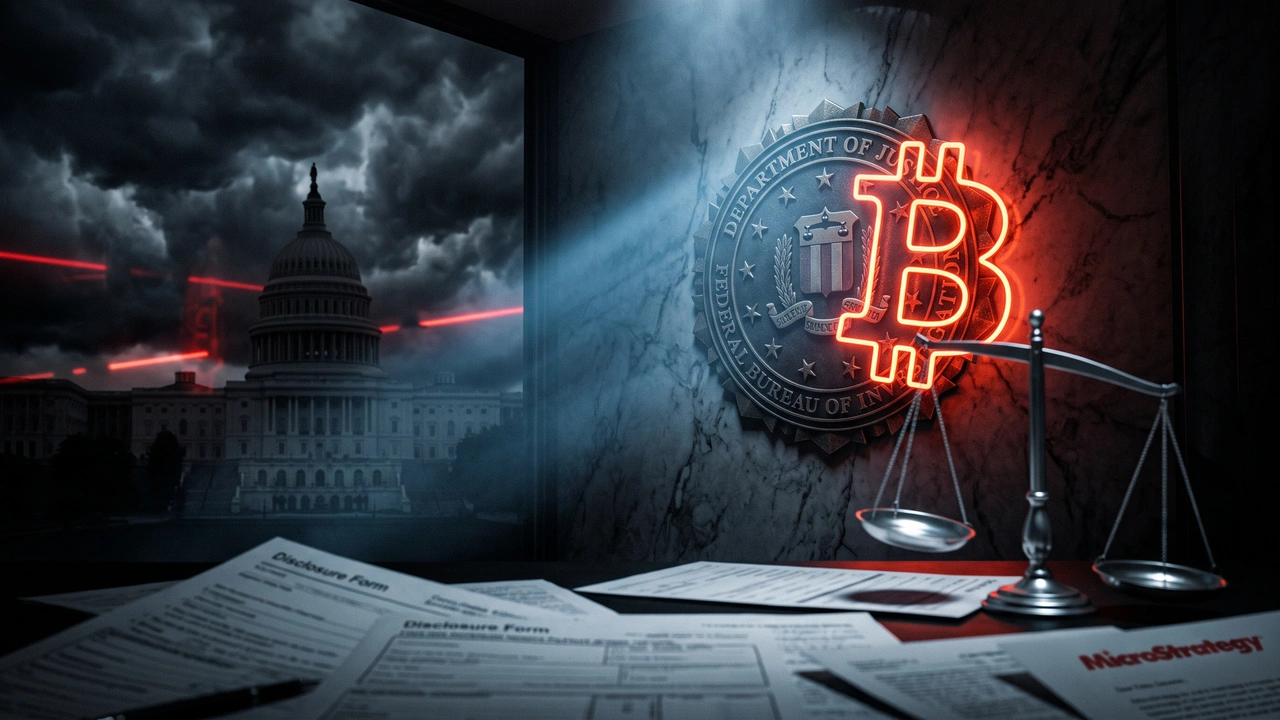
FBI Director Kash Patel disclosed a six-figure Strategy stock purchase nearly six months after the transaction - drawing scrutiny over both STOCK Act compliance and the conflict of interest inherent in leading America's top crypto-crime bureau while holding Bitcoin-linked assets.
Key Takeaways
- Patel disclosed a Strategy stock purchase worth up to $250,000 roughly six months after the transaction - well beyond the 45-day STOCK Act window - attributing the delay to an internal miscommunication.
- The conflict-of-interest concern is structural, not merely procedural: Strategy is both the world's largest corporate Bitcoin holder and a DOJ contractor, meaning Patel's financial interests intersect with his agency's investigative and vendor relationships.
- No fine has been levied and no evidence of deliberate misconduct has emerged - but the absence of wrongdoing does not dissolve the ethical ambiguity that watchdogs say the holding arrangement creates.
- Patel's case does not stand alone: it surfaced alongside Trump's own disclosure showing substantial Bitcoin and Strategy positions, plus stock purchases made the day before a market-moving tariff announcement, deepening the broader conversation about transparency in the administration.
- The episode reinforces a systemic weakness in STOCK Act enforcement - the nominal penalty provides little deterrent, and critics are using both cases to push for stricter rules governing equity trading by senior government officials.
FBI Chief Kash Patel's Bitcoin Bet Raises Conflict Questions
When Kash Patel took the helm of the FBI in February 2025, his financial disclosures already painted a picture of a Bitcoin-adjacent portfolio. What nobody knew at the time - because Patel hadn't told anyone - was that he had quietly added a significant chunk of Strategy stock to that portfolio just three months earlier. The belated revelation has ignited a debate that cuts deeper than a paperwork technicality: can the director of the nation's preeminent law enforcement body credibly police the crypto industry while personally benefiting from Bitcoin's price appreciation?
This is not a hypothetical tension. It sits at the intersection of ethics law, institutional credibility, and the rapidly expanding regulatory footprint of digital assets in Washington - and it arrives at a moment when the financial disclosures of several senior Trump administration officials are drawing simultaneous fire.
The Facts
Patel officially assumed the FBI directorship on February 21, 2025 [1]. From day one, his financial filings acknowledged a cluster of Bitcoin-related holdings: a stake in the Grayscale Bitcoin Trust ETF valued between $50,001 and $100,000, a position in the Grayscale Bitcoin Mini Trust ETF, and shares in Bitcoin mining company Core Scientific [1]. Those disclosures, however, contained a conspicuous omission.
On November 21, 2025 - three months before his confirmation - Patel had acquired shares of Strategy, the Michael Saylor-led firm that has made Bitcoin accumulation its central corporate identity, in a transaction valued between $100,001 and $250,000 [1][2]. That purchase did not appear in the financial filing he submitted to the Office of Government Ethics in December 2025 [1]. Under the STOCK Act, senior federal officials are required to report individual equity transactions exceeding $1,000 within 45 days of execution [1][2]. Patel's filing arrived on May 26, 2026 - approximately six months after the trade [1][2].
The FBI's explanation, relayed to the political outlet NOTUS, attributed the gap to an inadvertent breakdown in internal communications [1][2]. Deputy Attorney General William Taylor wrote to the ethics office affirming that Patel had corrected the record upon discovering the error and remained in compliance with conflict-of-interest statutes [1]. The amended filing has since received departmental approval, and as of publication no financial penalty has been assessed - a $200 fine is the standard first-offense consequence under the STOCK Act [1].
The conflict-of-interest dimension, though, is harder to dispatch with a corrected form. Strategy currently holds roughly 847,000 Bitcoin, making it by a substantial margin the largest publicly traded corporate Bitcoin holder on earth [1][2]. Its stock price moves in close lockstep with Bitcoin's value; owning MSTR is, in practical terms, a leveraged bet on the cryptocurrency [2]. At the same time, Strategy is a contractor for the U.S. Department of Justice - the parent agency of the FBI - having supplied software solutions and collected government contracts worth millions of dollars over the years [1]. Ethics watchdogs argue that a bureau chief holding a material stake in a DOJ vendor represents a textbook conflict scenario, regardless of whether any improper act has occurred [1].
Beyond the vendor relationship, the FBI plays a central operational role in combating crypto-related crime - fraud schemes, money laundering, and a growing catalogue of blockchain-enabled offenses [1][2]. Critics note that enforcement actions, public statements, or strategic pivots from an agency of this magnitude can move digital asset markets, even indirectly. Since Patel's purchase, the MSTR share price has in fact declined [2] - so there is no suggestion that he profited from official conduct. But the structural concern remains: the man setting investigative priorities for crypto enforcement has a financial interest in the health of the broader Bitcoin ecosystem [1].
The Patel disclosure landed within hours of a separate, and in some ways more incendiary, financial revelation. President Trump's own annual disclosure showed he held Bitcoin worth more than $100 million and had traded Strategy shares as of late 2025, while earning well over a billion dollars from various cryptocurrency ventures [1]. More pointed still: on April 8, 2025, accounts linked to Trump's investment trust purchased 327 individual stocks totaling roughly $12.8 million - one day before the administration announced a 90-day tariff pause that triggered one of the largest single-day market rallies in recent decades [1]. Those transactions only surfaced publicly more than a year later, despite existing disclosure requirements [1].
Analysis & Context
The STOCK Act has always had an enforcement problem. NOTUS and other watchdog outlets have catalogued dozens of late filings by members of Congress and executive branch officials over the years [1] - the $200 penalty is hardly a deterrent for someone managing a six-figure portfolio. What makes the Patel situation distinct is not the lateness of the filing per se, but the specific asset class involved. The FBI's expanding crypto enforcement mandate creates a uniquely tight feedback loop: bureau decisions can theoretically affect the price of the very assets its director holds. That circularity is unusual even by Washington's well-worn conflict-of-interest standards.
The broader pattern emerging from this news cycle is worth naming directly. Multiple senior officials in the current administration are now associated with Bitcoin or crypto holdings that intersect - at least structurally - with their official duties. Whether that reflects a generational shift in how Washington views digital assets, a deliberate ideological alignment with the pro-Bitcoin policy agenda, or simply the natural consequence of crypto's mainstream financial ascent is an open question. What it undeniably does is complicate the government's credibility as a neutral arbiter of crypto regulation, at precisely the moment Congress is debating comprehensive digital asset legislation. Investors and market participants should factor this structural ambiguity into how they interpret future enforcement signals from federal agencies.
Sources
AI-Assisted Content
This article was created with AI assistance. All facts are sourced from verified news outlets.