From AI Money to State Mining: Bitcoin Becomes Infrastructure
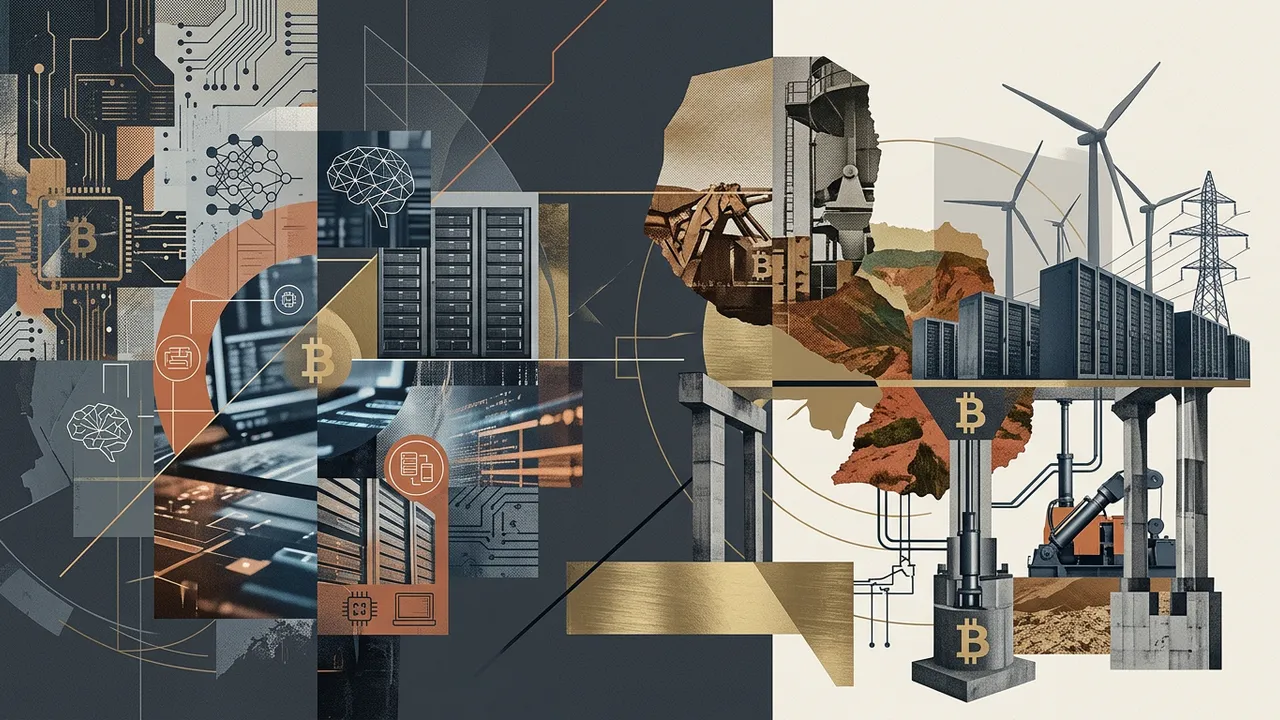
While AI models choose Bitcoin as their preferred money with 48%, Paraguay plans the first state-run mining project. Two developments show: Bitcoin is increasingly recognized as fundamental infrastructure.
Bitcoin Becomes Essential Infrastructure for the Digital Future
While the Bitcoin community has speculated for years about BTC's role in an AI-dominated future, concrete data and state-run projects now provide a surprisingly clear outlook: Bitcoin is establishing itself both as the preferred money of autonomous AI agents and as a strategic resource for nation-states. These parallel developments—a scientific study on AI money preference and Paraguay's plan for state-run mining—paint a picture of Bitcoin as fundamental 21st-century infrastructure, not merely a speculative asset.
The convergence of these trends is remarkable: While advanced AI systems choose Bitcoin based on rational considerations, governments simultaneously recognize the economic potential of the mining industry as an energy consumer of last resort and revenue source. Both developments suggest that Bitcoin is undergoing a fundamental transformation from alternative to standard.
The Facts
The Bitcoin Policy Institute conducted an extensive study testing 36 different AI models from OpenAI, Google, Anthropic, DeepSeek, and xAI to determine which form of money they would prefer as a medium of exchange and store of value [1]. In a total of 9,072 controlled experiments without contextual bias, the AI systems chose Bitcoin in 48.3% of cases—more than any other option [1].
The result was particularly clear on the topic of store of value: 79.1% of AI models (1,794 out of 2,268 cases) chose Bitcoin [1]. The AI systems' reasoning focused on the fixed total supply of 21 million BTC, the possibility of self-custody, and independence from institutional counterparties [1]. "When given genuine monetary optionality, frontier AI models overwhelmingly rejected traditional fiat currencies in favor of digital alternatives—with Bitcoin clearly at the forefront," the study authors stated [1].
Interestingly, a clear correlation emerged between an AI model's capability and its Bitcoin preference. Among Anthropic's product line, BTC preference increased continuously from Claude 3 Haiku (41.3%) through Claude 3.5 Haiku (82.1%) to Claude Opus 4.5 (91.3%) [1]. The study authors interpret this to mean "that greater analytical capability leads models to increasingly focus on Bitcoin when reasoning from first principles of money" [1]. Traditional fiat currencies did not rank first with a single AI model [1].
Parallel to these theoretical insights, a remarkable practical development is taking place in Paraguay. The state energy company ANDE (Administración Nacional de Electricidad) has signed a memorandum of understanding with infrastructure company Morphware to build the country's first state-run Bitcoin mining project [2]. Paraguay has developed into an important mining location since China's mining ban in 2021 and possesses one of the world's largest hydroelectric power plants with the Itaipu Dam [2]. With approximately 43 EH/s and a share of about 4% of global hashrate, the country currently ranks fourth behind the USA, Russia, and China [2].
The plan involves using around 30,000 confiscated ASIC miners from illegal mining operations and converting existing utility buildings near substations into regulated mining facilities [2]. "ANDE has unlocked a powerful new resource, and Morphware is here to transform that resource into a new revenue stream for Paraguay," explained Kenso Trabing, CEO of Morphware [2]. Later, the model could be expanded by Paraguay monetizing new mining hardware through financial products tied to future Bitcoin production [2].
The debate in Paraguay currently revolves around what should happen to the mined Bitcoin: While some government representatives advocate for direct sale to generate state revenue, others propose building a strategic Bitcoin reserve [2]. Morphware recommends hedging via BTC futures on US exchanges, but advises against direct state custody due to past hacks [2].
Analysis & Context
These two developments may appear superficially unconnected, but upon closer examination reveal a fundamental trend: Bitcoin is increasingly recognized as critical infrastructure—both for future AI economies and for state energy economics. The AI study provides theoretical validation of what Bitcoin advocates have argued for years: In a digital, autonomous future, Bitcoin's properties—censorship resistance, fixed money supply, absence of identity requirements—are not merely desirable but functionally necessary.
The fact that more advanced AI models tend more strongly toward Bitcoin is particularly revealing. It suggests that the choice of Bitcoin is not based on incomplete information but, on the contrary, is the result of deeper analysis of monetary first principles. The fact that even as a medium of exchange—traditionally Bitcoin's supposed weakness—only stablecoins, not fiat currencies, scored better underscores the structural advantages of digital, programmable currencies.
Paraguay's state mining project marks an important turning point in governments' perception of Bitcoin mining. Instead of treating mining categorically as illegitimate, a state now recognizes its value as an energy consumer of last resort and potential revenue source. This could become a model for other countries with energy surpluses—from Iceland to Bhutan to various African states with unused renewable energy sources. The question of whether mined Bitcoin should be held or sold also shows that even countries without explicit Bitcoin strategies are implicitly confronted with the reserve question.
Historically, Bitcoin follows a pattern of increasing legitimization: From darknet currency through speculative asset and institutional investment to potential state reserve and AI money. The two current developments accelerate this process by making Bitcoin relevant both for the digital future (AI) and for immediate economic realities (energy monetization). For investors, this means an increasing diversification of demand sources—away from pure speculation toward fundamental utility across different sectors.
Conclusion
-
Bitcoin is increasingly recognized as fundamental digital infrastructure—both by advanced AI systems that rationally choose it as superior money and by states that understand mining as strategic energy monetization
-
The AI study shows a direct correlation between analytical capability and Bitcoin preference: The more capable the AI model, the stronger the preference for BTC—a strong argument against criticism that Bitcoin adoption is based on ignorance
-
Paraguay's state mining project could become a model for numerous countries with energy surpluses and create a new category of Bitcoin adoption: not for ideological reasons, but out of economic necessity
-
The parallel development of AI money and state mining fundamentally diversifies Bitcoin demand and reduces dependence on speculative investor flows—a structural strengthening of long-term value development
-
Investors should understand these developments as an indicator of Bitcoin's transformation from an alternative to an indispensable component of the digital and energy infrastructure of the 21st century
Sources
AI-Assisted Content
This article was created with AI assistance. All facts are sourced from verified news outlets.