Global Bitcoin Regulation Shifts: From Banking Bans to Property Rights
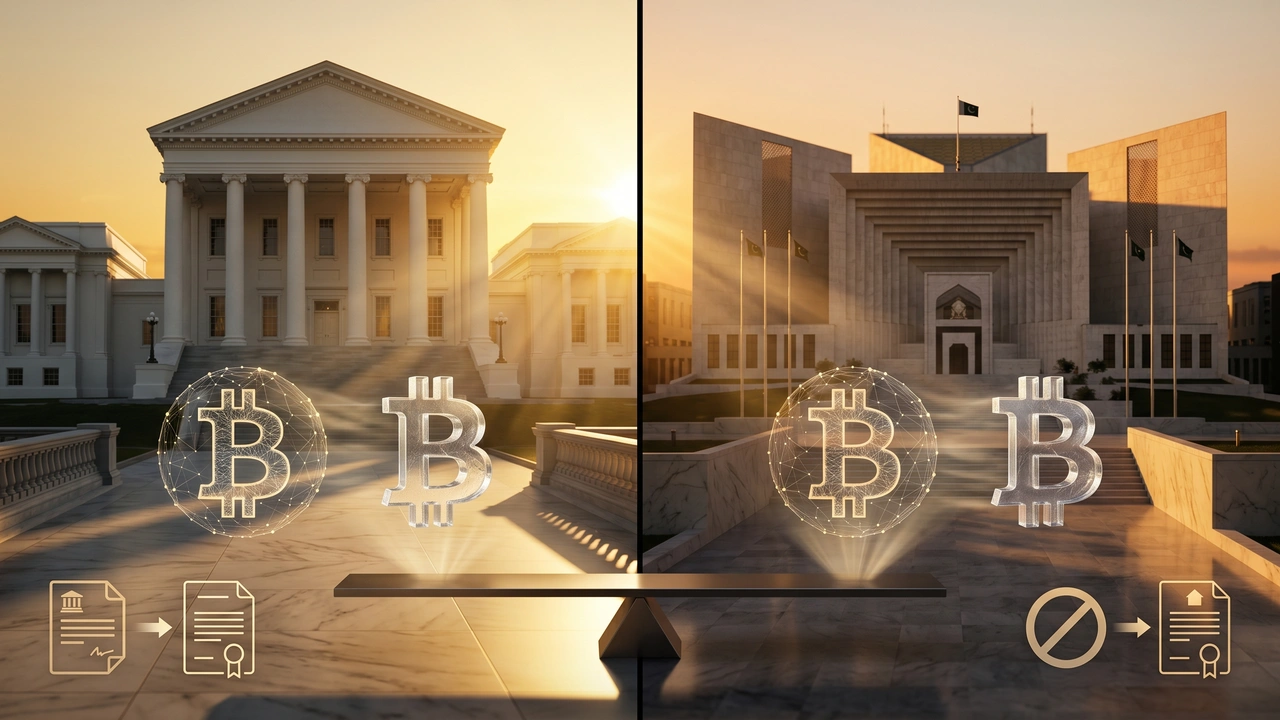
Two landmark regulatory developments — Pakistan ending its crypto banking prohibition and Virginia enshrining in-kind digital asset custody rights — signal a maturing global framework that increasingly treats Bitcoin as legitimate, protected property.
Key Takeaways
- Virginia's in-kind custody law sets a powerful precedent: Requiring the state to hold Bitcoin in its original form for at least one year before liquidation protects owners from forced sales at suppressed prices — a model other states should adopt.
- Pakistan's banking reversal is an admission that prohibition failed: Seven years of blocking crypto firms from banking services did not reduce Bitcoin adoption; the new framework is a pragmatic course correction toward regulated integration.
- Both laws reflect a maturing regulatory consensus: Governments are moving from "should we allow this?" to "how do we handle this responsibly?" — a shift that structurally reduces existential regulatory risk for Bitcoin.
- The "greater of" compensation standard in Virginia is investor-friendly: If the state sells your Bitcoin and the price rises before you reclaim it, you receive the higher market value — a meaningful protection that acknowledges Bitcoin's appreciation potential.
- Watch for the regulatory domino effect: Virginia and Pakistan are not outliers; they are part of a accelerating global pattern of jurisdictions formalizing Bitcoin's status as protected, legitimate property rather than an anomalous asset to be neutralized.
The World Is Learning How to Hold Bitcoin Without Destroying It
Something meaningful is happening in the global regulatory landscape, and it doesn't involve a single dramatic announcement or a congressional hearing. Instead, it's unfolding jurisdiction by jurisdiction, in the form of quietly consequential laws that reflect a deeper shift: governments are no longer debating whether Bitcoin exists — they're debating how to handle it responsibly. Two developments this month, one from Virginia and one from Pakistan, illustrate this evolution from two very different angles. Together, they tell a story about what serious, maturing Bitcoin regulation actually looks like.
The common thread is respect for the asset itself. Neither framework is perfect, and neither represents full Bitcoin adoption. But both acknowledge a reality that regulators ignored for years: Bitcoin is not interchangeable with cash, and treating it as such causes real harm to real people.
The Facts
Virginia Governor Abigail Spanberger signed House Bill 798 into law on April 14, updating the state's unclaimed property statute to formally include digital assets [1]. The law takes effect July 1, 2026, and introduces a structured framework for how the state handles dormant cryptocurrency accounts. Under the new rules, digital assets in customer accounts that show no activity for five years will be presumed abandoned and transferred to state custody — but critically, they must be transferred "in-kind," meaning the state takes possession of the actual tokens rather than immediately converting them to dollars [1].
The significance of the in-kind requirement cannot be overstated. Previously, many states would liquidate digital assets upon receipt, leaving the original owner exposed to massive opportunity cost if Bitcoin's price surged during the intervening period. Virginia's law directly addresses this by mandating that the state hold digital assets for a minimum of one year before any sale is permitted [1]. Owners who come forward during that window can reclaim their property in its original form. If the assets have already been sold, claimants receive either the sale proceeds or the fair market value at the time of the claim — whichever is greater [1]. Coinbase Chief Legal Officer Paul Grewal praised the measure, stating it ensures digital assets are handled in a way that preserves their native form throughout the unclaimed property process [1].
Meanwhile, on the other side of the world, Pakistan's State Bank formally reversed a seven-year banking ban on cryptocurrency firms [2]. The reversal follows the enactment of the country's Virtual Assets Act 2026 and allows regulated banks to open accounts for entities licensed by the newly created Pakistan Virtual Assets Regulatory Authority (PVARA). "This is a foundational step in bringing virtual assets into the formal financial system of Pakistan," said PVARA Chairman Bilal bin Saqib [2]. Banks must verify VASP licensing before providing services, maintain thorough anti-money laundering compliance, and hold client funds in segregated, non-interest-bearing rupee-denominated accounts [2]. However, Pakistani banks remain explicitly prohibited from investing in, trading, or holding cryptocurrencies using either their own capital or customer deposits — their role is strictly limited to payment rails and fiat custody [2]. Pakistan has also signed a memorandum of understanding with Binance and granted preliminary regulatory clearances to both Binance and HTX [2].
Analysis & Context
These two developments, while geographically and culturally distant, are chapters in the same regulatory story. The Virginia law addresses a problem Bitcoin users have long understood viscerally: forced liquidation by the state at an arbitrary moment in time is not just inconvenient — it can be financially devastating. Bitcoin's price history is defined by long periods of suppression followed by sharp, sudden appreciation. A state that liquidates dormant Bitcoin at $30,000 and returns the cash to the owner two years later when the same Bitcoin would have been worth $90,000 isn't protecting the owner; it's expropriating their gains under the guise of administrative procedure. Virginia's one-year holding requirement and the "greater of" compensation formula represent a genuine attempt to align state custody practices with the economic reality of a volatile, appreciating asset. It's a template other states should study carefully.
Pakistan's reversal is equally instructive, though its implications are more geopolitical than property-rights oriented. The 2018 ban effectively isolated Pakistan's nascent crypto industry from the banking system for the better part of a decade — a period during which peer adoption of Bitcoin and cryptocurrency surged across the Pakistani population despite official discouragement. The new framework essentially acknowledges that the ban failed. It did not stop Bitcoin adoption; it simply made that adoption more dangerous by pushing it underground, away from AML oversight and consumer protections. Pakistan's new approach — license firms, let banks serve them, but keep banks away from direct crypto exposure — mirrors a model seen in several emerging markets attempting to thread the needle between innovation and financial stability. The partnerships with Binance and HTX, and explorations of stablecoin infrastructure for cross-border payments, suggest Islamabad is thinking ambitiously about Bitcoin and digital assets as tools for financial integration, not merely threats to be contained.
Historically, regulatory legitimization tends to be a one-way door. Once a jurisdiction builds legal infrastructure around Bitcoin — custody standards, licensing regimes, property rights — rolling it back becomes politically and economically costly. The pattern from El Salvador's legal tender adoption to the U.S. spot Bitcoin ETF approval to now Virginia's property rights framework and Pakistan's banking integration suggests that the global regulatory trajectory, however uneven, is bending toward accommodation rather than prohibition. The countries and states that build thoughtful frameworks early will attract capital, talent, and innovation. Those that delay or maintain hostility will increasingly find themselves on the wrong side of that dynamic.
Sources
AI-Assisted Content
This article was created with AI assistance. All facts are sourced from verified news outlets.