Iran's Bitcoin Toll on the Strait of Hormuz Changes Everything
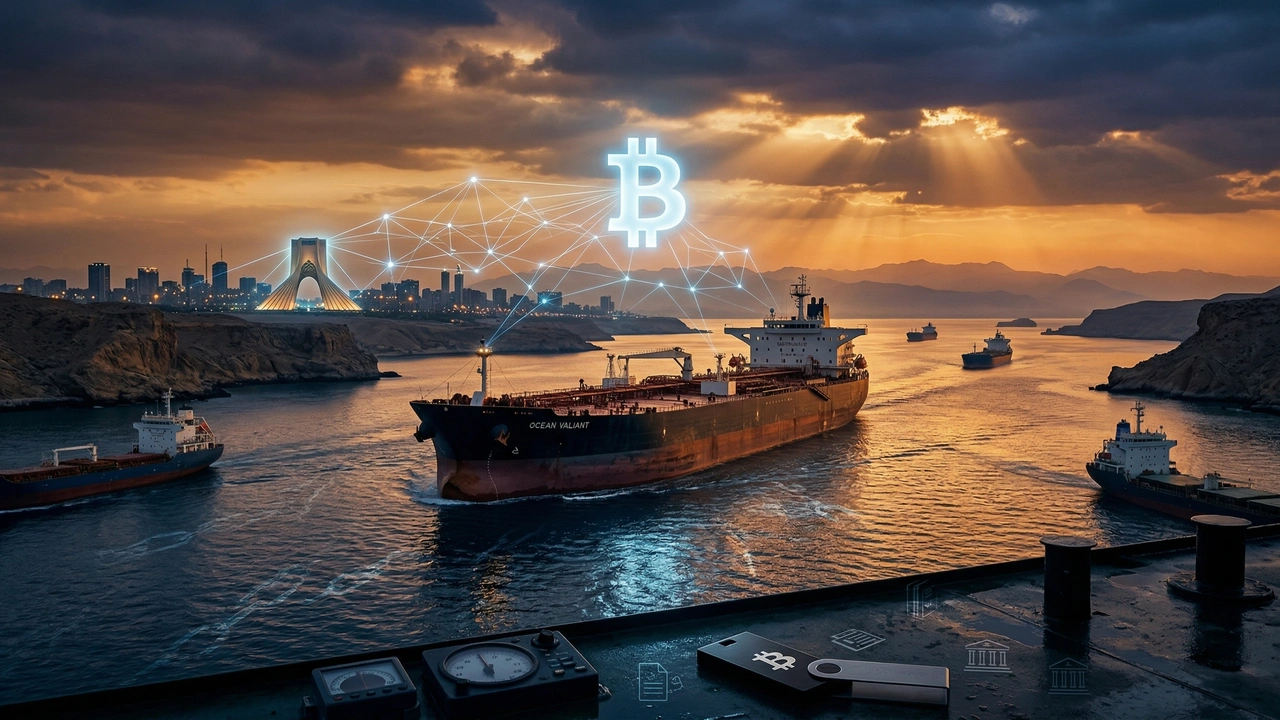
Iran's decision to demand Bitcoin payments for Strait of Hormuz transit rights marks a watershed moment — the first time a nation-state has deployed cryptocurrency as sovereign infrastructure in a geopolitical chokepoint.
Key Takeaways
- Bitcoin's censorship resistance just found its most consequential test case: Iran's Hormuz toll is the first documented instance of a nation-state using Bitcoin as mandatory payment infrastructure for access to critical geopolitical infrastructure — validating a core use-case thesis that has been theoretical until now.
- The $1/barrel toll structure creates real, large-scale Bitcoin demand: At two million dollars per VLCC passage, this is not a symbolic gesture — it is a mechanism that could generate substantial, recurring Bitcoin purchase pressure tied directly to global oil flows.
- Sanctions architecture has a Bitcoin-shaped gap: The speed and pseudonymity of Bitcoin transactions — combined with the short payment window IRGC has implemented — makes real-time sanctions interdiction technically near-impossible, signaling a structural challenge for Western financial enforcement tools.
- Price momentum is contingent on ceasefire durability: The rally above $72,000 reflects genuine risk-sentiment improvement, but traders like Daan Crypto Trades are rightly insisting on a clean, sustained hold above that level before confirming bullish structure [1] — the geopolitical situation remains volatile.
- This sets a precedent other sanctioned states will study closely: If Iran's Bitcoin toll mechanism functions without being effectively neutralized, it offers a replicable model for any government excluded from dollar-based settlement systems — broadening Bitcoin's role from speculative asset to geopolitical utility layer.
Iran's Bitcoin Toll on the Strait of Hormuz Changes Everything
For years, Bitcoin advocates have argued that the network's censorship-resistant properties would eventually make it indispensable in global trade — not as a speculative asset, but as functional financial infrastructure. That moment may have just arrived. Iran's reported decision to require Bitcoin payments for transit through the Strait of Hormuz is not merely a curiosity; it is a live experiment in how nation-states under financial siege can weaponize decentralized networks to reassert economic sovereignty. The implications reach far beyond the Persian Gulf.
This development sits at the intersection of geopolitics, sanctions architecture, and monetary innovation. It forces every shipping company, government, and financial institution to reckon with a question they have long deferred: what happens when Bitcoin becomes a non-negotiable condition of access to critical global infrastructure?
The Facts
According to reporting by the Financial Times, Iranian authorities have begun requiring shipping companies to pay transit tolls in Bitcoin for vessels passing through the Strait of Hormuz [2]. The policy applies specifically to oil tankers seeking passage during a two-week ceasefire between Iran and the United States, announced following a shift in posture from the Trump administration [2]. The toll is structured at one US dollar per barrel of oil carried — meaning a fully loaded supertanker (VLCC) with a capacity of two million barrels would owe approximately two million dollars in Bitcoin per transit [3].
The operational mechanics are deliberate and time-sensitive. Shipping captains are required to declare their cargo and then receive only a narrow window to complete the Bitcoin transaction [3]. Iran's Revolutionary Guard (IRGC) has formalized a system for verifying payments and escorting vessels, making real-time sanctions interference technically difficult to execute [3]. Iranian officials have cited the country's long-standing exclusion from dollar-based settlement systems — particularly SWIFT — as the driving rationale for this approach [2]. Bitcoin, they argue, offers a settlement channel that is pseudonymous, fast, and inaccessible to third-party intermediaries.
Markets responded immediately. Bitcoin broke above $72,000 following the ceasefire announcement, reaching as high as $72,865 on Bitstamp, reversing earlier weakness tied to fears of regional escalation [1]. Crude oil dropped to around $91 per barrel as supply-disruption concerns eased and traffic began resuming through the strait [1]. The S&P 500 surged more than 2.5% at the open, adding an estimated $1.6 trillion in market capitalization in a single session [1]. Crypto trader Michaël Van de Poppe noted on X that the ceasefire delivered "a clear direction on the markets," describing Bitcoin's break above $71,000 as the beginning of a bullish structure [1].
Analyst Anthony Pompliano captured the broader sentiment, writing on X: "The world needs a digital, decentralized, non-state and neutral asset to facilitate global trade between countries that don't trust each other" [3]. Analysts quoted in coverage from BTC Echo described the Hormuz toll mechanism as the largest real-world use case for cryptocurrency in global trade to date [3].
Analysis & Context
To understand the significance of what Iran has done, it is worth recalling the original promise of Bitcoin. Satoshi Nakamoto designed the network to enable peer-to-peer transactions without reliance on trusted intermediaries — a system that would function even between parties who have no reason to trust each other or a shared institutional framework. The Strait of Hormuz toll is, in structural terms, exactly the scenario that Bitcoin was architected for. Two parties under mutual geopolitical hostility, one of whom controls a physical chokepoint and the other who needs access to it, settling a financial obligation through a neutral, borderless network that neither side can unilaterally seize or block.
Historically, Iran has experimented with alternatives to the dollar system in fits and starts. Previous reports noted the country had trialed stablecoins for some transit-related settlements [3], but stablecoins carry a critical vulnerability for a sanctioned state: they are typically issued by entities — like Tether or Circle — that are subject to US jurisdiction and can freeze balances on demand. Bitcoin has no such counterparty. That distinction is not incidental; it is the entire point. Iran is not using Bitcoin because it is trendy. It is using Bitcoin because it is the only globally liquid, bearer-instrument-style asset that cannot be frozen mid-transaction by a SWIFT administrator or a US Treasury order.
For Bitcoin investors, the medium-term implications are significant but nuanced. The price reaction — a clean break above $72,000 on the ceasefire news — suggests the market is beginning to price in a new dimension of Bitcoin's utility: sovereign adoption under duress. This is categorically different from corporate treasury adoption or ETF inflows. It represents a nation-state stress-testing Bitcoin as geopolitical infrastructure. If the toll mechanism survives beyond the two-week ceasefire window, and if other shipping firms comply without triggering a coordinated Western legal response, it will establish a precedent. Other sanctioned economies — Venezuela, Russia, North Korea, and others — will have observed a functioning playbook. The risk to the upside for Bitcoin's value proposition is substantial. The risk to the downside, in the near term, remains the ceasefire's fragility: any breakdown in negotiations could abruptly halt transit and alter the payment framework, leaving exposed anyone who built operational exposure around the arrangement [2].
Sources
AI-Assisted Content
This article was created with AI assistance. All facts are sourced from verified news outlets.