Congress Moves to Block a Fed Digital Dollar Through 2030
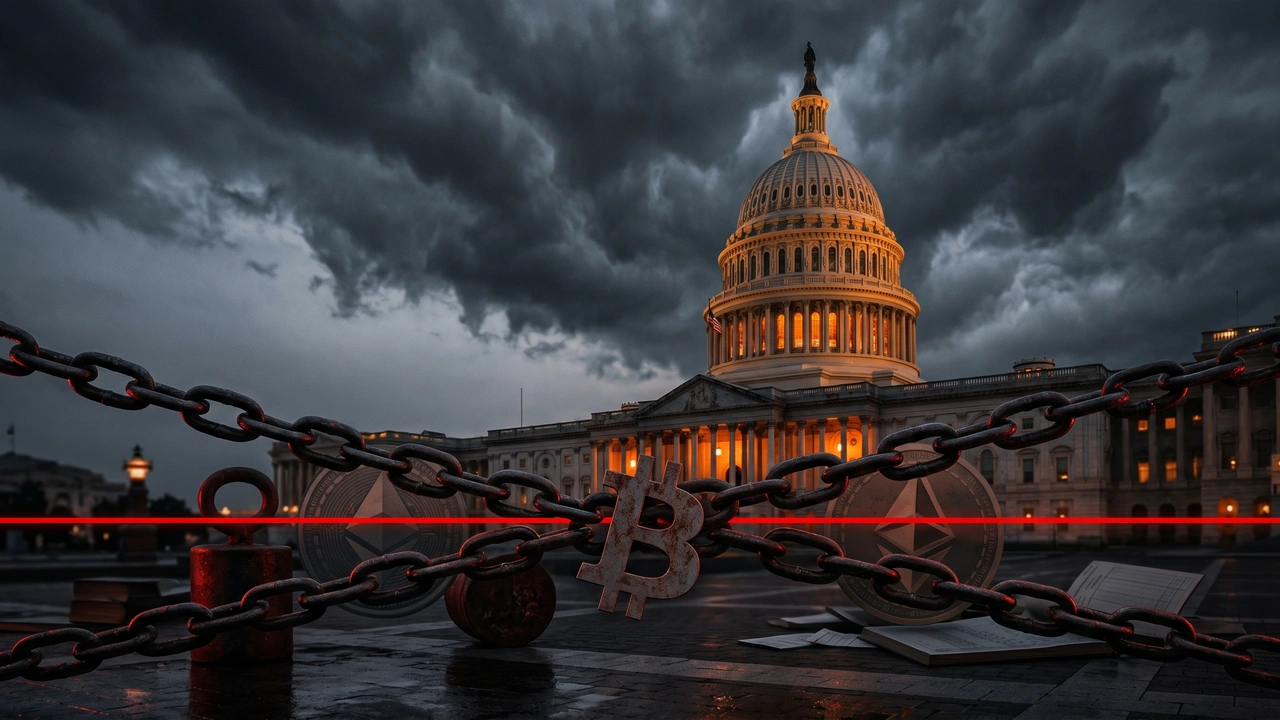
A sweeping housing bill sailing through Congress carries an unexpected payload: a hard legislative ceiling on Federal Reserve digital currency ambitions, cementing a Washington consensus that private crypto belongs and a government-issued digital dollar does not.
Key Takeaways
- The Senate's 85-5 vote embeds a CBDC moratorium into law through the end of 2030, with an additional requirement that any post-deadline launch needs explicit congressional sign-off - making this more than a temporary delay.
- Private stablecoins are explicitly protected under the same bill, and the GENIUS Act already provides them federal licensing legitimacy - the two moves together constitute a coherent pro-private, anti-government-digital-dollar strategy.
- A third pillar of crypto legislation - the market structure bill resolving SEC vs. CFTC jurisdiction - faces a tight August deadline and needs Democratic crossover votes to survive; its fate will determine how complete this regulatory architecture actually becomes.
- Bitcoin's price decline to the $62,000 range, despite broadly favorable legislation, underscores that regulatory clarity and market momentum are independent variables - macro and technical pressures can override political tailwinds.
- The Fed and the White House arriving at the same anti-CBDC position simultaneously is historically unusual and suggests the policy direction is durable beyond a single administration.
Washington Draws a Hard Line: The Fed's Digital Dollar Is Officially Unwelcome
Something remarkable happened inside a housing affordability bill this week. Tucked between provisions about mortgage rates and rental assistance sits language that could define America's monetary architecture for the rest of this decade - a statutory prohibition barring the Federal Reserve from ever putting a central bank digital currency into circulation before 2031. The vehicle may have been unglamorous, but the destination is historic.
What makes this moment significant is not just the ban itself. It is the convergence. The White House, the new Fed leadership, and an 85-5 Senate supermajority are all pointing in the same direction. Private digital assets have been handed a legal framework and a competitive runway. The government's own version of a digital dollar has been grounded.
The Facts
The Senate approved the housing legislation on a Monday night vote of 85 to 5, an unusually lopsided margin that signals deep cross-party agreement on at least parts of the package [1]. Republican leadership made the inclusion of the CBDC restriction a condition of their support, attaching it to one of the most broadly backed pieces of legislation in recent memory [1].
The statutory language leaves little ambiguity. Neither the Federal Reserve's Board of Governors nor any of its regional banks may issue, develop, or circulate a central bank digital currency - directly or through any third party - before January 1, 2031 [1][2]. Crucially, the German-language reporting on the bill adds an important detail that the English coverage buries slightly: even after that deadline expires, the Fed would be barred from launching a CBDC without explicit congressional authorization [2]. The moratorium is not just a pause - it resets the default assumption against a Fed-issued digital currency indefinitely.
Private stablecoins are explicitly carved out. The bill's text protects digital dollar instruments that are open, permissionless, and private, drawing a sharp legal boundary between government-controlled programmable money and market-issued alternatives [1]. That carve-out did not emerge from nowhere. In July 2025, Trump signed the GENIUS Act into law, establishing the country's inaugural federal licensing regime for stablecoin issuers, mandating one-to-one reserve backing and monthly public disclosures [1]. The regulatory scaffolding for private digital dollars went up at precisely the moment the government's own version was being legislatively dismantled.
The political groundwork predates the Senate vote by months. Trump issued an executive order in January 2025 directing his administration to halt all CBDC-related activity, citing concerns about threats to financial system stability, individual privacy, and national sovereignty [1]. New Fed Chair Kevin Warsh, who succeeded Jerome Powell, has independently characterized a U.S. CBDC as a fundamentally misguided policy direction [1]. The alignment between a historically independent central bank and an executive administration on a monetary policy question of this magnitude is itself unusual.
A third legislative piece remains in play. A comprehensive digital asset market structure bill - designed to resolve the long-running jurisdictional dispute between the SEC and the CFTC over whether crypto tokens qualify as securities or commodities - cleared the Senate Banking Committee by a 15-to-9 vote in mid-May and was placed on the Senate Legislative Calendar on June 1 [1]. Research firm Galaxy has estimated the odds of that bill passing this calendar year at roughly 60%, though the window is narrowing fast [1]. Passage requires a minimum of seven Democratic votes on the Senate floor, and the chamber essentially goes into midterm recess mode after August [1]. Senator Bill Hagerty expressed optimism on June 18 that the measure could advance within weeks [1].
Bitcoin's price tells a different story than the legislative optimism might suggest. BTC was trading near $62,000 on Tuesday morning, down more than 3.7% in a single session, dragged lower by a broader Nasdaq selloff bleeding into digital asset markets [1]. That level represents a retreat of roughly half from the all-time peak above $125,000 set in July 2025, and at least one widely-followed technical model flags the potential for an additional 15% or more of downside before a durable floor appears [1].
Analysis & Context
The CBDC ban's placement inside a housing bill is no accident, and understanding that context sharpens what the move actually signals. Republican legislators needed a populist, bipartisan vehicle to push through a CBDC restriction that might otherwise have attracted more scrutiny as standalone legislation. By anchoring it to housing affordability - a rare area of Senate consensus - they insulated it from the kind of procedural obstruction that tends to stall explicitly crypto-focused bills. This is legislative judo, and it worked.
The more important forward-looking implication is competitive. With the GENIUS Act already giving private stablecoin issuers a clear regulatory home and the CBDC pathway now statutorily blocked, the U.S. is making an explicit bet that dollar dominance in the digital age will be maintained through market actors rather than central bank infrastructure. That is a meaningful divergence from the approach taken by the European Central Bank, which continues to develop its own digital euro. If dollar-denominated stablecoins - backed by U.S. Treasuries and federally licensed - scale globally before the next window for CBDC reconsideration opens, Washington may find it has locked in a private-sector dollar network that makes a government-issued alternative genuinely redundant. Bitcoin, sitting outside both camps, benefits from a world where trust in government-controlled programmable money remains politically toxic.
Sources
AI-Assisted Content
This article was created with AI assistance. All facts are sourced from verified news outlets.