Mining Sector in Upheaval: Billion-Dollar Losses Drive Pivot to AI
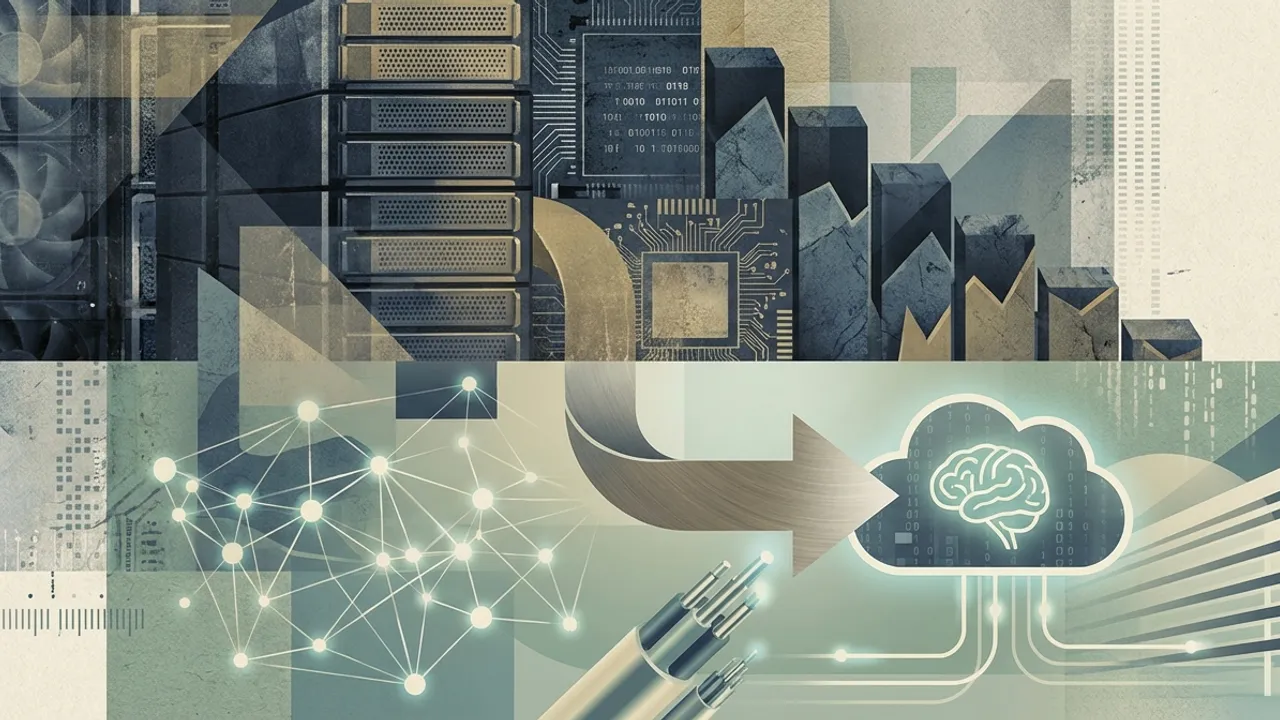
MARA and TeraWulf report dramatic losses due to Bitcoin price decline, while investors celebrate strategic realignment toward AI data centers. An industry trend gains momentum.
The Mining Industry Reimagines Itself – Under Duress
The Bitcoin mining industry is experiencing one of its toughest phases. Yet while the numbers appear dramatic, a fundamental transformation is simultaneously taking place: leading companies are converting their energy-intensive infrastructure into profitable AI data centers. What appears at first glance to be a stopgap solution could define the long-term survival strategy of an entire industry.
The Facts
MARA Holdings, one of the world's largest Bitcoin miners, reported a net loss of $1.71 billion for the fourth quarter of 2025 – a drastic contrast to the net profit of $528.3 million in the prior-year period [2][4]. The primary driver of these losses was a negative revaluation of digital assets totaling $1.5 billion, reflecting Bitcoin's price decline from approximately $114,300 at the end of September to $88,800 at the end of December [4]. For the full year 2025, the net loss totaled $1.31 billion, although annual revenue increased from $656.4 million to $907.1 million [2].
Despite increasing hashrate, Bitcoin production declined: In the fourth quarter, MARA mined 2,011 BTC, six percent less than the previous quarter and significantly below the 2,492 BTC from the prior year [4]. At year-end, the company held 53,822 BTC, of which 15,315 BTC were pledged or lent as collateral – holdings worth approximately $4.7 billion [2][4]. MARA's stock lost about 45 percent of its value over the past six months [2].
Yet markets reacted surprisingly: the stock jumped 13 to 16 percent in pre-market trading [2][3]. The reason lies in the strategic realignment. MARA announced a joint venture with Starwood Digital Ventures to develop AI and high-performance computing data centers at selected sites with favorable power supply [2][4]. The first phase targets over one gigawatt of IT infrastructure, with expansion potential to 2.5 gigawatts [2]. In early February, MARA had already acquired a 64-percent stake in Exaion, a provider of AI and HPC solutions for enterprise and government clients [2].
TeraWulf is also struggling with similar challenges. The company reported a loss of $1.66 per share for the fourth quarter – significantly worse than the $0.16 loss analysts expected [5]. Revenue fell to $35.8 million, below the expected $44.1 million. Of this, $26.1 million came from digital assets and $9.7 million from high-performance computing [5]. Nevertheless, TeraWulf plans aggressive expansion: planned acquisitions in Kentucky and Maryland are expected to bring 1.5 gigawatts of additional capacity and double total capacity to approximately 2.8 gigawatts across five sites [5]. The company already has HPC contracts worth $12.8 billion [5].
The pressure on the mining industry is fundamental: a Bloomberg analysis shows that the hash price – a key profitability metric for miners – recently reached historic lows [3]. At a current Bitcoin price of around $68,000, the cryptocurrency is well below the estimated average mining costs of $87,310 per coin [5].
Analysis & Context
The transformation of the mining industry reveals a fundamental truth about Bitcoin: the network itself remains robust, but the profitability of individual miners is subject to extreme cycles. The halving in April 2024 cut block rewards in half from 6.25 to 3.125 BTC, while network hashrate simultaneously reached historic highs. This combination of reduced revenue and increased competition coincides with a Bitcoin price significantly below its peaks – a perfect stress test for the industry.
The pivot to AI data centers is more than a tactical move – it is economically rational. Mining companies possess three critical assets: access to cheap energy, existing infrastructure, and experience operating energy-intensive facilities. AI data centers require precisely these resources. While Bitcoin mining suffers under margin pressure, demand for AI computing power is growing exponentially. Miners are thus effectively monetizing their greatest strength – energy infrastructure – in a more profitable market.
The positive market reaction to MARA's loss announcement is remarkable and signals a paradigm shift in the valuation of mining companies. Investors appear to value diversification more highly than short-term mining profitability. This could stabilize the mining industry long-term: companies become hybrid energy and infrastructure providers that can flexibly switch between Bitcoin mining and other computing loads.
For the Bitcoin network itself, this development is double-edged. On one hand, the migration of hashrate to other business models could theoretically compromise security. On the other hand, Bitcoin's difficulty adjustment is designed for precisely such scenarios: if hashrate declines, mining becomes easier and thus more profitable again for remaining participants. Historically, such consolidation phases have always led to a healthier, more decentralized network. Current market conditions could drive inefficient miners from the market, while well-capitalized, diversified companies emerge stronger.
Conclusion
• The Bitcoin mining industry is undergoing an existential transformation: the pivot to AI data centers is not a short-term stopgap solution but marks the evolution toward hybrid energy infrastructure companies with multiple revenue streams.
• Billion-dollar losses at MARA and other miners primarily reflect accounting effects, not operational failure – fair-value accounting of Bitcoin holdings creates extreme profit and loss fluctuations that are decoupled from actual business operations.
• The historically low hash price and mining costs above the Bitcoin price suggest a classic capitulation phase – historically, such phases have often been harbingers of bottoming in Bitcoin's price.
• For the Bitcoin network, the consolidation is healthy long-term: the difficulty adjustment mechanism ensures that mining remains profitable despite declining hashrate, while inefficient participants exit.
• The positive market reaction despite catastrophic numbers shows: investors value flexibility and diversification more highly than pure mining exposure – a signal for the entire industry to adapt business models.
Sources
AI-Assisted Content
This article was created with AI assistance. All facts are sourced from verified news outlets.