Mt. Gox Hard Fork Proposal: Is Bitcoin's Most Sacred Foundation at Risk?
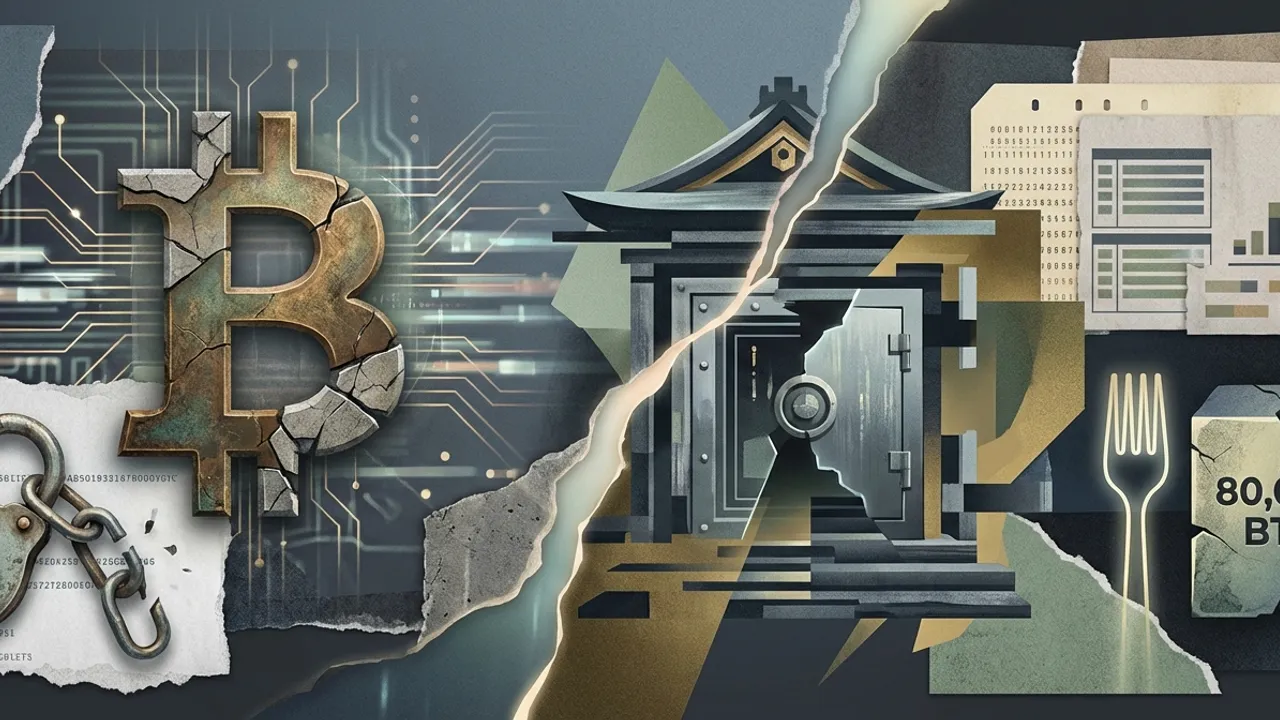
Mark Karpelès proposes a hard fork to recover 80,000 stolen Bitcoin. The community is alarmed: Would this undermine the foundation of Bitcoin's immutability?
Mt. Gox Hard Fork Proposal: Is Bitcoin's Most Sacred Foundation at Risk?
The Bitcoin community faces one of its most fundamental debates in years: Should consensus rules be changed to recover stolen Bitcoin? Mark Karpelès, former CEO of the insolvent crypto exchange Mt. Gox, has proposed exactly this—triggering a discussion that goes to the very roots of what Bitcoin represents. At stake is nothing less than the principle of blockchain immutability and the question of whether an exception could set a precedent that would weaken Bitcoin in the long term.
The Facts
Mark Karpelès has submitted a proposal via GitHub to recover 79,956 Bitcoin stolen in the Mt. Gox hack, currently worth over $5.2 billion [2]. According to him, the tokens have remained unmoved in a single wallet for more than 15 years and belong to the most well-known and publicly tracked UTXOs in Bitcoin's history [2]. The proposal calls for introducing a new consensus rule that would allow these Bitcoin to be transferred to a recovery address without the original private key [1].
Karpelès makes it unequivocally clear: "This is a hard fork. It makes a previously invalid transaction valid. All nodes would need to upgrade before the activation height. I'm not trying to obscure this fact or sneak it in as something else" [2]. The former CEO emphasizes that his goal is not to bypass the Bitcoin development process, but to create a concrete basis for discussion. Mt. Gox trustee Nobuaki Kobayashi has so far declined to pursue an on-chain recovery because it's unclear whether such a consensus change would ever be adopted. This creates a deadlock: The trustee won't act without certainty, and the community can't evaluate the idea without a concrete proposal [2].
Reactions in the Bitcoin community have been overwhelmingly negative. On the Bitcointalk forum, numerous users warned of a dangerous precedent. "Absolutely not, Bitcoin's reputation would suffer and the value of BTC would drop to zero," wrote one user [1]. Another added: "Every time a hack incident occurs, someone will demand a new consensus rule to recover stolen funds. This will completely destroy the Bitcoin concept" [2]. Critics argue that Bitcoin should remain independent of law enforcement decisions in any jurisdiction [2].
Karpelès acknowledges this as the strongest argument against his proposal, but emphasizes the special nature of the case: There is consensus among both law enforcement and the community that the address in question contains Bitcoin stolen from Mt. Gox [2]. Some individuals who claim to have been affected by the Mt. Gox insolvency supported the proposal. One creditor explained that he had recovered about 15 percent of his original holdings through the bankruptcy proceedings and would support legal action to secure the remaining Bitcoin [1][2].
Experts consider implementation extremely unlikely. "It's virtually impossible that something like this would ever be implemented through Bitcoin Core or Bitcoin Knots," according to Bitcointalk [1]. Bitcoin Core is the most important software for implementing Bitcoin's rules, Bitcoin Knots an alternative based on it. Both stand for blockchain immutability—a targeted rule change to recover individual holdings would therefore likely be accepted by neither the developers nor the majority of node operators [1].
As a reminder: Mt. Gox was the world's largest crypto exchange from 2010 to 2014, handling approximately 70 percent of all Bitcoin transactions at its peak [1][2]. However, the exchange's global presence also made it a target for hackers who exploited vulnerabilities in security systems in 2011. On February 24, 2014, a leaked document revealed that the company was insolvent after losing 744,408 Bitcoin through years of undetected theft [2]. After total losses of around 850,000 Bitcoin, Mt. Gox filed for bankruptcy in Tokyo on February 28, 2014, with liabilities of approximately $65 million [1][2].
Analysis & Context
Karpelès' proposal touches on a fundamental conflict in the Bitcoin ecosystem: the balancing act between technical immutability and individual justice. The fierce rejection by the community is unsurprising—it reflects a deep understanding that Bitcoin's value proposition is based on its immutability. The critics have a valid point: Where do you draw the line? If a hard fork is implemented for Mt. Gox today, what prevents governments or other actors from demanding similar interventions tomorrow?
Historically, there have been only a few moments in Bitcoin's history when similar discussions arose—and they usually ended with a clear rejection of any blockchain manipulation. The only notable exception was the so-called "Value Overflow Incident" of 2010, when a bug was fixed that had created 184 billion Bitcoin out of thin air. But even then, it was about fixing a technical error in the protocol itself, not about deliberately reversing a transaction. The Ethereum community split over exactly this question after the DAO hack in 2016, leading to the creation of Ethereum Classic—a clear warning about the consequences of such interventions.
The chances of implementing this proposal are vanishingly small. Bitcoin Core developers and the broader node operator community have historically proven that they reject even beneficial technical improvements if they could endanger the core principle of decentralization. A hard fork for a specific use case that breaks blockchain immutability would face massive resistance. In the short term, the proposal is unlikely to have any market impact—it will probably disappear into the archives as a theoretical discussion. In the medium term, however, the debate could sharpen awareness of Bitcoin's governance principles and demonstrate that the network adheres to its fundamental principles even under emotional pressure—which is ultimately bullish for long-term value stability.
Conclusion
• Karpelès' proposal will almost certainly fail—not from lack of sympathy for Mt. Gox victims, but because the Bitcoin community considers blockchain immutability non-negotiable
• The debate demonstrates a healthy governance process: Even controversial ideas can be discussed, but protocol changes require overwhelming consensus, which this proposal will not achieve
• For Bitcoin investors, the community's rejection is positive in the long term—it shows that Bitcoin remains resistant to manipulation, even when the intention seems understandable
• Mt. Gox creditors should not pin their hopes on a hard fork, but focus on existing legal proceedings that have already enabled significant repayments
• The episode could go down in Bitcoin history as a teaching example: The network's principles take precedence over individual claims—a painful but necessary reality for a truly decentralized monetary system
Sources
AI-Assisted Content
This article was created with AI assistance. All facts are sourced from verified news outlets.