Nations Turn to Cryptocurrency to Navigate Sanctions as Turkmenistan Legalizes Digital Assets
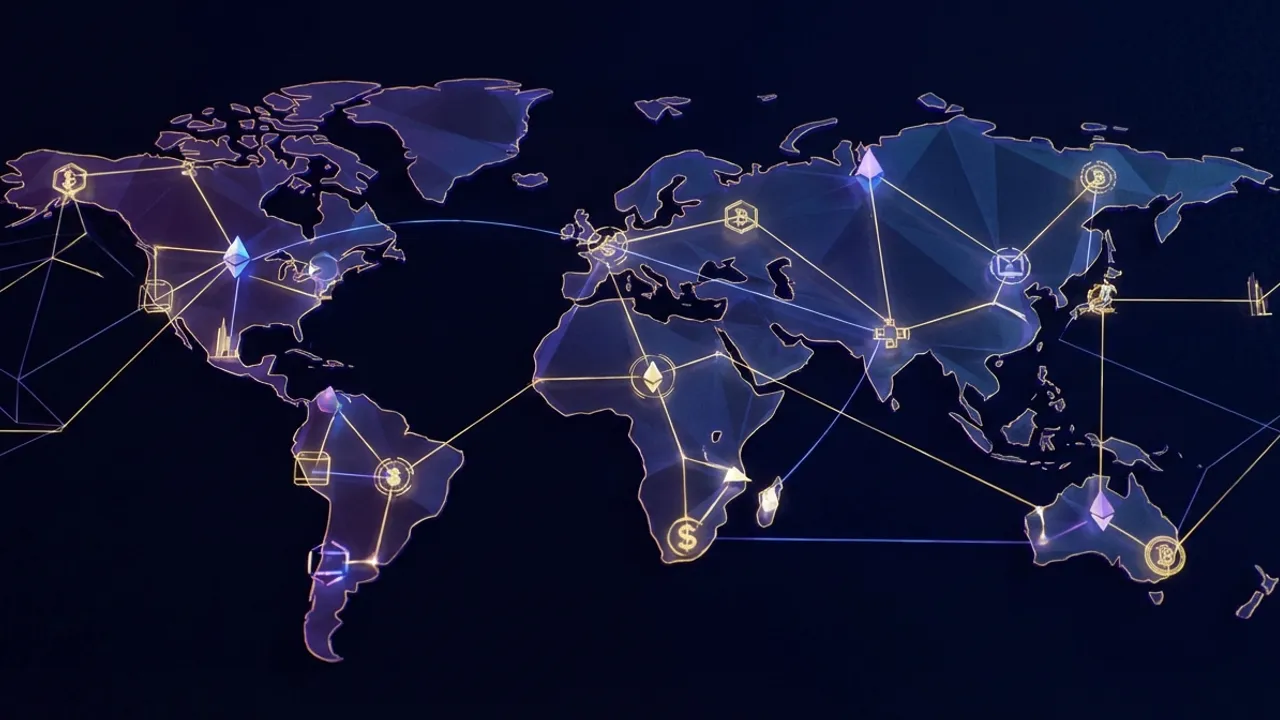
Turkmenistan has legalized cryptocurrency mining and exchanges under strict government oversight, while Iran openly accepts digital currencies for weapons sales, highlighting crypto's growing role in circumventing international sanctions.
Two significant developments highlight the evolving relationship between state control and cryptocurrency adoption, as nations seek to leverage digital assets for economic and geopolitical objectives while maintaining regulatory oversight.
Turkmenistan Establishes Controlled Crypto Framework
Turkmenistan has legalized cryptocurrency mining and exchanges, representing a notable policy shift for one of the world's most closed economies [1]. President Serdar Berdimuhamedov signed the Law on Virtual Assets, which took effect on January 1, 2026, after parliament approved the legislation in November 2025 [1].
The new framework brings digital assets under civil law for the first time, creating a licensing regime for miners, exchanges, and custodial services overseen by the Central Bank of Turkmenistan [1]. However, cryptocurrencies will not be recognized as legal tender, currency, or securities, and cannot be used to pay for goods or services [1]. The law defines virtual assets strictly as property or investment instruments [1].
Both individuals and companies may mine cryptocurrencies, but all miners must register with the central bank and meet technical standards [1]. Covert mining practices, including cryptojacking, are prohibited [1]. Crypto exchanges and custodians may operate with licenses, with both domestic and foreign entities eligible to own these services, except firms linked to offshore jurisdictions [1].
The legislation requires exchanges to enforce know-your-customer and anti-money laundering rules, while anonymous wallets and transactions are prohibited [1]. The law categorizes virtual assets into secured and unsecured types, with secured assets backed by underlying property and unsecured assets including bitcoin and similar tokens [1].
Authorities stated the law aims to support economic development and attract foreign capital to a country whose economy depends heavily on natural gas exports, with China as its main buyer [1]. Supervision extends beyond the central bank to include the Cabinet of Ministers and the Ministry of Finance and Economy, with regulators retaining power to suspend or revoke licenses for violations [1].
Iran Accepts Crypto for Military Equipment Sales
In a separate development illustrating cryptocurrency's role in sanctions evasion, Iran now accepts digital currencies for weapons sales [2]. Mindex, the export center of Iran's defense ministry, lists cryptocurrencies as an accepted payment method on its website, alongside Iranian rials and barter arrangements [2].
The website, available in multiple languages, offers tanks, warships, aircraft, ammunition, and other military equipment, though prices are not listed [2]. A virtual chatbot guides potential customers through the purchase process, and the site states that sanctions pose no problem for contract implementation [2].
Mindex claims to maintain customer relationships with 35 countries and notes that buyers must accept conditions on how weapons are used during wartime, though these agreements are negotiable [2]. According to the Stockholm International Peace Research Institute, Iran ranked as the 18th largest weapons exporter globally between 2020 and 2024 [2].
This represents what appears to be the first known case of a state publicly signaling acceptance of cryptocurrencies as payment for military equipment [2].
Broader Sanctions Circumvention Trend
The Iranian weapons sales example fits within a larger pattern of sanctioned nations turning to cryptocurrency. Russian Finance Minister Anton Siluanov stated in December 2024 that domestically-mined bitcoin would be used by companies for international trade, with plans to expand this practice [2].
Russian President Vladimir Putin emphasized at the "Russia Calling!" investment forum that declining U.S. dollar dominance meant increased use of alternative instruments, stating: "Who can for example prohibit the use of Bitcoin? No one" [2].
Reuters reported in March 2025, citing anonymous sources, that Russia increasingly uses bitcoin and stablecoins for oil transactions with India and China [2]. Blockchain analytics firm Chainalysis reported in early 2025 that countries under U.S. sanctions received nearly $16 billion worth of digital assets the previous year [2].
Regional Context
Central Asia has emerged as a testing ground for cryptocurrency policy [1]. Kazakhstan became a major bitcoin mining hub following China's 2021 crackdown and announced preparations to establish a national cryptocurrency reserve fund worth between $500 million and $1 billion [1]. Pakistan launched a national virtual assets authority in 2025 [1].
Despite the Trump administration's pro-crypto policy stance, U.S. authorities continue efforts to prevent sanctions circumvention through digital assets, taking action against Russian actors and Iranian entities allegedly using cryptocurrency to facilitate oil sales and move funds outside the formal banking system [2].
Sources
AI-Assisted Content
This article was created with AI assistance. All facts are sourced from verified news outlets.