NYT Points to Adam Back as Satoshi — But the Evidence Falls Short
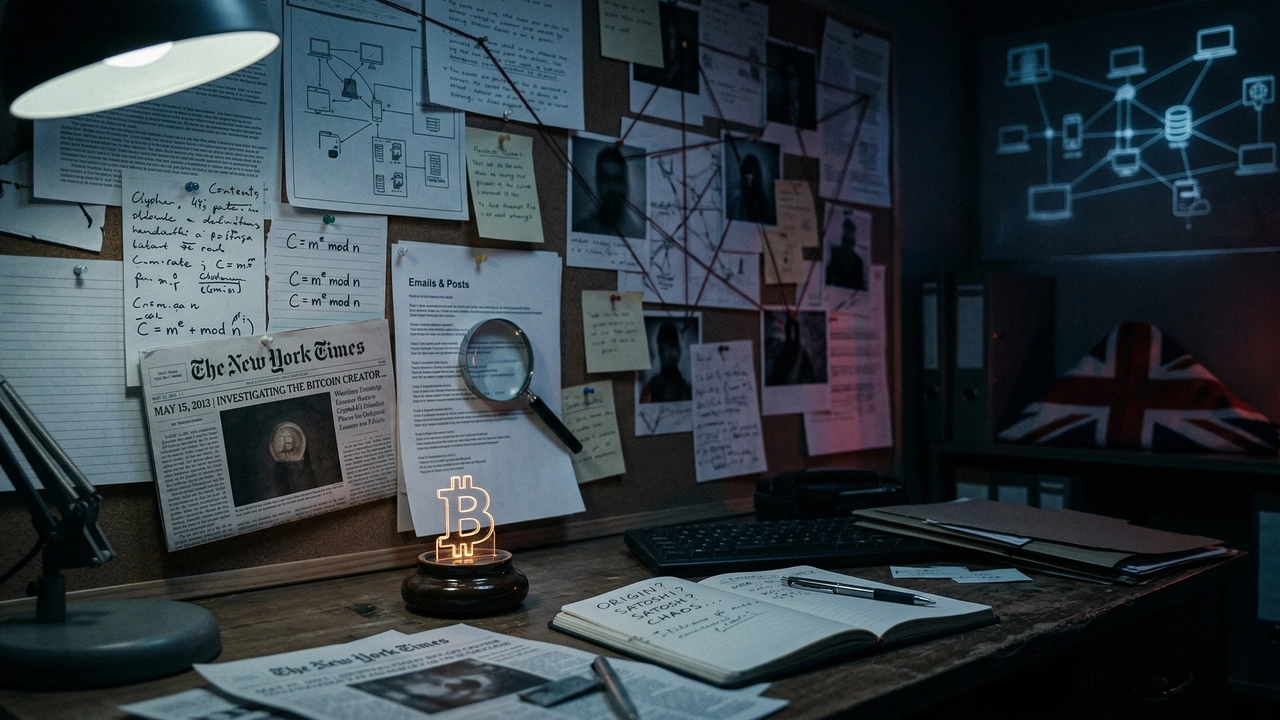
The New York Times has named cryptographer Adam Back as its most credible Satoshi Nakamoto candidate yet, but the case rests entirely on circumstantial evidence — and Back himself is having none of it.
Key Takeaways
- The New York Times investigation is the most methodically assembled Satoshi identification attempt to date, combining stylometric analysis, technical lineage, and activity timeline — but it produces no cryptographic proof, which remains the only form of evidence the Bitcoin community treats as conclusive.
- Adam Back's connection to Bitcoin's technical foundations is genuine and historically significant — Hashcash is directly cited in the whitepaper — but proximity to an idea is not the same as authorship of it.
- Back's counter-argument has real structural merit: his prolific cypherpunk writing history makes his archived text disproportionately matchable against Satoshi's output compared to less prolific contemporaries, a point the Times methodology does not fully account for.
- The $73 billion in estimated Satoshi holdings makes this more than an intellectual puzzle — public identification of Satoshi, if accurate, carries genuine personal safety implications for that individual and their family.
- For Bitcoin holders and investors, Satoshi's identity is a distraction from what matters: the protocol's decentralization, fixed supply, and censorship resistance are entirely unaffected by whether Adam Back, or anyone else, is ever definitively identified as its creator.
The Mystery Endures: NYT's Satoshi Claim Is Compelling, But Not Conclusive
For over fifteen years, the question of who created Bitcoin has captivated technologists, journalists, and investors alike. Now the New York Times believes it has cracked the case — pointing squarely at Adam Back, the British cryptographer and Blockstream co-founder, as the man behind the Satoshi Nakamoto pseudonym. It is arguably the most methodically constructed identification attempt yet. It is also, still, very much unproven.
The claim lands at a moment when Bitcoin is firmly embedded in global financial infrastructure, and when Satoshi's estimated holdings — approximately $73 billion worth of BTC — make the question of identity not just intellectually fascinating but genuinely consequential. Yet as with every prior unmasking attempt, the gap between persuasive and conclusive remains vast.
The Facts
The New York Times published its investigation on Tuesday, presenting Adam Back as the most credible Satoshi candidate to date [2]. The investigation draws heavily on stylometric analysis — the forensic study of writing patterns — applied to archived emails, forum posts, and early cypherpunk mailing list discussions. Among the specific patterns cited are Back's use of double hyphens, British spelling conventions, and particular compound terms like "proof-of-work" and "e-mail" — habits the Times argues overlap significantly with Satoshi's written output [1].
The technical dimension of the argument is harder to dismiss outright. Back developed Hashcash in 1997, a proof-of-work system explicitly referenced in the Bitcoin whitepaper and foundational to Bitcoin's mining mechanism [1]. The Times frames this technical lineage as meaningful circumstantial evidence, arguing that only a narrow group of individuals possessed both the cryptographic expertise and the ideological motivation to build something like Bitcoin — and that Back sits at the center of that group [2].
Timing also features in the analysis. During Satoshi's active period between 2008 and 2011, Back maintained a comparatively low public profile on digital currency topics. Following Satoshi's disappearance, Back's public engagement with Bitcoin increased noticeably [1]. The Times treats this pattern as suggestive, though it stops well short of definitive.
Back, for his part, rejected the identification emphatically — before the article ran, within the article itself, and again in a post on X after publication [2]. His explanation for the stylistic overlaps is structural rather than evasive: having written extensively on the cypherpunks mailing list since approximately 1992, his archived writing simply offers a larger surface area for pattern matching than most of his contemporaries [2]. "The rest is a combination of coincidence and similar phrases from people with similar experience and interests," he wrote [2]. He also addressed what the Times apparently read as a possible slip during a reporter interview, clarifying that his remark concerned confirmation bias in the investigative methodology — not an inadvertent self-disclosure [2].
Skepticism arrived quickly from credible corners. Bloomberg's Joe Weisenthal stated he was "not 100% convinced by the evidence or the conclusion," noting that shared cypherpunk values around privacy and internet architecture were common across that entire intellectual cohort, not unique to Back [2]. Early U.K. Bitcoin participant Nicholas Gregory said personal interactions led him to doubt Back was Satoshi, and raised a separate concern: public identification of Satoshi — whoever that person is — could expose them and their family to serious physical danger, given the scale of the holdings involved [2].
Analysis & Context
The NYT investigation deserves credit for being more rigorous than several of its predecessors. Compared to the 2024 HBO documentary that pointed at developer Peter Todd — a claim that collapsed under scrutiny almost immediately — the Times piece is structured, methodical, and honest about its own limitations [1]. Stylometry is a legitimate forensic tool used in academic and legal contexts. The Hashcash connection is real. Back's intellectual centrality to the pre-Bitcoin cypherpunk world is beyond dispute. These are not manufactured coincidences.
But the field of Satoshi speculation has a consistent and humbling track record. Every prior candidate — Dorian Nakamoto, Nick Szabo, Hal Finney, Craig Wright, Peter Todd — has been presented with varying degrees of confidence, and none has been confirmed. The methodology that trips up every investigation is the same: pattern matching can establish plausibility, but Bitcoin's own architecture defines what proof actually looks like. A cryptographic signature from one of the early genesis-era private keys is the only demonstration that the Bitcoin community would accept as genuine — and no such signature has been produced by or for any candidate [1]. Until it is, every theory, including this one, occupies the same epistemological category: informed speculation.
For Bitcoin's market position and long-term fundamentals, the identity question is largely irrelevant. The network's consensus rules, mining infrastructure, and monetary policy operate entirely independently of whoever wrote the original code. In fact, as Back himself noted, Satoshi's anonymity has functioned as a structural feature rather than a flaw — it prevents the protocol from being personified, regulated through an individual, or held hostage to one person's reputation [1]. Paradoxically, the more aggressively journalists pursue the identity, the more they validate the design choice that made the anonymity necessary in the first place.
Sources
AI-Assisted Content
This article was created with AI assistance. All facts are sourced from verified news outlets.