Regulatory Shift: Ripple Receives Apology, Binance Under Pressure
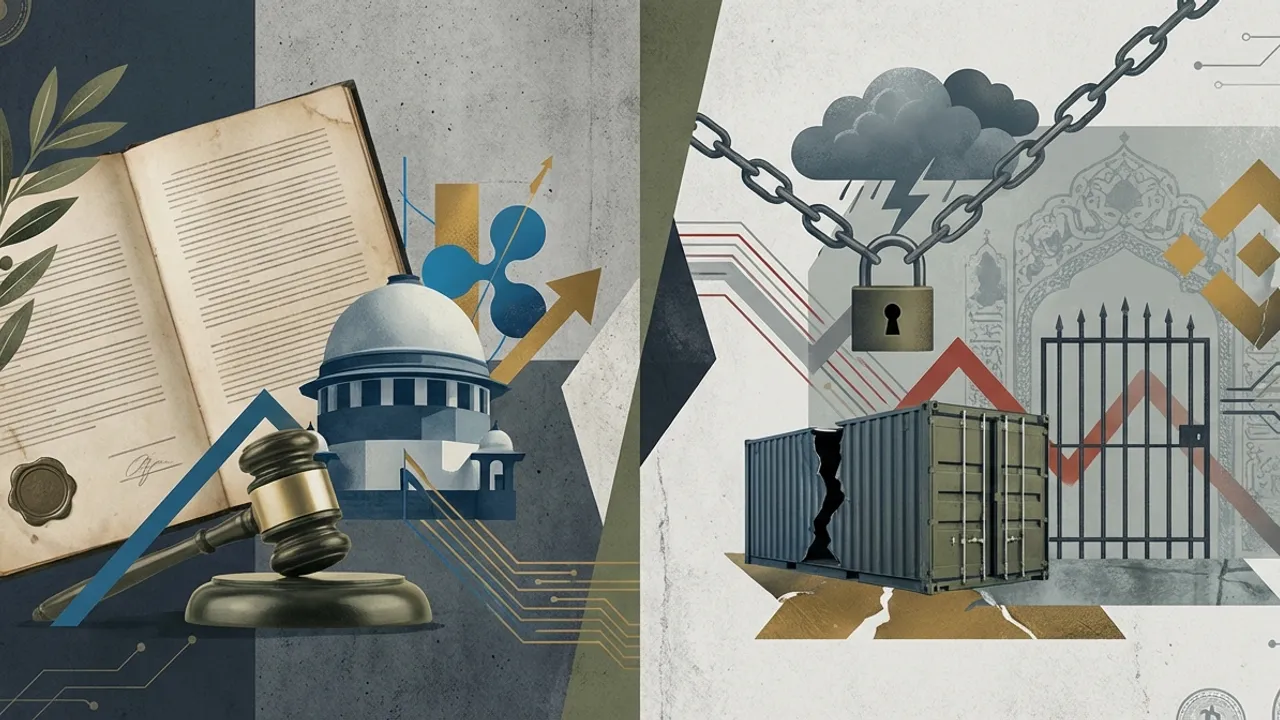
While Gary Gensler allegedly apologized to Ripple for the XRP lawsuit, Democratic senators are calling for new investigations into Binance over alleged sanctions violations and connections to Iranian actors.
Two Fronts of Regulation: Easing for Ripple, Escalation for Binance
The regulatory landscape of the crypto industry is in flux. While Ripple may be experiencing reconciliation with the U.S. Securities and Exchange Commission after years of litigation, Binance faces new serious allegations. Eleven Democratic senators are calling for comprehensive investigations into the world's largest crypto exchange over alleged violations of sanctions regulations. These contrasting developments exemplify how differently the regulatory future of individual crypto companies can unfold—depending on compliance, political entanglements, and the severity of past violations.
The Facts
Ripple CEO Brad Garlinghouse caused a stir at an XRP event in Sydney when he reported on a private meeting with former SEC Chairman Gary Gensler at the White House. According to Garlinghouse, Gensler allegedly said: "I'm sorry, I was wrong." The Ripple chief described this encounter as a "big surprise" and emphasized that the long legal battle had been worthwhile [1].
Gensler had initiated a securities lawsuit against Ripple in 2020, which led to a significant price decline in XRP and affected the entire crypto market. Following his resignation as SEC Chairman, the agency's stance toward cryptocurrencies fundamentally changed [1]. However, Gensler himself has not yet commented on Garlinghouse's claims, so the alleged apology remains unconfirmed [1].
Despite this potentially positive development, the XRP price remains unimpressed: At a current price of $1.35, it has fallen approximately 30 percent since the beginning of the year [1].
While Ripple may be making peace with regulators, Binance is once again in the crosshairs of U.S. authorities. Eleven Democratic senators from the Banking Committee, led by Senator Mark Warner and Ranking Member Elizabeth Warren, called in a letter to Attorney General Pam Bondi and Treasury Secretary Scott Bessent for an "immediate, comprehensive review" of Binance's sanctions compliance controls [2].
The senators cite media reports claiming that Binance compliance employees last year allegedly found evidence that digital assets worth approximately $1.7 billion flowed through the exchange to Iranian actors, including Iran-backed Houthi rebels and the Islamic Revolutionary Guard Corps. In one case, a Binance service provider allegedly moved $1.2 billion in funds linked to Iranian-connected actors [2].
The senators also criticize that employees who identified these transactions were allegedly terminated and that Binance is responding less cooperatively to law enforcement requests [2]. Such actions would contradict the commitments Binance made in 2023.
In 2023, Binance pleaded guilty to federal charges for violations of U.S. sanctions laws and failures in anti-money laundering efforts. The company committed to paying over $4 billion in penalties and implementing comprehensive reforms under U.S. oversight, including improved know-your-customer procedures and sanctions controls [2].
The senators' letter also addresses Binance's recent business relationships with President Donald Trump and his family's crypto projects. The lawmakers reference Binance's promotion of USD1, a stablecoin from the Trump family-backed project World Liberty Financial. The exchange offered interest incentives for USD1 holders and accepted a $2 billion investment in connection with it [2].
The senators also mentioned Trump's pardon of Binance founder Changpeng Zhao last fall, who had pleaded guilty to failing to implement an effective anti-money laundering program and served a four-month prison sentence [2]. These connections would reinforce the need for a "thorough, impartial" investigation.
A Binance spokesperson rejected the allegations and stated that the company had identified and reported suspicious activity. The claims about retaliation against compliance employees were false [2].
Analysis & Assessment
The parallel developments at Ripple and Binance illustrate a fundamental shift in the regulatory treatment of crypto companies in the United States. Gensler's possible apology—even if it proves true—comes too late for XRP to fully compensate for the damage done. The 30 percent price decline since the beginning of the year shows that markets look forward and do not react to symbolic gestures. While Ripple has achieved a moral victory, the lost years and market opportunities cannot be recovered.
The situation at Binance is far more threatening and raises fundamental questions about the future of centralized exchanges. If the allegations are true that despite the $4 billion settlement in 2023, $1.7 billion continued to flow to sanctioned Iranian actors, this would represent a fundamental failure of the agreed-upon compliance reforms. The political dimension—Trump's pardon of CZ and business relationships with Trump projects—further complicates the situation and could lead to a political power struggle between Democratic senators and the Republican administration.
Historically, similar regulatory attacks on major exchanges have often led to significant market shifts. The collapse of FTX, although primarily caused by fraud, showed how quickly trust in centralized platforms can erode. Binance already experienced massive capital outflows in 2023—new investigations could revive this dynamic and drive users to decentralized alternatives or platforms with greater regulatory clarity. For Bitcoin itself, this could paradoxically be positive, as it underscores the importance of self-custody and decentralized solutions.
Conclusion
• Gensler's alleged apology to Ripple marks a symbolic turning point but remains without immediate market relevance—the XRP price does not react to historical reconciliation gestures
• Binance faces potentially existential investigations that, if the allegations are confirmed, could permanently damage trust in the world's largest exchange and jeopardize the 2023 settlement
• The political dimension of the Binance affair—with Trump connections and Democratic opposition—could turn crypto regulation into a partisan football and create long-term uncertainty
• For Bitcoin users, both developments reinforce the importance of self-custody and decentralized solutions, as even large, seemingly established crypto companies remain exposed to regulatory risks
• The different fates of Ripple and Binance show that cooperation with regulators and genuine compliance reforms can make the long-term difference between rehabilitation and continued prosecution
Sources
AI-Assisted Content
This article was created with AI assistance. All facts are sourced from verified news outlets.