Stablecoin Liquidity Under Pressure: The Billion-Dollar Game with USDT and XRP
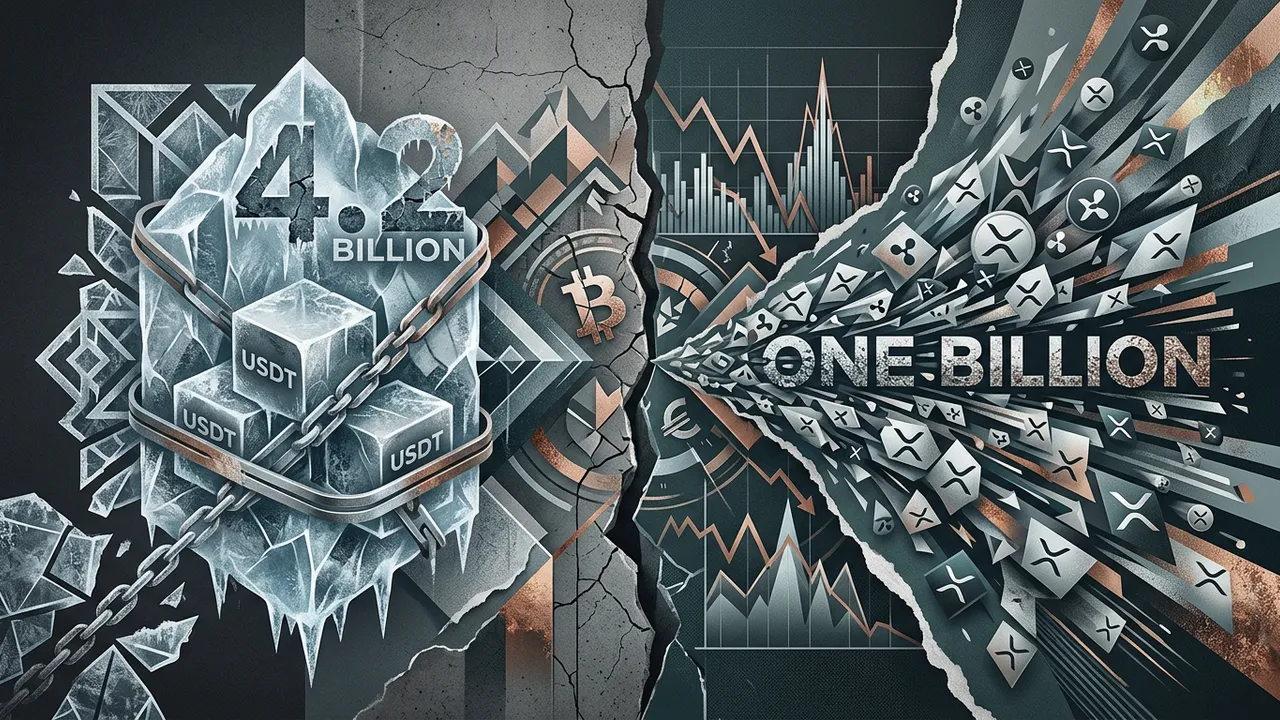
While Tether freezes $4.2 billion worth of USDT, Ripple floods the market with one billion XRP. Two developments show: token liquidity is increasingly becoming a strategic instrument – with far-reaching consequences.
When Token Control Becomes a Strategic Factor
The crypto markets are currently experiencing two parallel developments that appear contradictory at first glance, but reveal a common theme: the growing importance of token liquidity control. While stablecoin issuer Tether freezes billions of dollars in USDT, Ripple releases tokens worth billions according to schedule. Both mechanisms demonstrate how centrally managed token systems influence market activity – and raise fundamental questions about decentralization and control in the crypto ecosystem.
The Facts
Tether, the issuer of the market's largest stablecoin with over $180 billion, has frozen approximately $4.2 billion worth of USDT over the past three years [1]. The El Salvador-based company stated it was responding to intensified scrutiny by regulatory and law enforcement authorities, who are increasingly cracking down on crypto fraud and sanctions evasion [1]. The affected tokens were linked to allegedly criminal activities.
The technical implementation occurs directly on the blockchain: Tether blacklists wallet addresses at the request of authorities, effectively rendering the tokens contained within unusable [1]. According to blockchain analytics firm Elliptic, stablecoin issuers like Tether and Circle had blacklisted approximately 5,700 wallets with a total volume of about $2.5 billion by the end of 2025, with roughly three-quarters of the affected addresses holding USDT [1]. These figures illustrate the scale of interventions: over the past three years, since USDT circulation stood at around $70 billion, not only has the total volume more than doubled, but regulatory control has also significantly intensified [1].
In parallel, XRP shows a completely different liquidity pattern. Ripple has released one billion XRP from an escrow account according to schedule, which at the current price of $1.37 represents a value of approximately $1.37 billion [2]. This release is part of the strategic escrow mechanism to manage circulating supply. In December 2017, Ripple locked 55 billion XRP into 55 separate contracts that expire monthly – up to one billion XRP can be released per month, with unused tokens being placed back into later escrow contracts [2].
While supply enters the market in a structured manner, XRP ETFs recorded net inflows of more than $9.5 million last week, with four consecutive trading days of inflows starting February 24 [2]. The XRP price recently fluctuated between $1.35 and $1.43, with the token stabilizing at $1.38 – just above the 20-day average [2]. The current market capitalization stands at approximately $84 billion [2].
Analysis & Context
The two developments at Tether and Ripple reveal a fundamental tension in the crypto market: the discrepancy between blockchain technology's promise of decentralization and the actual central control over significant token systems. While Bitcoin was designed as a decentralized network where no central authority can block individual addresses or release additional units in a controlled manner, USDT and XRP demonstrate a completely different reality.
The massive USDT freezes by Tether may be understandable from a regulatory perspective – after all, combating money laundering and sanctions evasion serves legitimate purposes. However, this creates significant implications for the crypto ecosystem: the fact that the most important stablecoin can be frozen at any time by the issuer undermines a core promise of crypto technology. Users who use USDT as a "cash equivalent" in the crypto space must be aware that their holdings can be blocked if suspicions arise – without prior court proceedings or the possibility of appeal.
This has direct consequences for the Bitcoin market: USDT is by far the most important trading pair on many exchanges and provides a substantial portion of liquidity. When billions in USDT are frozen, this potentially reduces available liquidity for Bitcoin trading. At the same time, increasing regulatory control over stablecoins could diminish their attractiveness in the long term and motivate users to invest directly in Bitcoin rather than trading through stablecoin intermediaries.
The controlled XRP release by Ripple illustrates a different aspect of central token control: planned supply expansions that can put pressure on the price. While Bitcoin has an immutable halving scheme and the maximum supply is limited to 21 million, Ripple can release billions into the market monthly. The recent ETF inflows of $9.5 million appear modest compared to the $1.37 billion in released tokens – the ratio of demand to controlled supply expansion remains asymmetric. This dynamic underscores a fundamental difference from Bitcoin, where supply is algorithmically and immutably controlled.
Conclusion
• The freezing of $4.2 billion in USDT by Tether demonstrates the de facto centralization of the most important stablecoin – a fundamental contrast to Bitcoin's censorship-resistant design
• While regulatory compliance may be necessary, massive token freezes reduce available liquidity in the crypto market and could strengthen Bitcoin as an alternative to centrally controlled tokens in the long term
• Ripple's monthly billion-dollar releases of XRP demonstrate the risks of centrally managed token supplies – in contrast to Bitcoin's immutable, algorithmic emission schedule
• Both developments underscore a core advantage of Bitcoin: No central authority can freeze Bitcoin holdings or release additional units at will
• Investors should incorporate the structural differences between centrally controlled token systems and decentralized networks like Bitcoin into their risk assessment – especially for larger amounts and longer holding periods
Sources
- [1]btc-echo.de
- [2]btc-echo.de
AI-Assisted Content
This article was created with AI assistance. All facts are sourced from verified news outlets.