Trump's Bitcoin Influence: When Words Fail But Policy Delivers
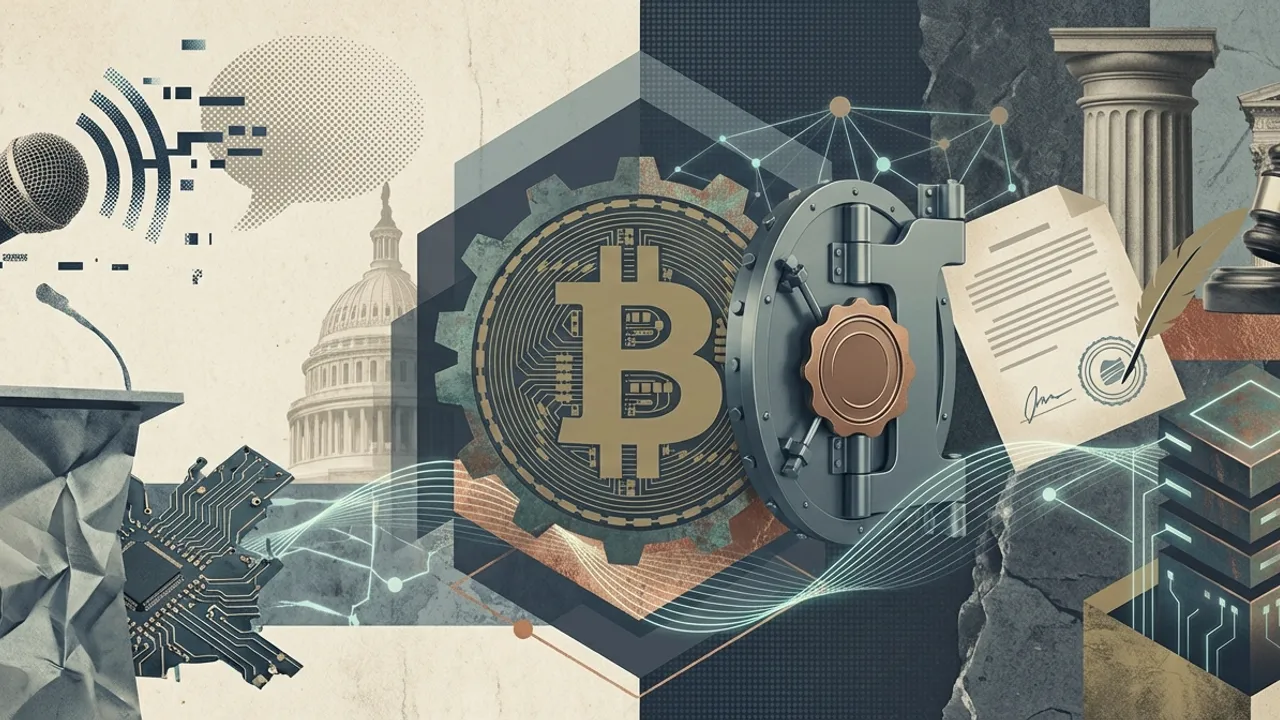
Despite presidential rhetoric consistently moving Bitcoin markets less than 2%, structural policy shifts under the Trump administration—from SEC leadership changes to strategic reserve creation—are fundamentally reshaping America's position in the digital asset landscape.
Trump's Bitcoin Influence: When Words Fail But Policy Delivers
Donald Trump's relationship with Bitcoin presents a paradox: while his pronouncements generate headlines, they rarely move markets more than a percentage point or two. Yet his administration's structural changes to digital asset policy may prove more consequential than any speech. As the SEC's first pro-Bitcoin chairman prepares to address Bitcoin 2026—a historic first for a sitting SEC chair—the divergence between Trump's rhetorical impact and his policy legacy has never been clearer[1][2].
This disconnect reveals an important truth about Bitcoin's maturation: as the asset integrates deeper into traditional financial markets, macro-economic policy increasingly matters more than bullish soundbites.
The Facts
Since Trump's January 2025 inauguration, his administration has delivered a series of pro-crypto policy moves that reshaped the regulatory landscape. Just three days into his presidency, Trump signed executive order 14178, banning a US central bank digital currency and establishing the Presidential Working Group on Digital Asset Markets to "strengthen U.S. leadership in digital finance"[1]. In early March, he signed orders creating both a Strategic Bitcoin Reserve from seized assets and a broader US Digital Asset Stockpile including XRP, Solana, and Cardano—though Bitcoin advocates were disappointed by the lack of active purchasing provisions[1].
The most dramatic shift came through personnel. After Trump promised at Bitcoin 2024 in Nashville to fire then-SEC Chairman Gary Gensler—who had overseen aggressive enforcement actions against the crypto industry—Gensler resigned on Trump's inauguration day[2]. His replacement, Paul Atkins, launched "Project Crypto," a sweeping initiative to build "a clear, innovation-friendly regulatory framework" and move America's financial markets on-chain[2]. Atkins, a market-friendly former SEC Commissioner under Bush, declared at the project's launch: "We are at the threshold of a new era in the history of our markets"[2].
Atkins has now been confirmed as a speaker at Bitcoin 2026, scheduled for April 27-29 at The Venetian in Las Vegas, marking "the first time in history that a sitting SEC Chair has been invited to the world's largest Bitcoin conference"[2]. The event expects to be the largest Bitcoin conference ever, building on 35,000 attendees in Las Vegas in 2025[2].
Yet Trump's market-moving power through rhetoric has proven surprisingly limited. A comprehensive analysis of Trump's Bitcoin-related actions and statements since January 2025 shows remarkably muted price responses[1]. When his family's World Liberty Financial project bought multiple tokens hours before his inauguration, Bitcoin rose just 4.5% in 24 hours[1]. His March 2025 "Crypto Reserve" announcement and subsequent executive order actually resulted in Bitcoin dropping 0.75% immediately after[1]. Even his November 2025 speech in Miami declaring the US "the Bitcoin superpower" left Bitcoin down 1.8% a day later[1].
The most significant market impact came not from pro-crypto announcements but from tariff policies. Trump's April 2025 "Liberation Day tariffs"—a sweeping trade war initiative—initially crashed Bitcoin 5.7%, though it recovered to a 2.14% weekly gain as traders adjusted their risk assessments[1]. When the Supreme Court ruled many of Trump's tariffs unconstitutional in February 2026, he responded with new 10% global tariffs using different legal authority, again putting downward pressure on markets[1].
Meanwhile, Trump's family business World Liberty Financial has reportedly earned over $1 billion since its inception, raising concerns about conflicts of interest as Trump influences policy directly affecting his personal wealth[1]. The project's $550 million token sale in March 2025 marked one of the largest fundraising events tied to the Trump family, and WLFI tokens began trading on major exchanges like Binance in September 2025[1].
Analysis & Context
The data reveals a critical evolution in Bitcoin's market dynamics. When Tesla CEO Elon Musk added "#bitcoin" to his X bio in 2021, Bitcoin spiked nearly 20%[1]. Trump's comparable statements in 2025-2026 rarely moved markets 2%. This isn't because Trump is less influential—it's because Bitcoin itself has changed.
Bitcoin's increasing correlation with traditional financial markets means macro-economic policy now matters more than promotional rhetoric. Tariffs create genuine economic uncertainty, supply chain disruptions, and inflationary pressure—factors that affect all risk assets, Bitcoin included. No amount of "Bitcoin superpower" speeches can override those fundamental economic headwinds. This represents Bitcoin's maturation from a speculative asset moved by celebrity endorsements to a macro asset responding to monetary and trade policy.
The Trump administration's structural contributions may prove far more durable than any price pump. The shift from Gensler's enforcement-heavy SEC to Atkins's "Project Crypto" represents a generational change in regulatory posture. For years, American crypto companies operated in legal limbo, unclear whether their products would be deemed securities. Atkins's framework-building approach—whatever its ultimate form—provides the regulatory clarity that enables institutional adoption. A sitting SEC chairman addressing Bitcoin 2026 would have been unthinkable three years ago.
However, the stalling of the CLARITY Act in the Senate demonstrates that even a pro-crypto administration faces Congressional obstacles[1]. And Trump's tariff policies may ultimately harm Bitcoin adoption more than his pro-crypto rhetoric helps it. Trade wars reduce global economic growth, increase consumer prices, and create the kind of uncertainty that drives investors toward traditional safe havens rather than emerging alternative assets. The Supreme Court's February 2026 ruling striking down Trump's tariff authority—which Trump promptly circumvented—signals ongoing legal and economic turbulence[1].
The Trump family's billion-dollar profit from World Liberty Financial also raises uncomfortable questions about regulatory capture. When the president's personal wealth directly benefits from pro-crypto policy while his administration writes those same policies, the appearance of conflict is unavoidable. This could ultimately undermine the legitimacy of sensible regulatory reforms.
Key Takeaways
• Trump's pro-crypto speeches consistently fail to move Bitcoin markets more than 1-2%, while his tariff policies create significant downward pressure—revealing that macro-economic policy now matters more than bullish rhetoric as Bitcoin matures into a traditional macro asset
• The regulatory transformation from Gary Gensler's enforcement-heavy SEC to Paul Atkins's framework-building "Project Crypto" represents the Trump administration's most significant Bitcoin contribution, with a sitting SEC chairman addressing Bitcoin 2026 marking a historic shift in Washington's posture toward digital assets
• Trump's Strategic Bitcoin Reserve and Digital Asset Stockpile, while symbolically important, disappointed Bitcoin advocates by relying solely on seized assets rather than active government purchasing, limiting their potential market impact
• The Trump family's reported $1 billion profit from World Liberty Financial creates potential conflicts of interest that could undermine the legitimacy of the administration's otherwise beneficial regulatory reforms
• Bitcoin's subdued response to Trump's pro-crypto messaging compared to its sensitivity to his tariff policies demonstrates the asset's evolution from celebrity-driven speculation to integration with traditional financial markets, where monetary and trade policy increasingly drive price action
Sources
AI-Assisted Content
This article was created with AI assistance. All facts are sourced from verified news outlets.