US Regulation at a Crossroads: SEC's Crypto Retreat and Legislative Time Pressure
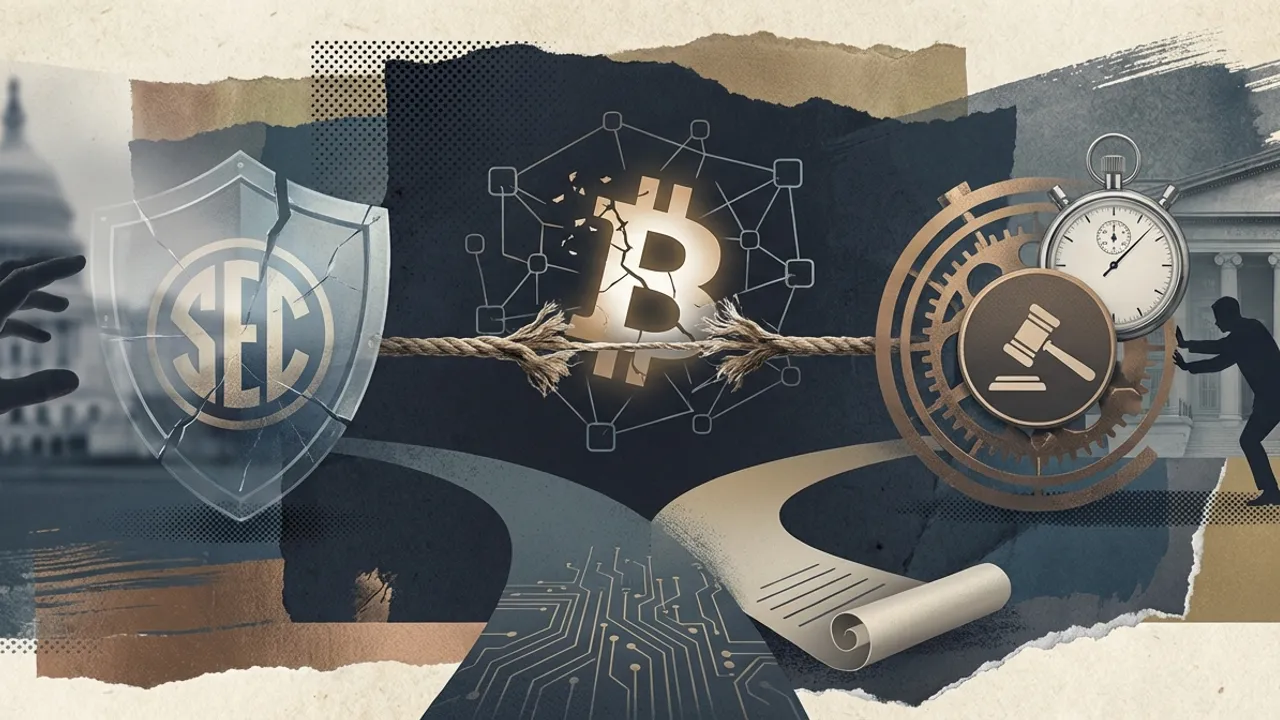
While the SEC under Atkins drastically reduces its enforcement actions, the US Treasury is pushing for swift legislation. A political tug-of-war with far-reaching consequences for Bitcoin and the entire industry.
Regulatory Shift with Question Marks: What the Policy Change Means for Bitcoin
The US regulatory landscape for digital assets is undergoing a historic transformation. While the Securities and Exchange Commission (SEC) under its new chairman Paul Atkins has seen a drastic decline in enforcement proceedings, the Treasury Department is increasing pressure on Congress to pass comprehensive crypto legislation this spring. These contrasting dynamics—regulatory retreat on one hand, and a push for legislative clarity on the other—could fundamentally shape the future of Bitcoin in the United States.
The numbers tell a clear story: The drop from 33 to 13 enforcement proceedings within one year marks not just a policy change, but possibly the end of an era of aggressive regulation through enforcement actions. At the same time, the Treasury Secretary's intervention shows that the Trump administration does not want to leave crypto regulation to chance—but rather wants to structure it through clear legislative frameworks.
The Facts
The SEC initiated only 13 crypto-related enforcement proceedings in 2025—a decline of approximately 60 percent compared to the 33 proceedings in 2024, according to current data from Cornerstone Research [1]. This is the lowest level since 2017 and marks a drastic policy shift under new SEC Chairman Paul Atkins [1].
Particularly revealing is the temporal distribution: Five of the 13 proceedings were initiated under Gary Gensler's leadership, while eight proceedings fell under Atkins' tenure—with the latter exclusively involving fraud allegations according to Cornerstone [1]. At a congressional hearing, Atkins rejected criticism from Democratic representatives and emphasized that the SEC continues to rigorously pursue violations [1].
The imposed fines also reflect the policy shift: In 2025, the agency imposed penalties totaling only $142 million—less than three percent of the 2024 sum [1]. A symbol of the new regulatory philosophy is the lawsuit against Binance that ended in May 2025, which had been running since June 2023 and included allegations surrounding the operation of an unregistered platform and handling of customer funds [1].
In parallel, the US Treasury Department is increasing pressure on Congress. Treasury Secretary Scott Bessent told CNBC on Friday that Congress must act quickly and pass crypto legislation this spring that establishes clear federal rules for digital assets [2]. The proposed "Clarity Act" would provide "great comfort for the market," according to Bessent, especially during a phase of heightened volatility [2].
Bessent warned last week on Fox News: "What we've seen in the crypto market over the past months means more than ever that the US needs market structures, we need clarity, and we need to get this across the finish line this spring" [2]. He made clear that the recent volatility in Bitcoin and digital assets underscores the urgency of legal certainty [2].
The Treasury Secretary acknowledged that some crypto companies are attempting to block the legislation, but emphasized that a bipartisan coalition of lawmakers remains determined to advance the bill [2]. However, he warned that the momentum of this coalition could weaken if Democrats regain control of the House of Representatives in November [2].
At a Senate Banking Committee hearing, Bessent advocated for the Clarity Act, arguing that digital asset innovation should be anchored in the US economy under "safe, sound, and smart" oversight [2]. He also expressed concerns that deposit volatility from crypto-related legislation could harm community and small banks [2]. Senator Cynthia Lummis raised the possibility of a de minimis tax exemption for small Bitcoin transactions, whereupon Bessent pledged to bring the Treasury's Office of Tax Policy together with her team [2].
Analysis & Assessment
The documented 60 percent decline in SEC enforcement actions marks a paradigm shift that goes far beyond symbolic politics. The Gensler era was characterized by "regulation by enforcement"—an approach that plunged the industry into legal uncertainty and often stifled innovation. The policy shift under Atkins suggests a fundamental reassessment of this strategy.
But the numbers tell a more nuanced story: The fact that all eight proceedings initiated under Atkins contain fraud allegations signals a strategic focus on clear legal violations rather than interpretation-dependent securities questions. This could benefit Bitcoin in the long term, as the SEC apparently wants to distinguish between genuine fraud cases and regulatory gray areas.
Bessent's intervention is noteworthy because it reveals a rare consensus within the Trump administration: crypto regulation through clear laws rather than through agency arbitrariness. The urgency with which the Treasury is pushing for spring deadlines, however, also reflects political realities. The bipartisan coalition supporting the Clarity Act is fragile and could dissolve after the congressional elections in November.
Historically, periods of regulatory clarity have almost always been positive for Bitcoin. When Japan recognized Bitcoin as legal tender in 2017, an innovation surge followed. MiCA regulation in Europe has led to more institutional engagement despite initial concerns. The crucial question, however, is whether the Clarity Act actually creates clarity or generates new uncertainties through complex compliance requirements.
The political dimension—particularly the involvement of Trump's World Liberty Financial and the $500 million investment from Abu Dhabi—casts shadows on the independence of the regulatory debate. If regulatory relaxations coincide with the president's personal business interests, this could undermine the legitimacy of the entire process and lead to sharper opposition.
Conclusion
• The drastic 60 percent decline in SEC enforcement actions marks the end of the Gensler era of aggressive regulation through agency arbitrariness—with potentially positive impacts for Bitcoin and legitimate crypto projects
• The Clarity Act could create the urgently needed legal clarity, but only if it is passed this spring—after that, the political dynamics could shift and bipartisan support could wane
• The SEC's focus under Atkins on clear fraud cases rather than interpretation-dependent securities questions suggests a more pragmatic regulatory philosophy that distinguishes between genuine legal violations and innovation
• The political entanglement through Trump's crypto businesses remains a risk factor that could undermine the legitimacy of regulatory reforms and lead to stronger opposition
• For Bitcoin investors, this means: reduced regulatory risk in the short term; in the medium term, much depends on whether Congress delivers by summer—timing is crucial
Sources
AI-Assisted Content
This article was created with AI assistance. All facts are sourced from verified news outlets.