US Senate Banking Committee Delays Crypto Market Structure Legislation to 2026 as SEC Warns Against Financial Surveillance
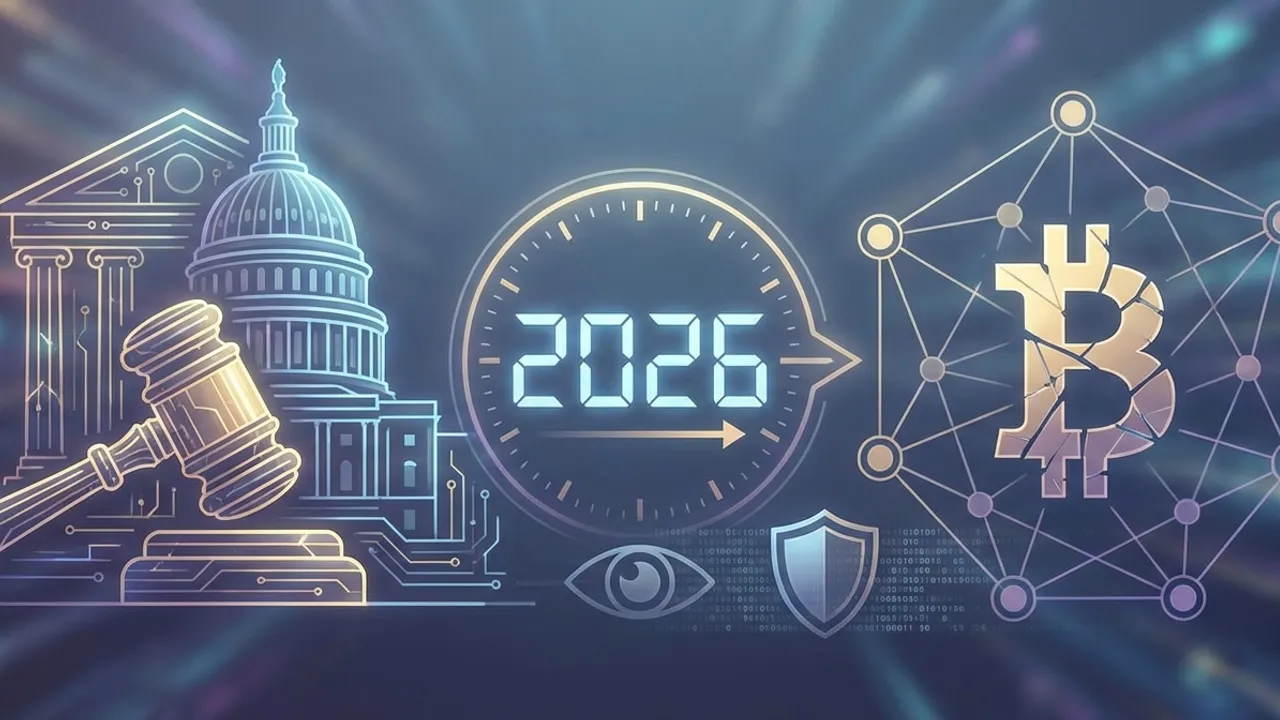
The Senate Banking Committee has postponed markup hearings on crypto market structure legislation until early 2026, while SEC leadership raises concerns about privacy and surveillance in digital asset regulation.
Crypto Market Structure Bill Delayed Until 2026
The US Senate Banking Committee has pushed back markup hearings on crypto market structure legislation to 2026, disappointing lawmakers who had anticipated a hearing this week [1]. A spokesperson for Senate Banking chair Tim Scott confirmed in a Monday statement that the committee will not hold a market structure hearing [1].
The proposed market structure bill aims to resolve jurisdictional confusion between the Securities and Exchange Commission (SEC) and the Commodity Futures Trading Commission (CFTC) [1]. Specifically, the legislation seeks to designate the CFTC as the primary spot market regulator for crypto while more clearly defining how securities laws might apply to the sector [1].
The Banking Committee, which oversees the SEC, has produced several drafts for the legislation, while the Senate Agriculture Committee, which oversees the CFTC, has only produced one discussion draft so far and will also need to hold its own markup hearing [1].
Democratic Concerns Focus on Trump's Crypto Interests
Democrats and Republicans have engaged in ongoing debate regarding the legislation, with Democratic concerns centering on financial stability, market integrity, and ethics [1]. The ethics concerns are largely attributed to President Donald Trump and his family's expanding involvement in the digital asset space [1].
The Trump family launched meme coins at the beginning of the year and is linked to the decentralized finance (DeFi) platform World Liberty Financial [1]. The family is also involved in the stablecoin, Bitcoin mining, and prediction market sectors, with their crypto-related wealth growing to billions of dollars this year [1].
Senator Elizabeth Warren has been among the lawmakers voicing concerns about Trump's crypto involvement, accusing the President of using his policy influence for personal gain [1]. "Trump is pushing for crypto legislation to keep lining his own pocket," Warren stated, adding that "we should not pass any crypto legislation without shutting this down" [1].
Timeline Remains Uncertain
While Scott's spokesperson indicated the committee plans to resume negotiations "early" next year, the timeline for completion remains unclear [1]. Congress will prioritize funding the US government when it returns from holiday break, with the current funding bill set to expire on January 30 [1]. Following resolution of funding issues, lawmakers will have limited time to work on crypto legislation before midterm elections become a top priority [1].
The crypto market reacted negatively to the confirmed postponement, with the total crypto market cap plunging over 4% in the 24 hours following the announcement, according to CoinMarketCap data [1]. Bitcoin and Ethereum dropped over 4% and 6%, respectively, during the same period [1].
SEC Leadership Raises Privacy and Surveillance Concerns
In separate developments, SEC leadership has warned that crypto could become a "powerful financial surveillance" tool if not regulated correctly [2]. SEC Chair Paul Atkins addressed the previous regulatory approach taken by former Chair Gary Gensler, who regulated the crypto industry through enforcement actions and pushed for every transaction on the blockchain to be reported [2].
"Indeed, if the instinct of the government is to treat every wallet like a broker, every piece of software as an exchange, every transaction as a reportable event, and every protocol as a convenient surveillance node, then the government will transform this ecosystem into a financial panopticon," Atkins said [2].
SEC Commissioner Hester Peirce, who leads the agency's crypto task force, echoed Atkins' remarks, stating that the time has come for regulators to "rethink when and how financial transactions are surveilled" as the digital asset space grows [2]. "Protecting one's privacy should be the norm, not an indicator of criminal intent," Peirce added [2].
The privacy debate has featured prominently in criminal cases involving crypto protocols. In August, Tornado Cash developer Roman Storm was found guilty on a money laundering charge related to the decentralized crypto mixing service designed to provide user privacy [2]. The crypto community has rallied behind Storm seeking an appeal, with over 65 crypto organizations pushing Trump to stop the retrial [2].
Sources
AI-Assisted Content
This article was created with AI assistance. All facts are sourced from verified news outlets.