Warsh Confirmed as Fed Chair While Clarity Act Looms Large
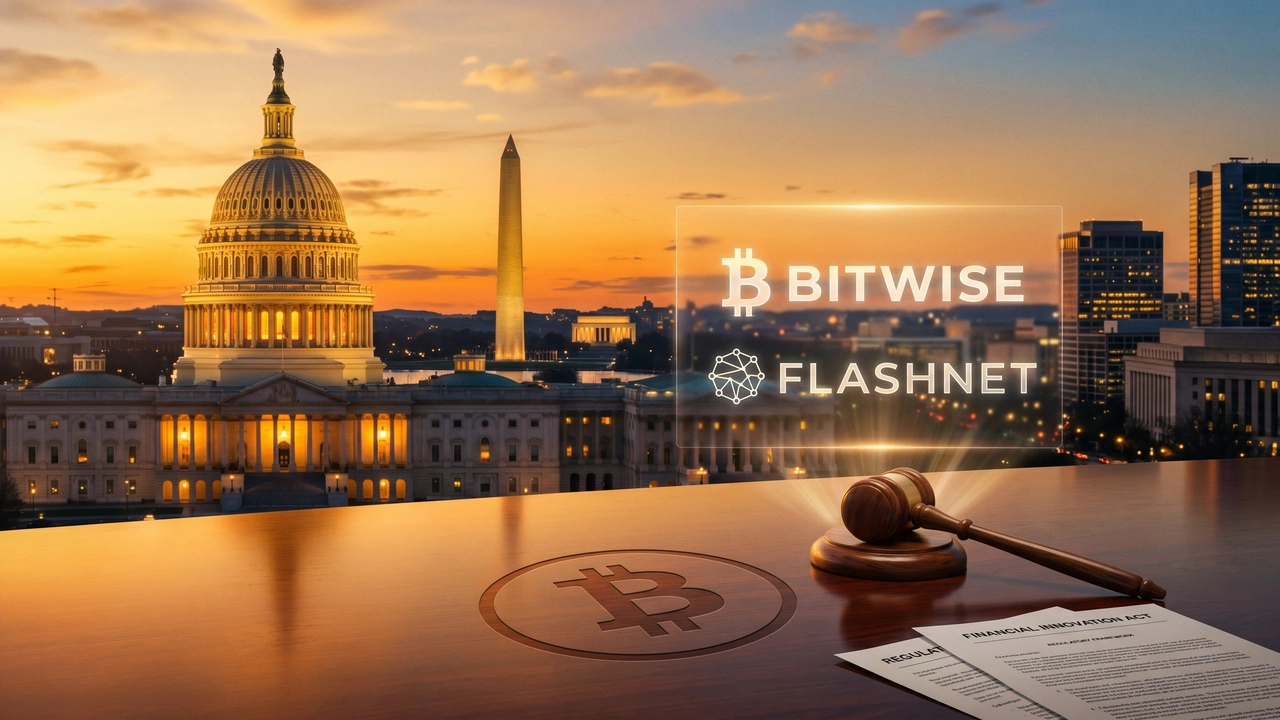
Kevin Warsh's Senate confirmation as Federal Reserve Chair - the first incoming Fed chief with direct Bitcoin exposure - arrives at the same moment Congress prepares to vote on landmark crypto market structure legislation, marking a potential inflection point for Bitcoin's regulatory and monetary landscape.
Key Takeaways
- Kevin Warsh is the first Fed Chair in history to hold direct Bitcoin exposure, and his framing of Bitcoin as a "policeman for monetary policy" marks a fundamental shift in central bank tone toward digital assets.
- The Clarity Act vote represents potentially the most significant piece of U.S. crypto legislation in years - a successful passage in a form that resolves SEC-CFTC jurisdiction could remove the regulatory overhang that has suppressed institutional participation.
- Onchain data is constructive: five consecutive days of zero short-term holder loss pressure and a 90-day low in short-term BTC supply share suggest reduced selling pressure and a more resilient holder base heading into a potential catalyst week.
- Warsh faces immediate challenges - inflation above target, pipeline price pressures at a three-year high, and a politically charged Fed - meaning his first FOMC meeting in June will be watched with unusual intensity by both traditional and crypto markets.
- The stablecoin provisions within the Clarity Act matter for Bitcoin indirectly: broader stablecoin adoption drives liquidity across crypto markets, and clearer stablecoin rules could accelerate the institutional-grade infrastructure that supports long-term Bitcoin investment flows.
Washington's Twin Signals: A Bitcoin-Friendly Fed Chair and a Landmark Crypto Vote
In the span of 48 hours, Washington has sent two of the most consequential signals in Bitcoin's regulatory history. The Senate has confirmed a Federal Reserve Chair who publicly holds crypto assets and calls Bitcoin "a very good policeman for policy," while Congress simultaneously prepares to vote on the Clarity Act - legislation designed to finally resolve the jurisdictional fog that has hung over the digital asset industry for years. Taken together, these are not isolated developments. They represent a structural shift in how the United States government is positioning itself toward Bitcoin and the broader crypto ecosystem.
For Bitcoin investors and long-term holders, the convergence of monetary leadership change and market structure legislation arriving in the same week is the kind of macro catalyst that rarely presents itself so cleanly. The question is no longer whether Washington is paying attention to Bitcoin. The question is how deep that attention runs, and what it means for price, adoption, and legitimacy.
The Facts
The Senate confirmed Kevin Warsh as the 16th Federal Reserve Chair by a 54-45 margin, one of the most partisan confirmation votes in the central bank's modern history [1]. Only Pennsylvania Democratic Senator John Fetterman crossed party lines to support Warsh, who takes over from Jerome Powell - though Powell retains his seat as a Fed Governor through 2028 [1]. At 56, Warsh is not new to the institution. He previously served on the Board of Governors from 2006 to 2011, becoming its youngest-ever member at age 35 [1].
What sets Warsh apart from every previous incoming Fed Chair is his direct exposure to digital assets. His financial disclosures reveal an equity stake in Flashnet, a Bitcoin payments startup, as well as ties to crypto index manager Bitwise and stablecoin project Basis [1]. At a Hoover Institution event, Warsh stated plainly that "Bitcoin doesn't trouble me," framing its price as a real-world signal of confidence in the Fed's inflation management credibility [1]. He called it "an important asset" - language no incoming Fed Chair has ever used about Bitcoin.
Warsh inherits a complicated macroeconomic environment. Inflation remains above the Fed's 2% target, pipeline price pressures are accelerating at their fastest pace in more than three years, and markets have dialed back rate-cut expectations significantly - some pricing in a rate increase later this year [1]. His first FOMC meeting as Chair is scheduled for June 16-17, giving him roughly eight weeks before his monetary policy stance faces its first real test [1].
On the legislative front, the Clarity Act vote follows closely behind the confirmation. Senate Banking Committee members submitted more than 100 amendments to the bill ahead of Thursday's discussion, with most focused on stablecoins, crypto developers, and ethics provisions [2]. A leaked draft of the bill suggests that crypto exchanges may be prohibited from offering stablecoin yield products that resemble traditional savings account interest - a provision that crypto research firm XWIN Japan characterizes as an effort to separate payment stablecoins from deposit-like instruments [2]. Despite the regulatory complexity, stablecoin adoption continues to grow, with ERC-20 stablecoin active addresses showing parabolic growth across crypto networks [2].
Market participants are watching closely. MN Capital founder Michael van de Poppe said that if Bitcoin continues its upward grind alongside the Clarity Act vote, a move toward $90,000 in a matter of days is plausible [2]. Onchain analyst Axel Adler Jr. noted that short-term holder loss pressure has sat at zero percent for five consecutive days, and the share of Bitcoin supply held by short-term traders dropped to 22.2%, its lowest level in 90 days - suggesting reduced selling pressure from recent buyers [2]. However, trader Zord flagged the $83,400-$84,600 range as the next meaningful Fibonacci resistance zone where profit-taking could slow any rally [2].
Analysis and Context
The appointment of a Fed Chair with direct crypto holdings is historically unprecedented, and its significance should not be underestimated. Central bank credibility is built on perception as much as policy. When the person setting U.S. monetary policy views Bitcoin as a credibility gauge for that same policy - rather than a threat to it - the institutional adversarial posture toward Bitcoin that defined the Yellen and early Powell eras begins to dissolve. This is not a guarantee of favorable policy. Warsh has vowed to keep monetary decisions strictly independent from White House pressure, and his first challenge - navigating stubborn inflation and market volatility - has nothing to do with crypto. But the symbolic value of his confirmation cannot be dismissed. Bitcoin no longer has an enemy at the helm of the world's most powerful central bank.
The Clarity Act represents a different but equally important dimension of this shift. The crypto industry's single biggest structural problem in the United States has been regulatory ambiguity - specifically, the unresolved question of whether digital assets fall under SEC or CFTC jurisdiction. Years of enforcement-by-litigation under former SEC Chair Gary Gensler created a chilling effect on institutional participation and product development. If the Clarity Act passes in a form that provides genuine jurisdictional clarity, it removes one of the last major structural barriers to full institutional adoption of Bitcoin and related assets. The 100-plus amendments being debated are a sign of how contentious the details remain, but the fact that this vote is happening at all - in the same week a Bitcoin-friendly Fed Chair is confirmed - reflects a genuinely different regulatory posture in Washington.
Historically, Bitcoin has tended to respond powerfully to the removal of regulatory uncertainty. The approval of spot Bitcoin ETFs in January 2024 produced a sustained rally that eventually pushed prices to new all-time highs. The current moment - with onchain data showing compressed selling pressure from short-term holders and a macro backdrop that could shift toward easing later in the year - has structural similarities. The Fibonacci resistance levels flagged by technical analysts are real friction points, but the medium-term narrative being built in Washington this week is more consequential than any single resistance zone.
Sources
AI-Assisted Content
This article was created with AI assistance. All facts are sourced from verified news outlets.