When Regulation Becomes a Weapon: Two Cases Reveal the Limits
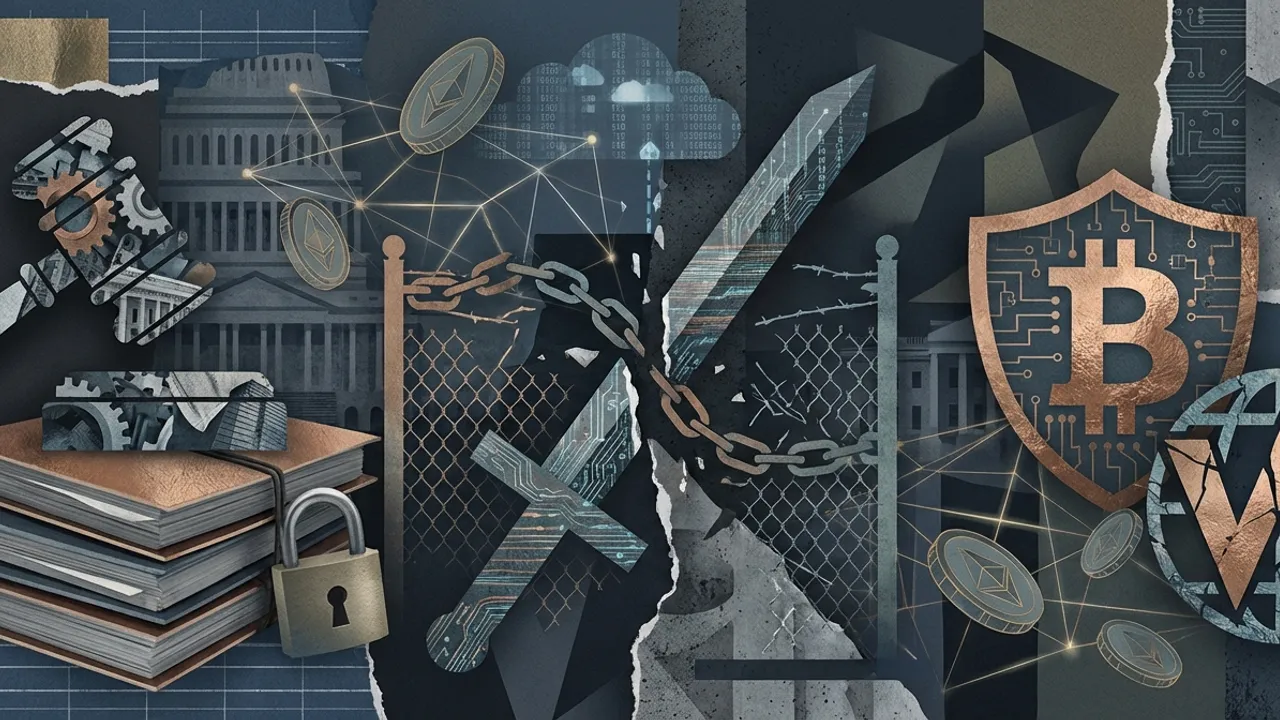
The cases of Trump's World Liberty Financial and Binance expose a fundamental problem: crypto regulation is increasingly becoming an instrument of political control, while real risks remain in the shadows.
When Regulation Becomes a Weapon: Two Cases Reveal the Limits
Two current controversies surrounding World Liberty Financial and Binance raise an uncomfortable question: Does crypto regulation still serve consumer protection – or has it long since become an instrument of political and economic power? While U.S. senators scrutinize a Trump-affiliated crypto company over foreign investments and simultaneously one of the largest exchanges comes under sanctions suspicion again, a pattern emerges: The boundaries between legitimate oversight and selective enforcement are increasingly blurred.
The Bitcoin community must closely monitor this development. Because what's happening here affects not just individual companies – it's about the fundamental question of whether decentralized technologies can still fulfill their core function under traditional control mechanisms.
The Facts
U.S. Senator Elizabeth Warren and Senator Andy Kim have called on the Treasury Department to investigate foreign involvement in World Liberty Financial (WLFI). Specifically, it concerns the acquisition of 49 percent of the Trump-affiliated crypto company by a United Arab Emirates-backed investment vehicle for approximately $500 million [1]. The transaction allegedly took place just days before Trump's inauguration and makes the fund the largest and only publicly known external investor.
The senators are demanding a review by the Committee on Foreign Investment in the United States (CFIUS), chaired by Treasury Secretary Scott Bessent. According to the letter, the investment is attributed to the circle of Sheikh Tahnoon bin Zayed Al Nahyan, the national security advisor of the United Arab Emirates. Approximately $187 million allegedly flowed to companies connected to the Trump family [1]. Additionally, two board seats were given to executives with connections to G42, a technology company previously examined by U.S. authorities over possible China ties.
Warren and Kim argue that WLFI, according to its own statements, collects wallet and IP addresses, device identifiers, location data, and certain identity information. Foreign involvement could thus open up influence over a company that processes financial and personal data of U.S. citizens [1]. Already in 2024, Warren and Senator Jack Reed had called for investigations into WLFI, citing reports that governance tokens of the project were purchased by addresses linked to the North Korean Lazarus Group as well as Russian and Iranian actors.
In parallel, Binance faces serious allegations again. A report by U.S. magazine Fortune claims that internal investigators identified transfers totaling more than $1 billion that flowed through the platform between March 2024 and August 2025 and had connections to Iran [2]. These allegedly involved transactions with the stablecoin USDt on the Tron blockchain. Particularly explosive: At least five internal investigators with law enforcement backgrounds were allegedly dismissed after documenting the incidents, and additional senior compliance officers left the company.
Binance categorically denies the allegations. "No investigator was terminated for raising compliance concerns or reporting potential sanctions issues, as no violations exist," the exchange stated [2]. An internal review with external legal advisors found no sanctions violations. The exchange has been under special scrutiny since its settlement with U.S. authorities in 2023, after paying $4.3 billion for violations of anti-money laundering and sanctions regulations. Founder Changpeng Zhao served a four-month prison sentence, and the exchange has since been subject to independent compliance monitoring [2].
Analysis & Context
These two cases expose a fundamental tension in crypto regulation: On one hand, there is a legitimate public interest in preventing money laundering and sanctions evasion. On the other hand, it's increasingly evident that regulatory instruments are being deployed selectively and with political motivation. While Elizabeth Warren has been one of Bitcoin's harshest critics for years and consistently combines her investigations with media-effective accusations, the question remains: Why are some actors scrutinized minutely while others – particularly in the traditional financial sector – commit similar violations with comparatively mild consequences?
The World Liberty Financial case is particularly revealing. Here it's less about proven violations than about potential conflicts of interest and data access. The argument that a foreign-funded company collects wallet addresses and user data is fundamentally justified. However, the same logic would apply to countless U.S. technology companies with foreign investors – from social media platforms to payment providers. The question is not whether scrutiny should occur, but whether standards are applied consistently.
With Binance, a different problem emerges: The exchange has already paid one of the highest penalties in crypto history and is subject to external compliance monitoring. If billion-dollar sanctions violations allegedly still occurred, this raises serious questions – either about the effectiveness of the monitoring or about the substance of the allegations. The fact that Binance contests the accusations and points to internal reviews, while simultaneously reports circulate about dismissed investigators, makes independent assessment nearly impossible. For Bitcoin users, the lesson is clear: Centralized exchanges remain central attack points for regulatory intervention and offer no true sovereignty.
Historically, such regulatory disputes follow a recognizable pattern. After the Liberty Reserve case in 2013, the Silk Road trials, and the BitMEX settlement in 2020, it has become clear: Crypto companies are pursued harder and faster than comparable actors in the traditional financial sector. While major banks regularly pay fines for money laundering and sanctions violations without executives going to prison, Changpeng Zhao served a prison sentence. This unequal treatment fuels suspicion that it's not just about law enforcement, but also about controlling an emerging, system-critical technology.
For Bitcoin itself, these developments are double-edged. On one hand, they confirm the original vision: A decentralized, censorship-resistant monetary system that is not subject to political control becomes all the more relevant the more pressure central actors face. On the other hand, the cases show that on- and off-ramps – the interfaces between fiat and Bitcoin – remain vulnerable. As long as most users depend on exchanges, regulatory control over these gatekeepers remains an effective instrument of state influence.
Conclusion
• The World Liberty Financial and Binance cases demonstrate: Crypto regulation is increasingly being used as an instrument of political control, with standards applied inconsistently – the Trump proximity at WLFI and Warren's well-known anti-Bitcoin stance underscore the political dimension
• Centralized exchanges remain the central weak point in the crypto ecosystem – even billion-dollar penalties and external monitoring guarantee neither compliance nor protection from new allegations, which underscores the importance of self-custody and decentralized solutions
• The unequal treatment of crypto companies compared to traditional financial institutions for similar offenses suggests systematic discrimination that has less to do with consumer protection than with controlling disruptive technologies
• For Bitcoin users, these developments confirm the core thesis: True financial sovereignty requires minimizing dependencies on regulated, centralized intermediaries – Not your keys, not your coins applies today more than ever
Sources
- [1]btc-echo.de
- [2]btc-echo.de
AI-Assisted Content
This article was created with AI assistance. All facts are sourced from verified news outlets.